
 Wildlife
of Spain
American Golden-Plover
Waders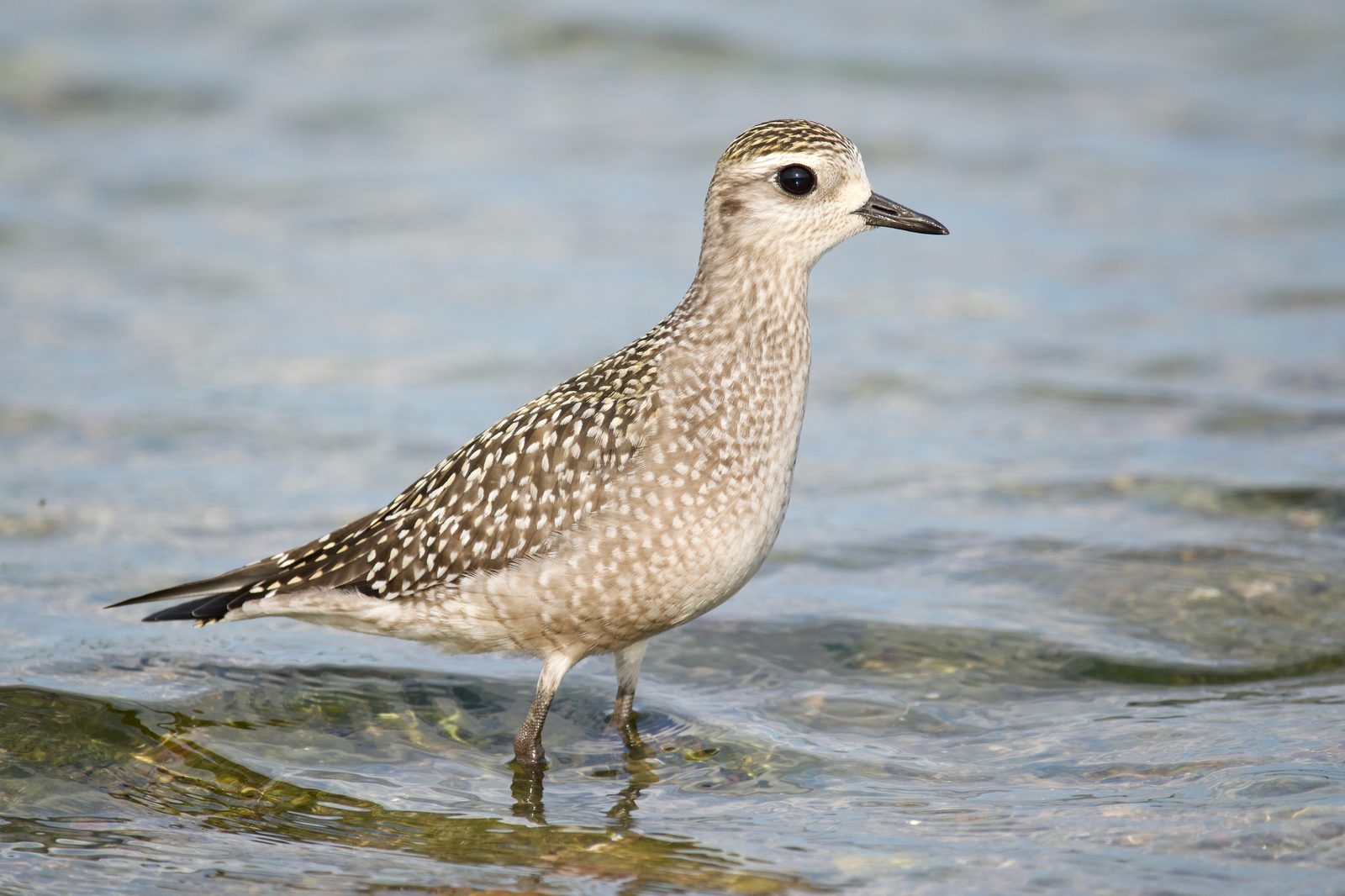
Photo: (c) Owen Strickland, some rights reserved (CC BY) · CC-BY (May be cropped or resized)
Pluvialis dominica
Basic stats
Diet
Mostly insects and other invertebrates
Habitat
Arctic tundra when breeding; fields, grassland, beaches and tidal flats during migration and winter
Range
Breeds in Alaska and northern Canada; winters in southern South America
Clutch size
4 eggs
Incubation period
26–27 days
Weight
Averages about 152g
The American Golden-Plover is a slim, medium-sized plover. Breeding adults have gold-spangled dark upperparts, a black face and underparts, and a bold white stripe from the forehead down the side of the breast; females usually show less black. Outside breeding plumage, both sexes become grey-brown above and paler below with a whitish eyebrow. Its long primary projection helps identify it. The species averages about 152 g (Wikipedia, general species account; AVONET, Tobias et al. 2022).
Across its range, the species breeds on dry Arctic tundra in Alaska and northern Canada and winters in southern South America. Its elliptical migration runs north through Central America and south largely over the western Atlantic and Caribbean. Birds forage by sight on tundra, fields, beaches and tidal flats, taking chiefly insects and other invertebrates. A lined ground scrape holds four eggs. Both parents share the 26–27-day incubation, and newly hatched chicks soon leave the nest and feed themselves (Wikipedia, general species account; EltonTraits, Wilman et al. 2014; AnAge).
Quick answers
- What does the American Golden-Plover eat?
- Mostly insects and other invertebrates
- What habitat does the American Golden-Plover live in?
- Arctic tundra when breeding; fields, grassland, beaches and tidal flats during migration and winter
- Where is the American Golden-Plover found?
- Breeds in Alaska and northern Canada; winters in southern South America
- How many eggs does the American Golden-Plover lay?
- 4 eggs
- How long are the eggs of the American Golden-Plover incubated?
- 26–27 days
- How much does the American Golden-Plover weigh?
- Averages about 152g