
 Wildlife
of Spain
Arctic Loon
Divers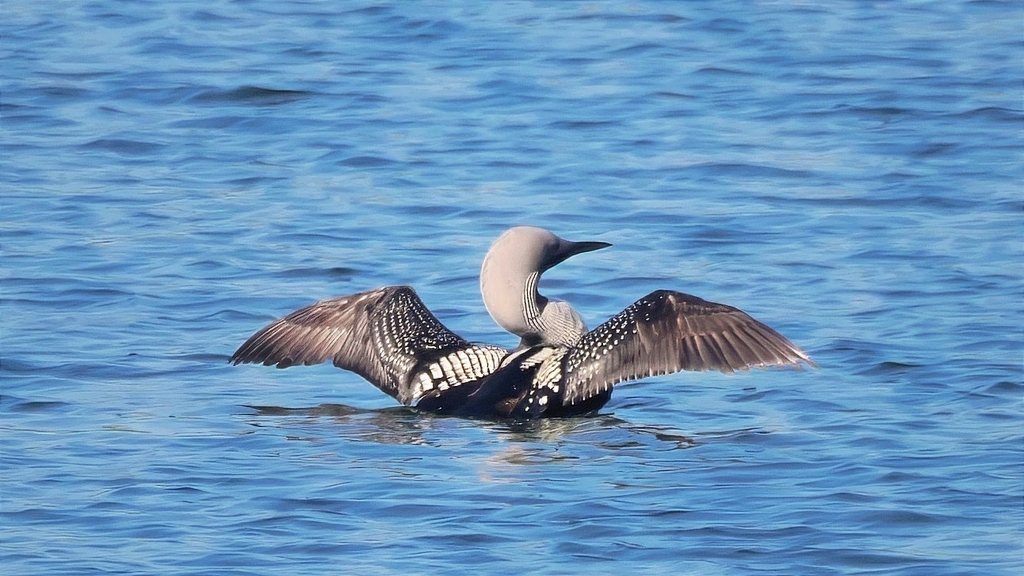
Photo: (c) Олеся, some rights reserved (CC BY) · CC BY 4.0 (May be cropped or resized)
Gavia arctica
Basic stats
Diet
Mostly fish, with aquatic invertebrates
Habitat
Northern freshwater lakes when breeding; sheltered coasts in winter
Range
Breeds across northern Europe and Asia; winters on North Atlantic and Pacific coasts
Clutch size
Usually 2 eggs
Incubation period
About 27–29 days
Size
58–73cm
Wingspan
100–130cm
Weight
Averages about 2251g
The Arctic Loon is a large diving bird, 58–73 cm long with a 100–130 cm wingspan and an average AVONET mass near 2,251 g. Breeding adults have a grey head, black throat, strongly patterned black-and-white upperparts and white flanks. In winter the throat turns white and the upperparts become much plainer. Males and females look alike (Wikipedia, general species account; AVONET, Tobias et al. 2022).
The species breeds on freshwater lakes across northern Europe and Asia and winters along sheltered, ice-free North Atlantic and Pacific coasts. It dives from the surface, usually alone or in pairs, to pursue fish and aquatic invertebrates. A nest is built at the water's edge or on emergent vegetation. The usual two eggs hatch after approximately 27–29 days of incubation (Wikipedia, general species account; EltonTraits, Wilman et al. 2014).
Where to see Arctic Loon in Spain
GBIF records grouped by protected area. They show where the species has been reported, not that it is there now, and they are not population counts.
Recorded in 4 protected areas (1990–2024).
- LIC Jaizkibel BGL: 76 records (1990–2024)
- Zona Húmida Protexida Ría de Ortigueira e Ladrido: 75 records (2000–2023)
- Parc Agrari del Baix Llobregat: 3 records (2022)
- Zona Húmida Protexida Ría de Ribadeo: 3 records (1998–2024)
Quick answers
- What does the Arctic Loon eat?
- Mostly fish, with aquatic invertebrates
- What habitat does the Arctic Loon live in?
- Northern freshwater lakes when breeding; sheltered coasts in winter
- Where is the Arctic Loon found?
- Breeds across northern Europe and Asia; winters on North Atlantic and Pacific coasts
- How many eggs does the Arctic Loon lay?
- Usually 2 eggs
- How long are the eggs of the Arctic Loon incubated?
- About 27–29 days
- How big is the Arctic Loon?
- 58–73cm
- What is the wingspan of the Arctic Loon?
- 100–130cm
- How much does the Arctic Loon weigh?
- Averages about 2251g