
 Wildlife
of Spain
Arctic Tern
Gulls, Terns, Skuas & Auks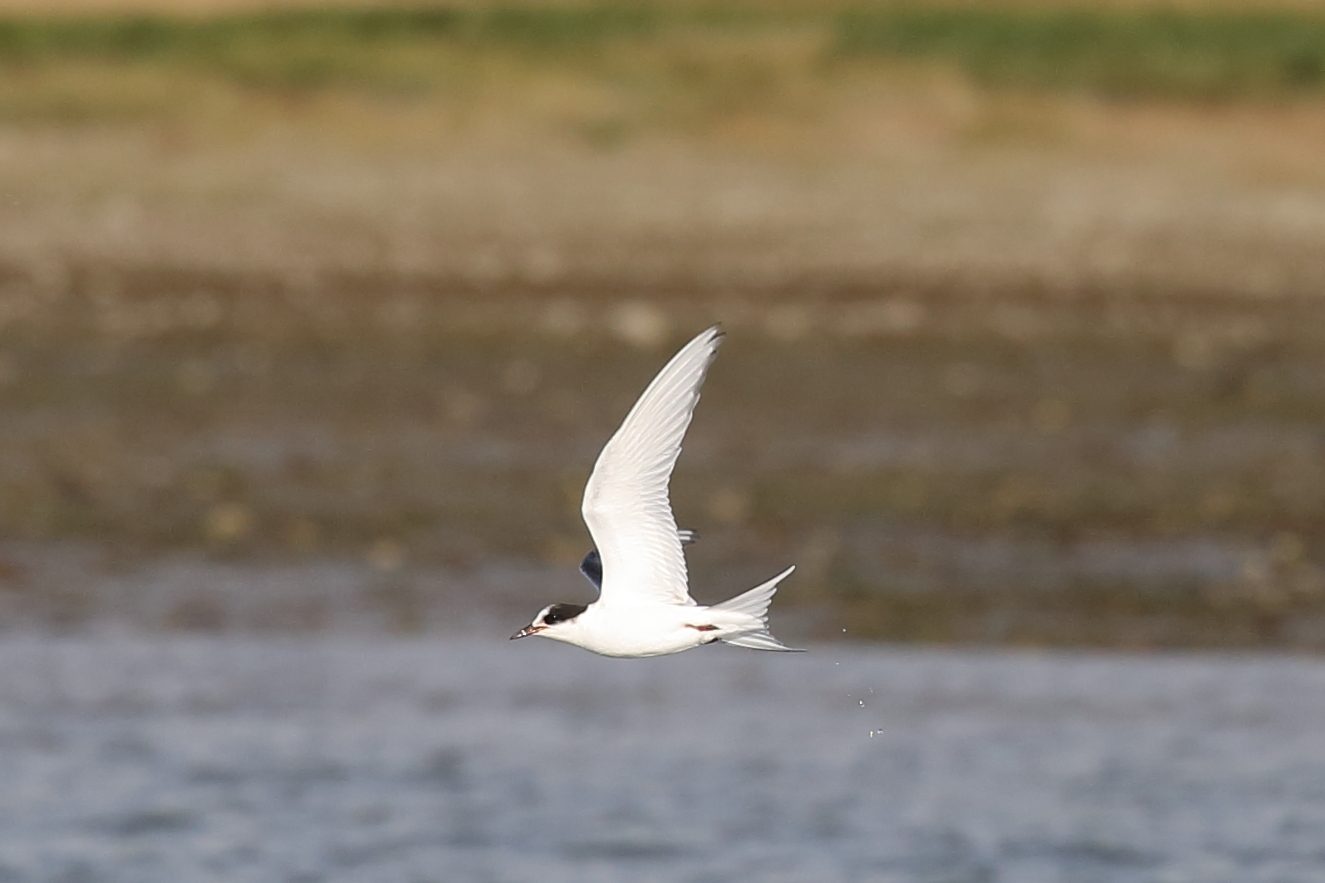
Photo: (c) patrickc, some rights reserved (CC BY) · CC-BY (May be cropped or resized)
Sterna paradisaea
Basic stats
Diet
Mostly fish, with small marine invertebrates
Habitat
Arctic and subarctic coasts when breeding; open ocean during migration and winter
Range
Breeds around the Arctic and subarctic Northern Hemisphere; winters near Antarctic waters
Clutch size
About 2 eggs
Incubation period
About 21 days
Size
33–36cm
Wingspan
76–85cm
Weight
Averages about 110g
The Arctic Tern is a graceful, medium-sized seabird with a black cap, pale-grey body, white cheeks and rump, and deeply forked tail. Breeding adults have a blood-red bill and legs; the forehead becomes partly white and the bare parts darken in winter. Narrow wings support sustained long-distance flight. Adults measure 33–36 cm, span 76–85 cm and average about 110 g (Wikipedia, general species account; AVONET, Tobias et al. 2022).
Across its circumpolar range, the species breeds on Arctic and subarctic coasts of Eurasia and North America, then migrates to Antarctic waters for the southern summer. Its looping annual route is the longest known migration among animals. Fish dominate the diet, supplemented by small marine invertebrates. Birds feed by hovering and diving into the sea. AnAge reports a mean clutch of about two eggs and incubation lasting roughly 21 days (Wikipedia, general species account; EltonTraits, Wilman et al. 2014; AnAge).
Where to see Arctic Tern in Spain
GBIF records grouped by protected area. They show where the species has been reported, not that it is there now, and they are not population counts.
Recorded in 3 protected areas (1984–2024).
- LIC Jaizkibel BGL: 128 records (1984–2024)
- Parque Natural de la Bahía de Cádiz: 22 records (2007–2024)
- Zona Húmida Protexida Ría de Ortigueira e Ladrido: 6 records (1999–2016)
Quick answers
- What does the Arctic Tern eat?
- Mostly fish, with small marine invertebrates
- What habitat does the Arctic Tern live in?
- Arctic and subarctic coasts when breeding; open ocean during migration and winter
- Where is the Arctic Tern found?
- Breeds around the Arctic and subarctic Northern Hemisphere; winters near Antarctic waters
- How many eggs does the Arctic Tern lay?
- About 2 eggs
- How long are the eggs of the Arctic Tern incubated?
- About 21 days
- How big is the Arctic Tern?
- 33–36cm
- What is the wingspan of the Arctic Tern?
- 76–85cm
- How much does the Arctic Tern weigh?
- Averages about 110g