
 Wildlife
of Spain
Blanus cinereus
Other Lizards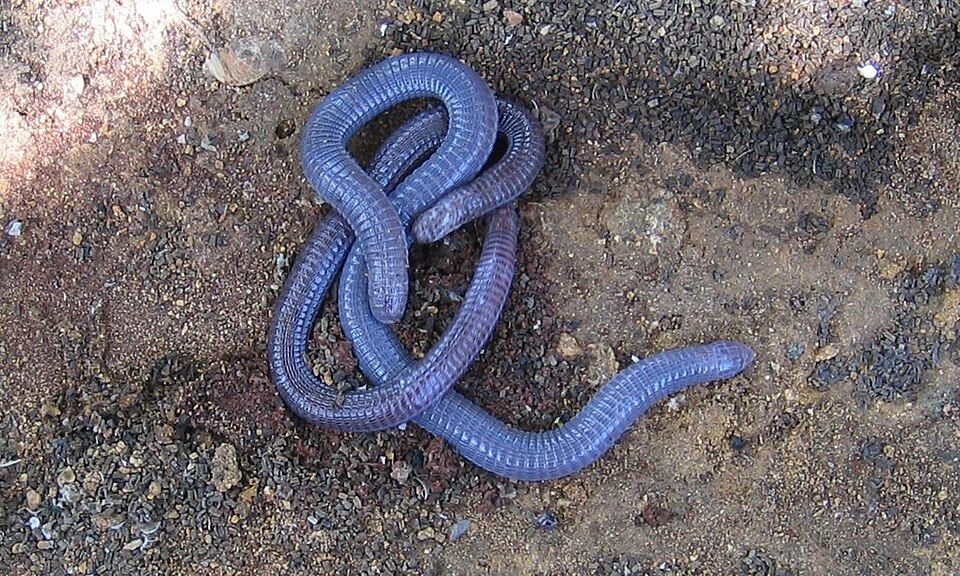
Photo: Richard Avery · CC BY-SA 3.0 (May be cropped or resized)
Blanus cinereus
Basic stats
Diet
Opportunistic; mainly insects and insect larvae
Habitat
Burrowing in humus-rich soil under rocks in Mediterranean habitats
Range
Portugal and most of central and southern Spain
Weight
Adult about 6g in the AnAge record
The Iberian worm lizard is a limbless burrower with a ringed, worm-like body, a small blunt head for digging, tiny underdeveloped eyes and small smooth scales. Despite the look it is a typical vertebrate with lungs and a closed circulation. It is known locally as a blind snake in Portuguese, Spanish and Catalan. Genetic work on 47 populations found two deeply divergent lineages, and some researchers want it split into two species.
It lives underground in a wide range of Mediterranean habitats, favouring soil rich in humus with scattered rocks, which it uses to regulate its temperature by moving between shallow soil and the underside of stones. It is an opportunistic feeder on insects and larvae, picks larger larvae and avoids some ants, and seems to have low energy needs. It lays eggs and is not venomous. The longest recorded lifespan is about 16 years (Wikipedia, general species account; ReptTraits, Oskyrko et al. 2024; AnAge).
Quick answers
- What does the Blanus cinereus eat?
- Opportunistic; mainly insects and insect larvae
- What habitat does the Blanus cinereus live in?
- Burrowing in humus-rich soil under rocks in Mediterranean habitats
- Where is the Blanus cinereus found?
- Portugal and most of central and southern Spain
- How much does the Blanus cinereus weigh?
- Adult about 6g in the AnAge record