
 Wildlife
of Spain
Canada Goose
Ducks, Geese & Swans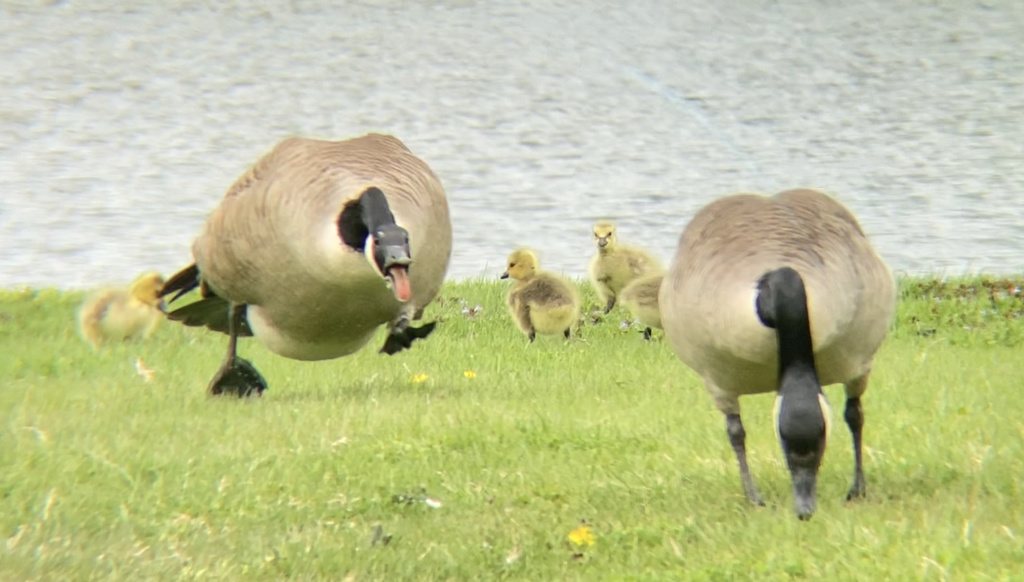
Photo: no rights reserved · CC0 1.0
Branta canadensis
Basic stats
Diet
Mostly grasses and other plant material
Habitat
Lakes, ponds, marshes, estuaries and grassland
Range
Native to Arctic and temperate North America; introduced elsewhere
Clutch size
Averages about 5 eggs
Incubation period
Averages about 26 days
Size
75–110cm
Wingspan
127–185cm
Weight
Averages about 2812g
The Canada Goose is a large goose, 75–110 cm long with a 127–185 cm wingspan and an average AVONET mass near 2,812 g. A black head and neck, white cheek patch and brown body form its familiar pattern. The numerous subspecies vary markedly in size, and males average somewhat larger than females while looking otherwise similar (Wikipedia, general species account; AVONET, Tobias et al. 2022).
Native to Arctic and temperate North America, the species lives around lakes, ponds, marshes, estuaries and lagoons, and often feeds on nearby grassland or farmland. Many populations migrate, while others remain resident, and introductions have established birds on other continents. Grasses and other plant material dominate the diet. Clutches and incubation average about five eggs and 26 days (Wikipedia, general species account; EltonTraits, Wilman et al. 2014; AnAge).
Quick answers
- What does the Canada Goose eat?
- Mostly grasses and other plant material
- What habitat does the Canada Goose live in?
- Lakes, ponds, marshes, estuaries and grassland
- Where is the Canada Goose found?
- Native to Arctic and temperate North America; introduced elsewhere
- How many eggs does the Canada Goose lay?
- Averages about 5 eggs
- How long are the eggs of the Canada Goose incubated?
- Averages about 26 days
- How big is the Canada Goose?
- 75–110cm
- What is the wingspan of the Canada Goose?
- 127–185cm
- How much does the Canada Goose weigh?
- Averages about 2812g