
 Wildlife
of Spain
Dunnock
Wrens, Dippers & Accentors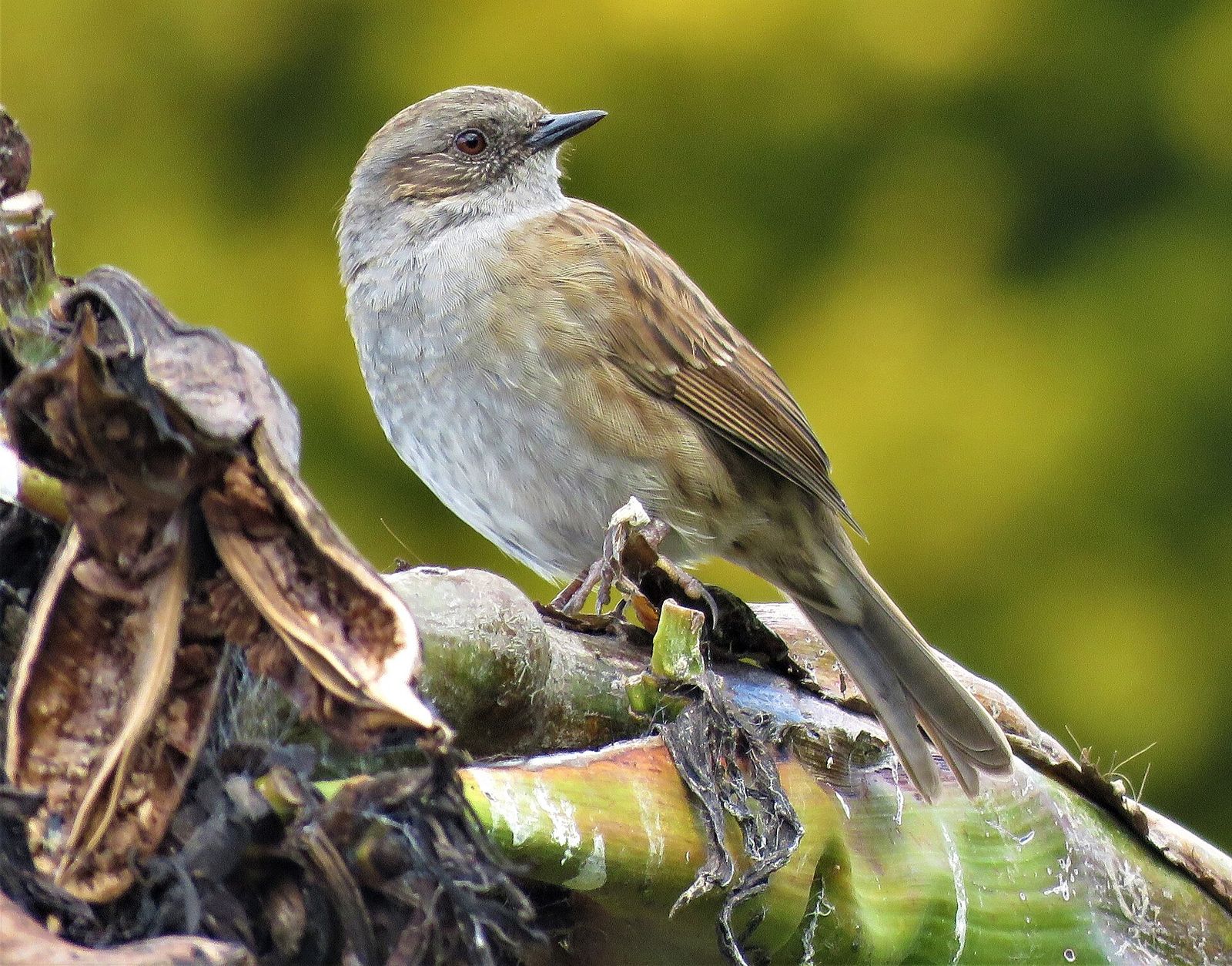
Photo: Catphotos · CC BY 4.0 (May be cropped or resized)
Prunella modularis
Basic stats
Diet
Invertebrates and seeds
Habitat
Woodland, shrubs, gardens and hedgerows
Range
Europe and western Asia; introduced to New Zealand
Clutch size
Usually 3–5 eggs
Size
13–14.5cm
Weight
Averages about 20g
The Dunnock is a small accentor native to much of Europe and western Asia and introduced to New Zealand. It measures 13–14.5 cm long, with a streaked brown back, fine bill and grey head in adults. AVONET gives an average mass of 20 g. Woodland, hedges, shrubs and gardens provide cover for this often inconspicuous bird (Wikipedia, general species account; AVONET, Tobias et al. 2022).
Dunnocks feed mainly on the ground; EltonTraits divides the diet equally between seeds and invertebrates. A nest of twigs and moss, lined with soft material, is placed low in a bush or conifer and usually contains three to five blue eggs. Mating arrangements vary, and more than one male can help provision chicks at a nest (Wikipedia, general species account; EltonTraits, Wilman et al. 2014).
Where to see Dunnock in Spain
GBIF records grouped by protected area. They show where the species has been reported, not that it is there now, and they are not population counts.
Recorded in 58 protected areas (1980–2026). The 8 with the most records:
- Parc Agrari del Baix Llobregat: 880 records (2002–2025)
- LIC Jaizkibel BGL: 500 records (1990–2025)
- Monfragüe National Park: 446 records (1982–2024)
- Reserva natural parcial de la Fageda d'en Jordà: 349 records (1993–2022)
- ZEC-ZEPA Sierra de Leire: 242 records (1995–2024)
- Parque Nacional Marítimo-Terrestre das Illas Atlánticas de Galicia: 225 records (2011–2024)
- Larrako erreserba naturala: 218 records (1996–2026)
- ZEC Sierra de Gata: 180 records (1998–2024)
Quick answers
- What does the Dunnock eat?
- Invertebrates and seeds
- What habitat does the Dunnock live in?
- Woodland, shrubs, gardens and hedgerows
- Where is the Dunnock found?
- Europe and western Asia; introduced to New Zealand
- How many eggs does the Dunnock lay?
- Usually 3–5 eggs
- How big is the Dunnock?
- 13–14.5cm
- How much does the Dunnock weigh?
- Averages about 20g