
 Wildlife
of Spain
Egyptian Vulture
Eagles, Hawks & Vultures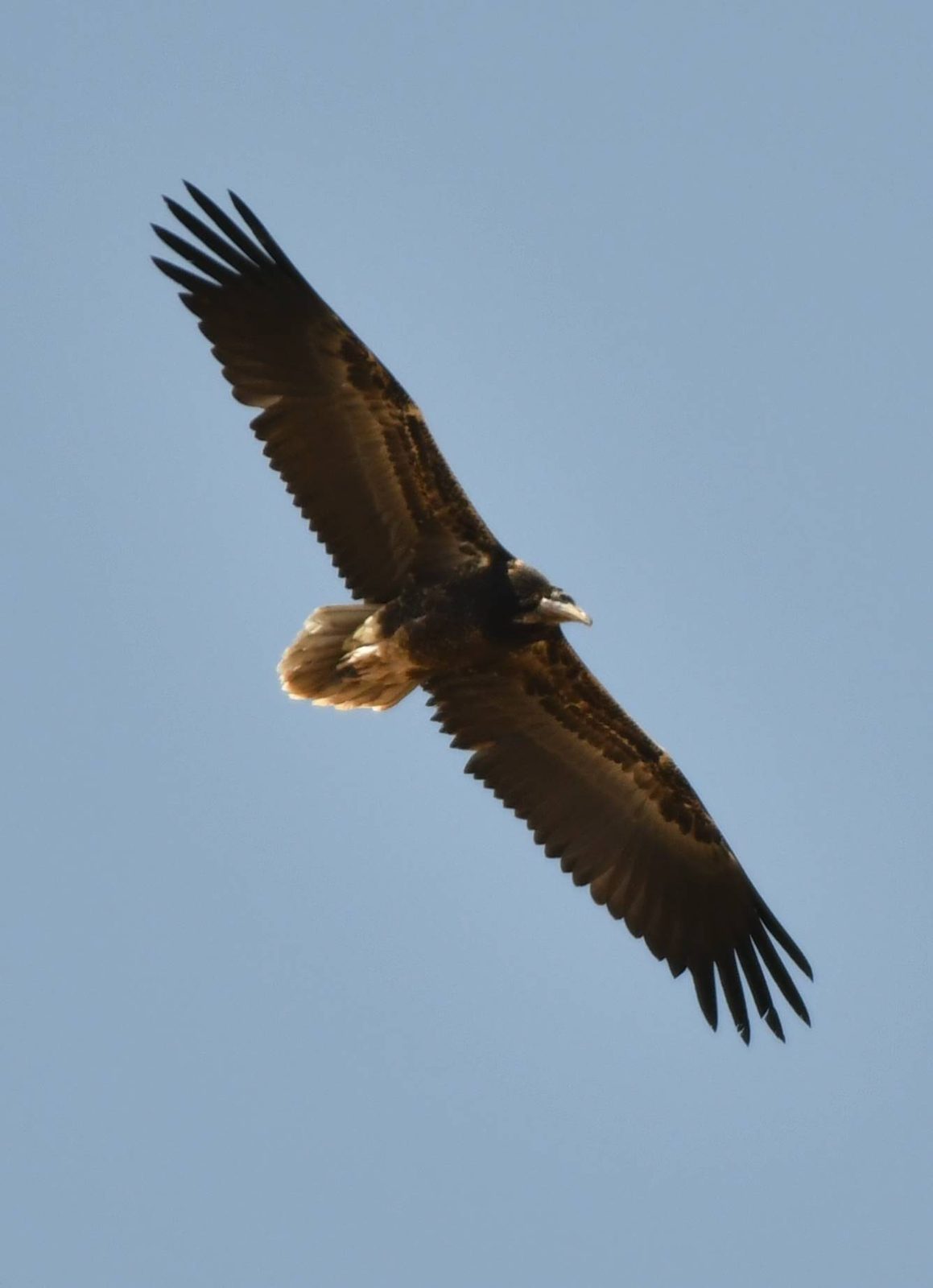
Photo: (c) Mourad Harzallah, some rights reserved (CC BY) · CC-BY (May be cropped or resized)
Neophron percnopterus
Basic stats
Diet
Mainly carrion; also small mammals, birds, reptiles and other birds' eggs
Habitat
Open habitat; up to about 2,000m in the Himalaya in summer
Range
Iberia, North Africa, West Asia and India
Size
47–65cm; Indian form males 47–52cm, females 52–55.5cm
The Egyptian vulture, also called the white scavenger vulture or pharaoh's chicken, is a small Old World vulture and the only species in its genus. The adult's plumage is white with black flight feathers in the wings, though wild birds usually look soiled with a rusty or brown shade from mud or iron-rich soil. The contrasting underwing pattern and wedge-shaped tail make it distinctive in flight. The bill is black in the nominate subspecies but pale or yellowish in adults of the smaller Indian form, which measures 47–52 cm in males and 52–55.5 cm in females (Wikipedia, general species account).
It is widely distributed from the Iberian Peninsula and North Africa to West Asia and India, and in the Himalaya goes up to about 2,000 m in summer. It feeds mainly on carrion but is opportunistic and will prey on small mammals, birds and reptiles, and it eats the eggs of other birds, breaking larger ones by tossing a pebble onto them, one of the rare examples of tool use in birds; it also uses twigs to roll up wool for its nest. Populations that breed in temperate regions migrate south in winter, while tropical ones are relatively sedentary. SoIB 2023 rates it a High conservation priority, with a rapid long-term decline of about 80% and a current decline of about 5% a year (Wikipedia, general species account; SoIB 2023).
Where to see Egyptian Vulture in Spain
GBIF records grouped by protected area. They show where the species has been reported, not that it is there now, and they are not population counts.
Recorded in 53 protected areas (1968–2026). The 8 with the most records:
- Monfragüe National Park: 6,212 records (1973–2026)
- ZEC-ZEPA Sierra de Leire: 503 records (1979–2024)
- LIC Sistema fluvial Irati-Urrobi-Erro: 296 records (1985–2024)
- ZEC de la Foz de Arbaiun: 213 records (1979–2024)
- ZEC-ZEPA Alto Tajo: 175 records (1995–2025)
- Ezka eta Bintze ibaiak BGL: 117 records (1985–2024)
- ZEC-ZEPA Sierra de Illón / Illongo mendilerroa KBE-HBB: 104 records (1977–2024)
- LIC Jaizkibel BGL: 91 records (1994–2024)
Quick answers
- What does the Egyptian Vulture eat?
- Mainly carrion; also small mammals, birds, reptiles and other birds' eggs
- What habitat does the Egyptian Vulture live in?
- Open habitat; up to about 2,000m in the Himalaya in summer
- Where is the Egyptian Vulture found?
- Iberia, North Africa, West Asia and India
- How big is the Egyptian Vulture?
- 47–65cm; Indian form males 47–52cm, females 52–55.5cm