
 Wildlife
of Spain
Eurasian Kestrel
Falcons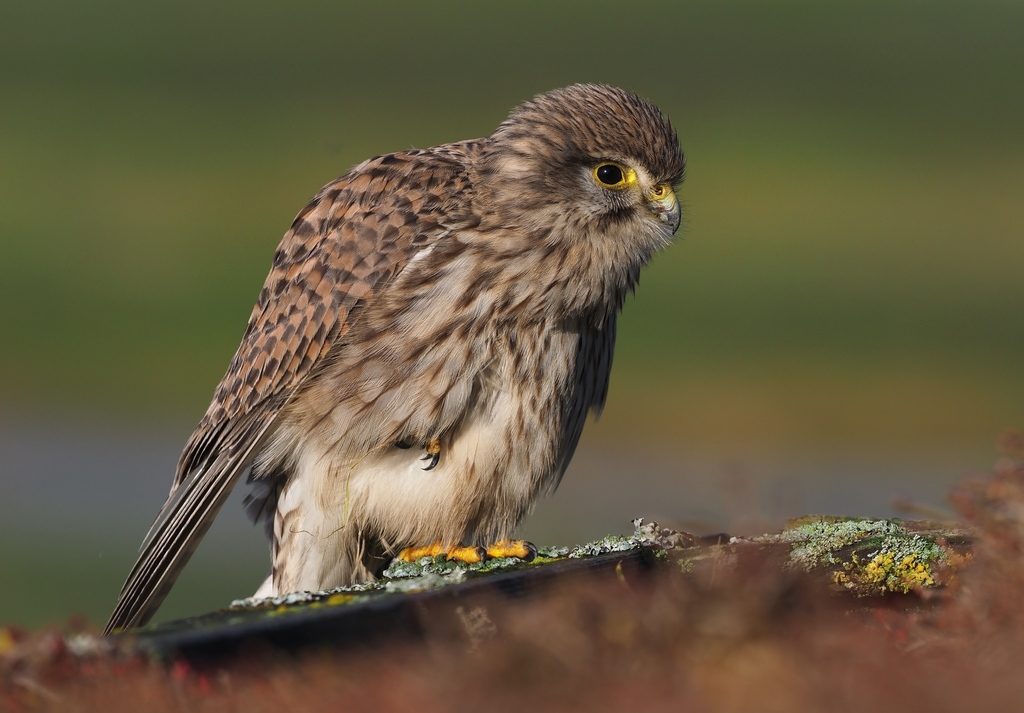
Photo: Frank Vassen · CC BY 4.0 (May be cropped or resized)
Falco tinnunculus
Basic stats
Diet
Mostly small vertebrates, especially mammals, with some large insects
Habitat
Open fields, heath, shrubland, marshes, steppe and settlements
Range
Europe, Asia and Africa
Size
32–39cm
Wingspan
65–82cm
Weight
Averages about 183g
The Eurasian Kestrel is a small falcon, 32–39 cm long, with pointed wings and a notably long tail. Chestnut upperparts carry dark spots, while the pale underside is finely streaked. Adult males have a blue-grey cap and tail and fewer dark markings than females; both sexes show a dark moustache and yellow bare skin around the bill, eyes and feet (Wikipedia, general species account).
Across Europe, Asia and Africa, the species occupies open country from fields and heath to steppe, marshes and towns, provided that hunting ground and nest sites are available. It commonly hangs nearly stationary into the wind before dropping steeply onto prey, or watches from a perch. Small mammals supply much of the diet, while birds, reptiles and larger insects are taken according to local conditions (Wikipedia, general species account; EltonTraits, Wilman et al. 2014).
Where to see Eurasian Kestrel in Spain
GBIF records grouped by protected area. They show where the species has been reported, not that it is there now, and they are not population counts.
Recorded in 134 protected areas (1964–2026). The 8 with the most records:
- ZEPA Estepas Cerealistas de los ríos Jarama y Henares: 2,487 records (1985–2025)
- Parc Agrari del Baix Llobregat: 2,226 records (2002–2026)
- Reserva Natural Dirigida de la Laguna de Gallocanta: 1,597 records (1982–2024)
- Paisaje Protegido Espacios Abiertos e Islas del Mar Menor: 1,349 records (1985–2025)
- Monfragüe National Park: 1,067 records (1973–2025)
- ZEC-ZEPA Laguna de Pitillas: 1,051 records (1986–2024)
- Zona Periférica de Protección de la Reserva Natural Dirigida de la Laguna de Gallocanta: 901 records (1998–2024)
- LIC-ZEPA Embalse de las Cañas: 805 records (1988–2024)
Quick answers
- What does the Eurasian Kestrel eat?
- Mostly small vertebrates, especially mammals, with some large insects
- What habitat does the Eurasian Kestrel live in?
- Open fields, heath, shrubland, marshes, steppe and settlements
- Where is the Eurasian Kestrel found?
- Europe, Asia and Africa
- How big is the Eurasian Kestrel?
- 32–39cm
- What is the wingspan of the Eurasian Kestrel?
- 65–82cm
- How much does the Eurasian Kestrel weigh?
- Averages about 183g