
 Wildlife
of Spain
European Tree Frog
Tree Frogs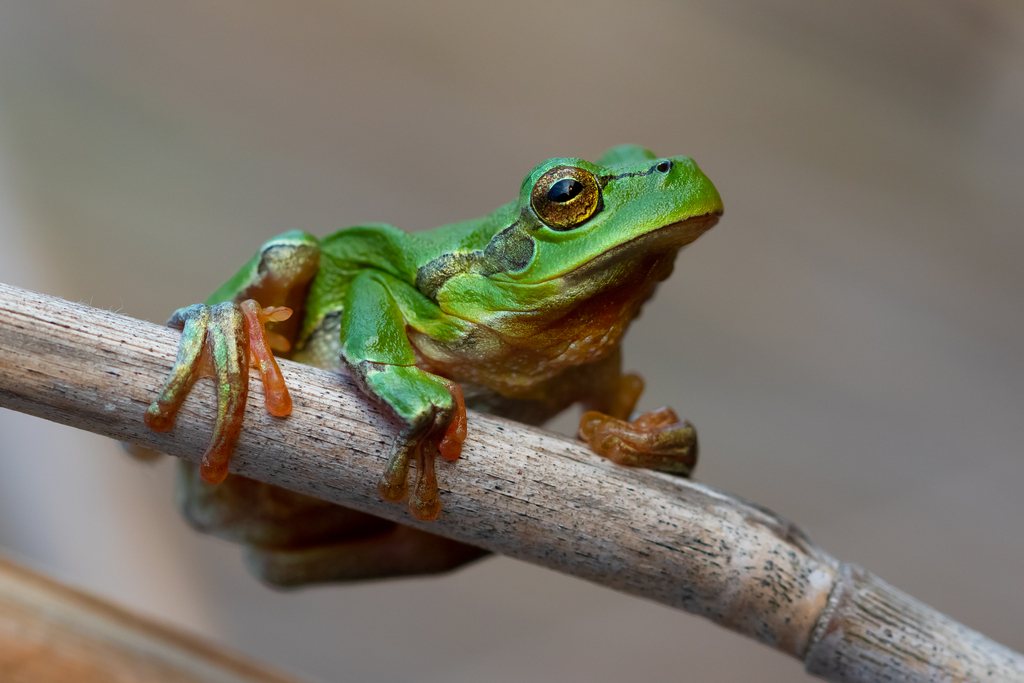
Photo: (c) Johannes S., some rights reserved (CC BY) · CC BY 4.0 (May be cropped or resized)
Hyla arborea
Basic stats
Habitat
Marshlands, meadows, reed beds, parks, gardens, vineyards, orchards, stream banks, lake shores and forests
Range
Europe from France to Poland and Greece
Clutch size
200–2,000
Size
50 mm
Weight
9.5 g
The European tree frog is a tree frog in the family Hylidae, described by Linnaeus in 1758. The true species ranges in Europe from France to Poland and Greece. Males measure 32–43 mm, while females are 40–50 mm long. The slender frog has long legs, smooth skin along its back and granular skin underneath; its back can be green, gray or tan, with a dark stripe running from each eye toward the groin. (Wikipedia, general species account; AmphiBIO, Oliveira et al. 2017; Catalogue of Life)
It lives in marshes, damp meadows, reed beds, gardens, orchards, stream banks, lake shores and humid or dry forests. This frog is active by day and night and feeds on arthropods. It breeds in still water from late March to June; females lay about 800 to 1,000 eggs in clumps, which hatch after 10–14 days. The tadpoles transform into frogs after about three months. (Wikipedia, general species account; AmphiBIO, Oliveira et al. 2017)
Quick answers
- What habitat does the European Tree Frog live in?
- Marshlands, meadows, reed beds, parks, gardens, vineyards, orchards, stream banks, lake shores and forests
- Where is the European Tree Frog found?
- Europe from France to Poland and Greece
- How many eggs does the European Tree Frog lay?
- 200–2,000
- How big is the European Tree Frog?
- 50 mm
- How much does the European Tree Frog weigh?
- 9.5 g