
 Wildlife
of Spain
Great Tit
Tits, Nuthatches & Treecreepers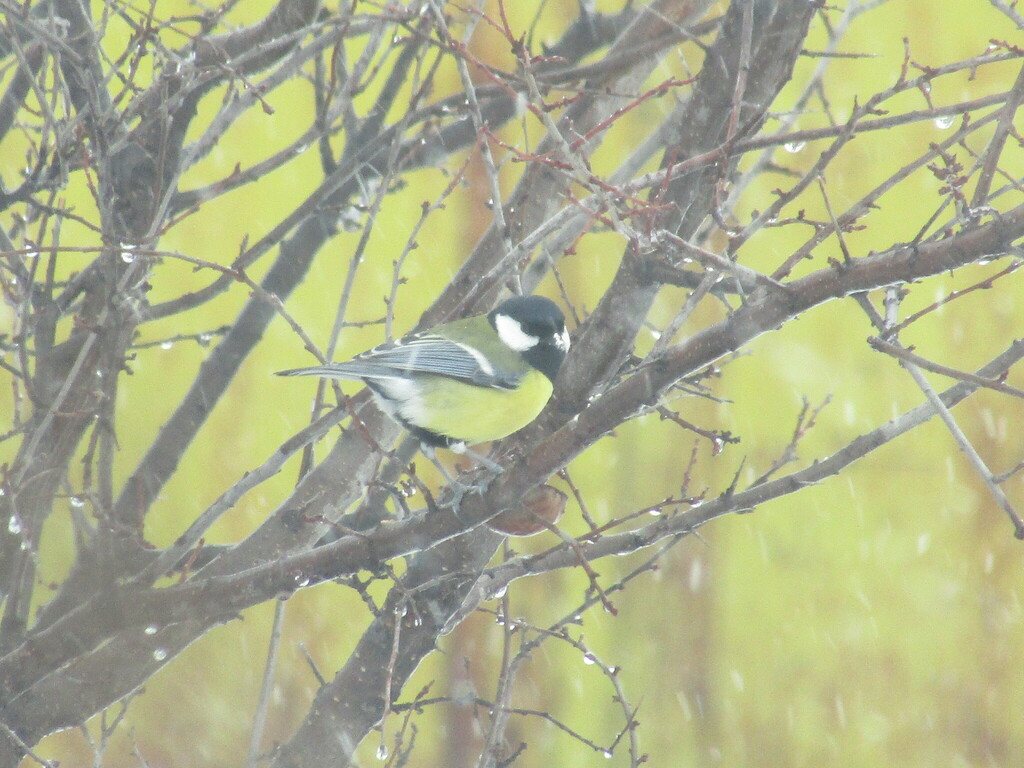
Photo: (c) SteveM4560, some rights reserved (CC BY) · CC BY 4.0 (May be cropped or resized)
Parus major
Basic stats
Diet
Invertebrates, fruit and seeds
Habitat
Woodland, parks and gardens
Range
Europe and North Africa east through the Middle East and Central Asia to the Amur region
Clutch size
About 12 eggs
Size
12.5–14cm
Weight
Averages about 16g
The Great Tit is a large, readily recognised tit with a black head and throat, broad white cheek patches, olive upperparts and yellow underparts crossed by a dark central stripe. Females generally have a narrower, less intense belly stripe than males, and young birds are duller with less sharply defined markings. Across its range, plumage varies among the numerous subspecies. Adults measure about 12.5–14 cm and average about 16 g (Wikipedia, general species account; AVONET, Tobias et al. 2022).
Across its range from Europe and North Africa east through the Middle East and Central Asia, the species occupies woodland and readily uses parks and gardens. Its diet broadens outside summer: invertebrates remain important, while fruit and seeds each form substantial components in the EltonTraits profile. It nests in cavities, including tree holes, and the female alone incubates a clutch of roughly twelve eggs. Both parents provision the young, and pairs may produce two broods in a year (Wikipedia, general species account; EltonTraits, Wilman et al. 2014).
Where to see Great Tit in Spain
GBIF records grouped by protected area. They show where the species has been reported, not that it is there now, and they are not population counts.
Recorded in 123 protected areas (1960–2026). The 8 with the most records:
- Monfragüe National Park: 7,186 records (1983–2026)
- Parc Agrari del Baix Llobregat: 3,893 records (2000–2026)
- ZEPA Estepas Cerealistas de los ríos Jarama y Henares: 1,656 records (2002–2025)
- Parque Regional El Valle y Carrascoy: 980 records (1976–2024)
- Reserva natural parcial de la Fageda d'en Jordà: 958 records (1993–2024)
- ZEC-ZEPA Sierra de Leire: 823 records (1995–2025)
- LIC Jaizkibel BGL: 667 records (1960–2024)
- ZEC-ZEPA Alto Tajo: 639 records (1983–2024)
Quick answers
- What does the Great Tit eat?
- Invertebrates, fruit and seeds
- What habitat does the Great Tit live in?
- Woodland, parks and gardens
- Where is the Great Tit found?
- Europe and North Africa east through the Middle East and Central Asia to the Amur region
- How many eggs does the Great Tit lay?
- About 12 eggs
- How big is the Great Tit?
- 12.5–14cm
- How much does the Great Tit weigh?
- Averages about 16g