
 Wildlife
of Spain
Horned Lark
Larks, Pipits & Wagtails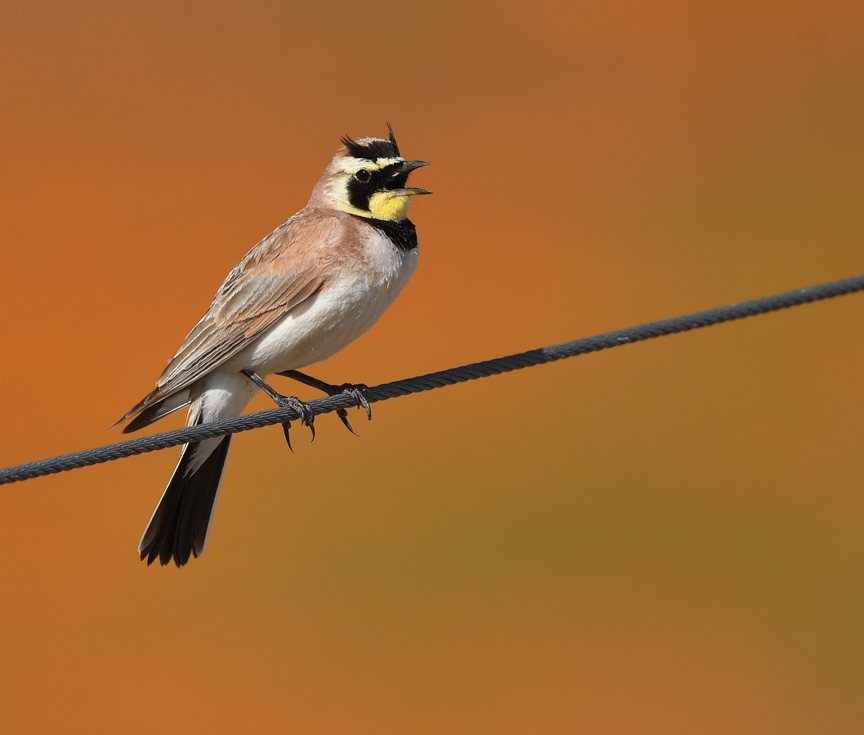
Photo: (c) Pat Farris, some rights reserved (CC BY) · CC BY 4.0 (May be cropped or resized)
Eremophila alpestris
Basic stats
Diet
Insects and seeds
Habitat
Tundra, alpine ground, prairie, farmland and other open landscapes
Range
Northern Eurasia and North America, with isolated populations farther south
Clutch size
2–5 eggs
Incubation period
10–12 days
Size
16–19cm
Weight
Averages about 33g
The Horned Lark is a distinctive ground-dwelling lark, brown-grey above and pale below, with a bold black-and-yellow facial pattern. Breeding males raise two small black feather tufts that resemble horns. Its mostly dark tail contrasts with the paler body in flight. Adults measure about 16–19 cm and average roughly 33 g (Wikipedia, general species account; AVONET, Tobias et al. 2022).
Across northern Eurasia and North America, with isolated populations farther south, the species occupies tundra, alpine ground, prairie, farmland and other open landscapes. Northern birds migrate, while many southern populations remain resident. Insects and seeds contribute equally in the EltonTraits diet profile, and feeding takes place on the ground. The female builds a lined cup in a shallow depression and lays two to five eggs, incubating them for 10–12 days (Wikipedia, general species account; EltonTraits, Wilman et al. 2014).
Quick answers
- What does the Horned Lark eat?
- Insects and seeds
- What habitat does the Horned Lark live in?
- Tundra, alpine ground, prairie, farmland and other open landscapes
- Where is the Horned Lark found?
- Northern Eurasia and North America, with isolated populations farther south
- How many eggs does the Horned Lark lay?
- 2–5 eggs
- How long are the eggs of the Horned Lark incubated?
- 10–12 days
- How big is the Horned Lark?
- 16–19cm
- How much does the Horned Lark weigh?
- Averages about 33g