
 Wildlife
of Spain
Long-fingered Myotis
Bats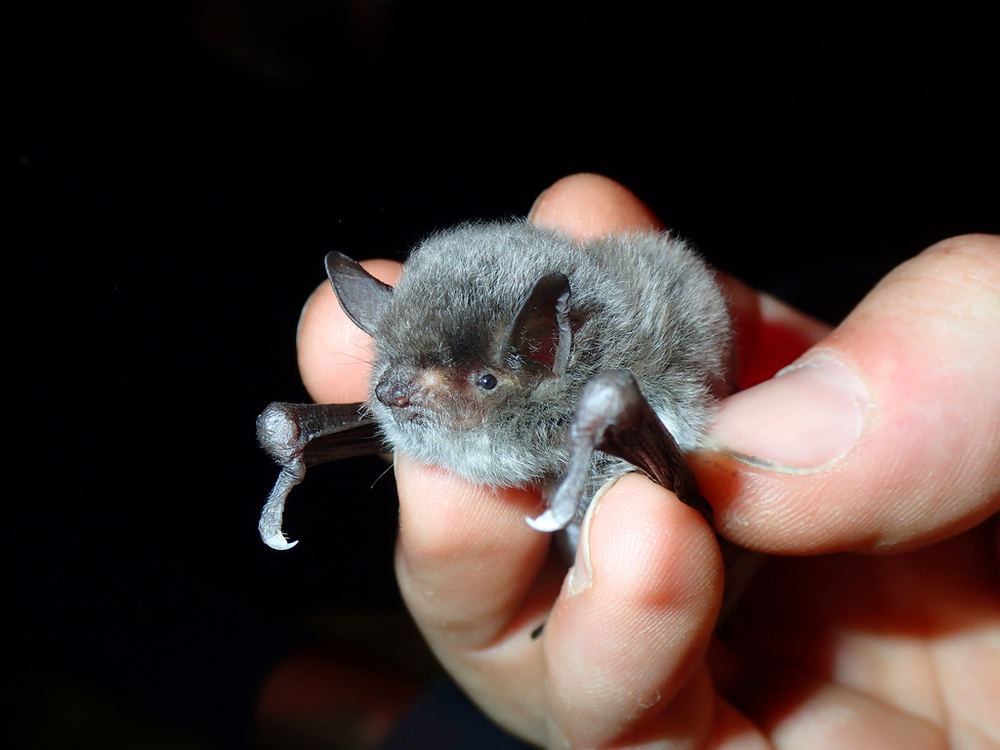
Photo: (c) Julien Renoult, some rights reserved (CC BY), uploaded by Julien Renoult · CC-BY (May be cropped or resized)
Myotis capaccinii
Basic stats
Diet
Fish, aquatic insects and small invertebrates
Habitat
Limestone areas near flowing water, with caves for roosting
Range
Coastal Mediterranean and western Iran
Size
Length 47–53mm
Weight
7–13g
The long-fingered bat is a small carnivorous vesper bat in the family Vespertilionidae. Its feet are characteristically large, which gives it its name, and its nostrils are more prominent than those of other European Myotis species. It measures 47–53mm and weighs 7–13g. The hind feet are 10–13mm long and bear long bristles. The hair is dark grey at the base, with light smoky grey on the back and light grey on the underside (Wikipedia, general species account; GBIF description, Vespertilionidae).
It is native to the coast of Morocco, Algeria and Tunisia, parts of the Iberian Peninsula, southern and south-eastern France, Bulgaria, Italy, part of the Balkan Peninsula and some Mediterranean islands such as Mallorca and Menorca. In Asia it stretches from Turkey to Uzbekistan. It lives in limestone areas near flowing water and roosts in caves in both summer and winter, sometimes in groups of up to 500. It hunts over rivers for fish, aquatic insects and small invertebrates such as ostracods and water fleas. Mating begins in August and can continue into late winter (Wikipedia, general species account; GBIF description, Vespertilionidae).
Quick answers
- What does the Long-fingered Myotis eat?
- Fish, aquatic insects and small invertebrates
- What habitat does the Long-fingered Myotis live in?
- Limestone areas near flowing water, with caves for roosting
- Where is the Long-fingered Myotis found?
- Coastal Mediterranean and western Iran
- How big is the Long-fingered Myotis?
- Length 47–53mm
- How much does the Long-fingered Myotis weigh?
- 7–13g