
 Wildlife
of Spain
Long-tailed Jaeger
Gulls, Terns, Skuas & Auks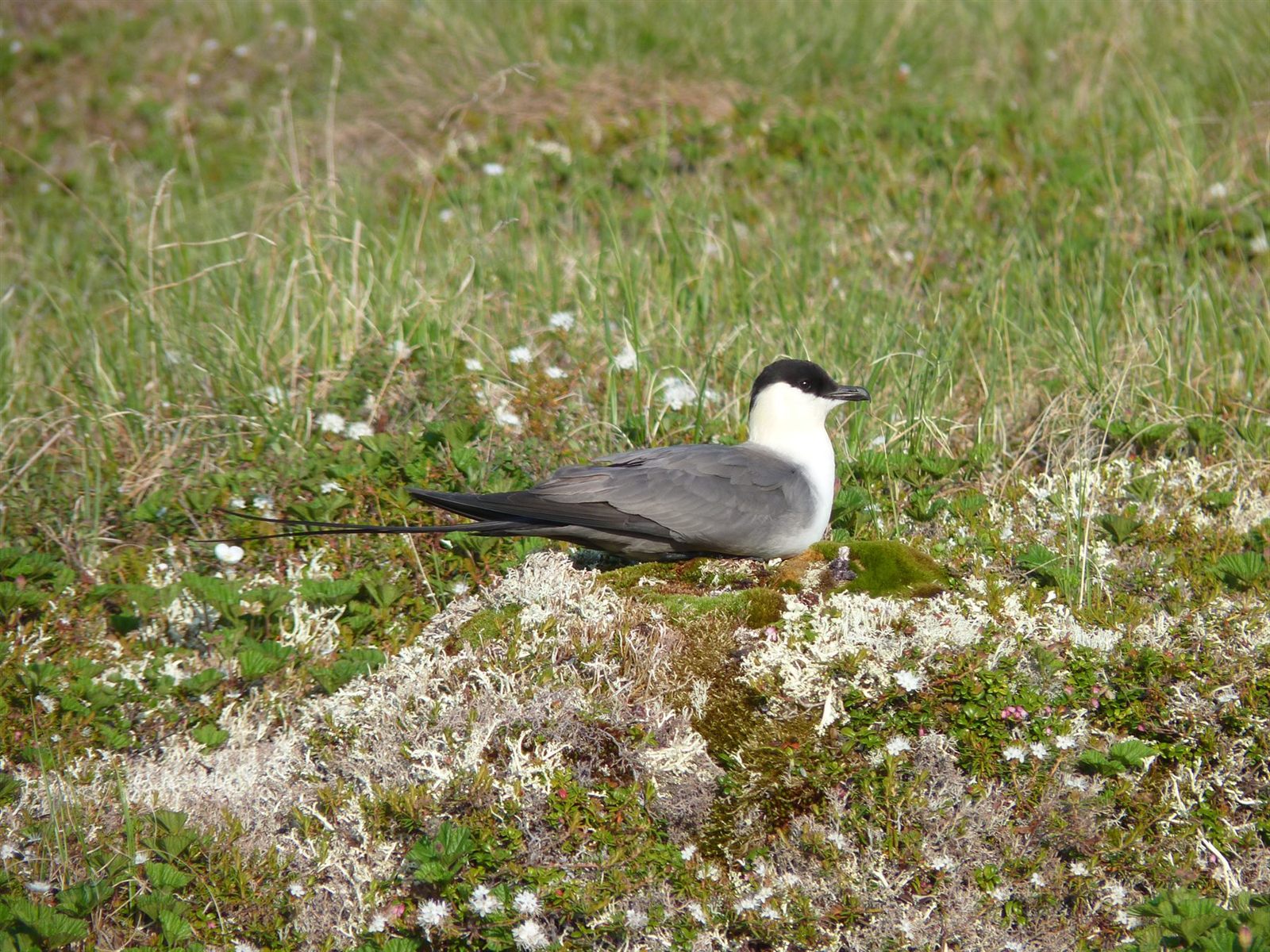
Photo: Kristine Sowl, USFWS · Public domain
Stercorarius longicaudus
Basic stats
Diet
Small mammals, birds, insects and other animal prey
Habitat
Arctic tundra when breeding; open ocean outside the breeding season
Range
Breeds across the high Arctic of Eurasia and North America; disperses widely through the Atlantic and Pacific
Clutch size
Usually 2 eggs
Incubation period
About 23 days
Size
38–58cm
Wingspan
102–117cm
Weight
Averages about 288g
The Long-tailed Jaeger is the smallest and most lightly built jaeger, with narrow wings and exceptionally long central tail feathers in breeding adults. Adults have a dark cap, pale neck and underparts, grey upperparts and a dark breast band, while juveniles are browner and more heavily barred. Its buoyant flight can appear tern-like. Including the variable tail, it measures 38–58 cm, spans 102–117 cm and averages about 288 g (Wikipedia, general species account; AVONET, Tobias et al. 2022).
Across the high Arctic of Eurasia and North America, the species nests on open tundra, then spends the non-breeding season far out at sea in the Atlantic and Pacific. On breeding grounds it takes small mammals, birds and insects, with animal prey dominating its diet; at sea it also obtains food from the water and may harry other seabirds. Two eggs are usual, and incubation averages about 23 days (Wikipedia, general species account; EltonTraits, Wilman et al. 2014; AnAge).
Quick answers
- What does the Long-tailed Jaeger eat?
- Small mammals, birds, insects and other animal prey
- What habitat does the Long-tailed Jaeger live in?
- Arctic tundra when breeding; open ocean outside the breeding season
- Where is the Long-tailed Jaeger found?
- Breeds across the high Arctic of Eurasia and North America; disperses widely through the Atlantic and Pacific
- How many eggs does the Long-tailed Jaeger lay?
- Usually 2 eggs
- How long are the eggs of the Long-tailed Jaeger incubated?
- About 23 days
- How big is the Long-tailed Jaeger?
- 38–58cm
- What is the wingspan of the Long-tailed Jaeger?
- 102–117cm
- How much does the Long-tailed Jaeger weigh?
- Averages about 288g