
 Wildlife
of Spain
Northern Fulmar
Shearwaters, Petrels & Albatrosses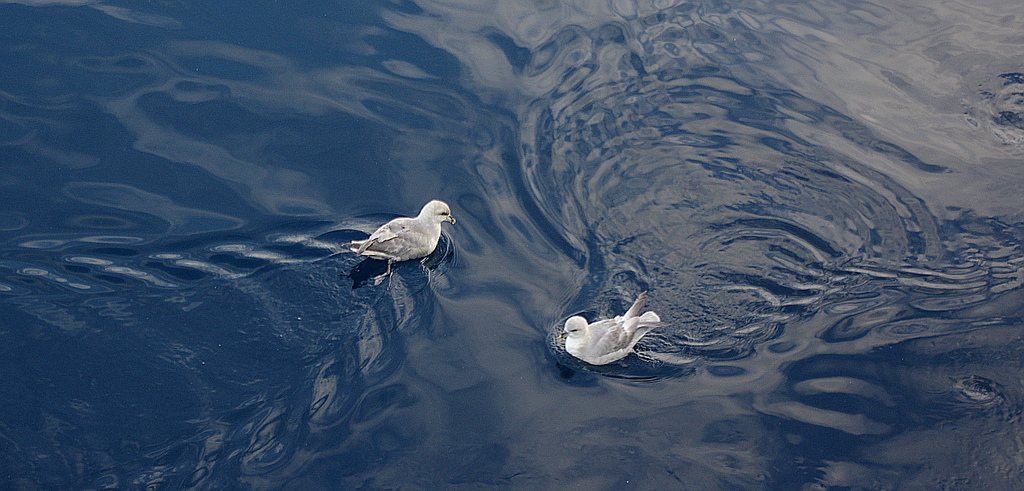
Photo: (c) Георгий Виноградов (Georgy Vinogradov), some rights reserved (CC BY) · CC BY 4.0 (May be cropped or resized)
Fulmarus glacialis
Basic stats
Diet
Fish and invertebrates
Habitat
Subarctic and temperate oceans; coastal cliffs for breeding
Range
North Atlantic and North Pacific oceans
Clutch size
1 egg
Incubation period
About 50–55 days
Size
About 46cm
Wingspan
102–112cm
Weight
Averages about 612g
The Northern Fulmar is a 46 cm tubenose with a 102–112 cm wingspan. Pale birds have a white head and body with grey wings and tail, while dark Arctic birds are grey throughout; intermediates also occur. A thick pale-yellow bill and stiff-winged flight distinguish it from superficially similar gulls. AVONET records an average mass of about 612 g (Wikipedia, general species account; AVONET, Tobias et al. 2022).
It ranges across the North Atlantic and North Pacific, breeding mainly on sea cliffs and spending winter offshore. Fish contribute 60% and invertebrates 40% to the EltonTraits diet profile. Birds take fish, squid, plankton, jellyfish, carrion and vessel refuse, sometimes diving several metres. A grassy ledge scrape or shallow ground nest contains one egg, incubated by both sexes for roughly 50–55 days. Adults and chicks can eject stomach oil in defence (Wikipedia, general species account; EltonTraits, Wilman et al. 2014).
Quick answers
- What does the Northern Fulmar eat?
- Fish and invertebrates
- What habitat does the Northern Fulmar live in?
- Subarctic and temperate oceans; coastal cliffs for breeding
- Where is the Northern Fulmar found?
- North Atlantic and North Pacific oceans
- How many eggs does the Northern Fulmar lay?
- 1 egg
- How long are the eggs of the Northern Fulmar incubated?
- About 50–55 days
- How big is the Northern Fulmar?
- About 46cm
- What is the wingspan of the Northern Fulmar?
- 102–112cm
- How much does the Northern Fulmar weigh?
- Averages about 612g