
 Wildlife
of Spain
Rock Pipit
Larks, Pipits & Wagtails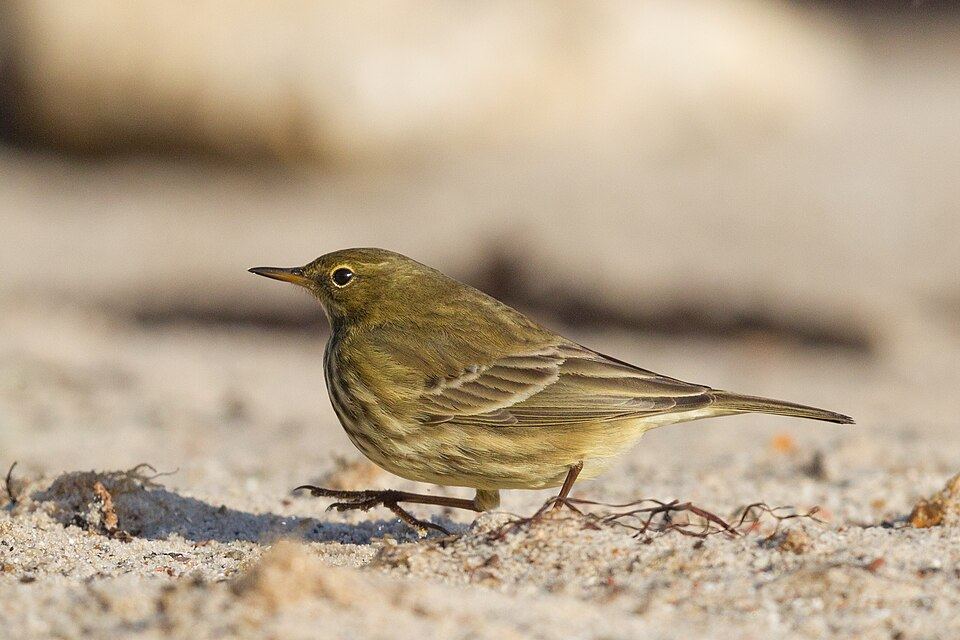
Photo: Andreas Trepte · CC BY-SA 2.5 (May be cropped or resized)
Anthus petrosus
Basic stats
Diet
Small invertebrates
Habitat
Rocky coasts
Range
Western Europe
Clutch size
4–6 eggs
The Rock Pipit is a small passerine that breeds on rocky coasts in western Europe. Its nominate subspecies stays in place, while the Fennoscandian form migrates west and south along European shores for winter. Resident birds defend territories during the breeding season and throughout the year where they remain. Adults measure about 16.5–17 cm in length. (Wikipedia, general species account)
Nests are cup-shaped and placed beneath coastal plants or in cliff crevices, holding four to six pale grey, speckled eggs. The pipit takes small invertebrates from rocks and shallow water, though it sometimes catches insects in flight; the sexes look alike. Resident birds defend territories year-round, and males sometimes help neighbors repel intruders. The sexes look alike. (Wikipedia, general species account)
Where to see Rock Pipit in Spain
GBIF records grouped by protected area. They show where the species has been reported, not that it is there now, and they are not population counts.
Recorded in 4 protected areas (1978–2024).
- Reserva Natural Parcial de la Ría de Villaviciosa: 32 records (1978–2024)
- LIC Jaizkibel BGL: 4 records (1994–2022)
- Zona Húmida Protexida Ría de Ortigueira e Ladrido: 4 records (1999–2019)
- Parc natural d'es Trenc i el Salobrar de Campos: 3 records (2007–2023)
Quick answers
- What does the Rock Pipit eat?
- Small invertebrates
- What habitat does the Rock Pipit live in?
- Rocky coasts
- Where is the Rock Pipit found?
- Western Europe
- How many eggs does the Rock Pipit lay?
- 4–6 eggs