
 Wildlife
of Spain
Savi's Warbler
Warblers & Kinglets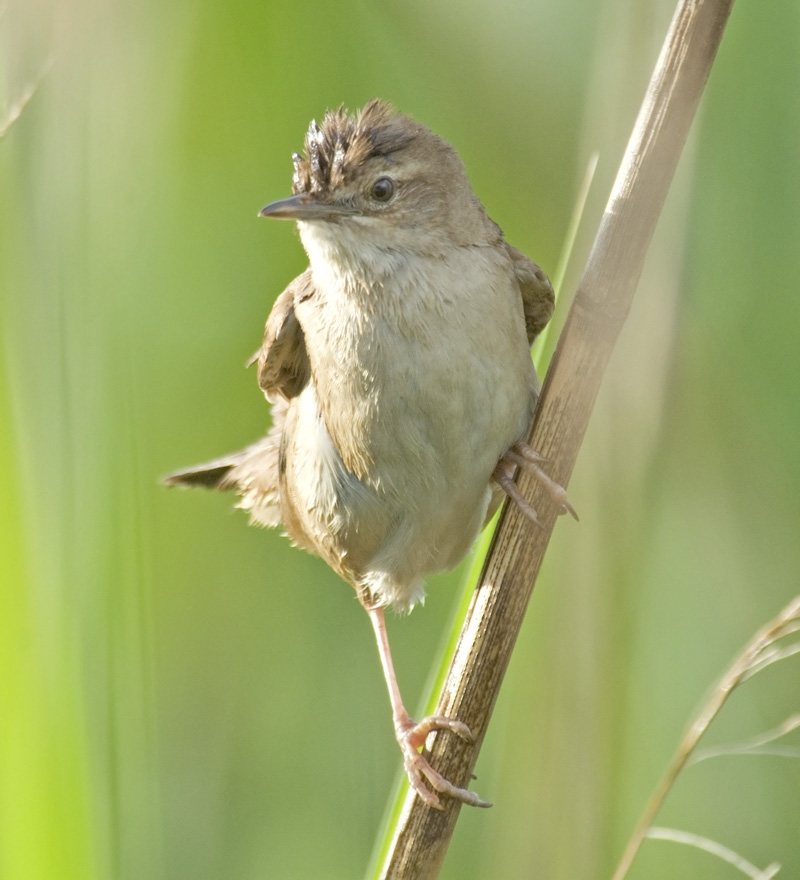
Photo: Created by Sergey Yeliseev. · CC BY 2.0 (May be cropped or resized)
Locustella luscinioides
Basic stats
Diet
Invertebrates
Habitat
Reedbeds, marshes and lagoons with dense waterside vegetation
Range
Breeds from western Europe to Central Asia; winters in northern and sub-Saharan Africa
Clutch size
Usually 4–6 eggs
Incubation period
About 12 days
Size
About 14cm
Weight
Averages about 14g
Savi's Warbler is a 14 cm wetland warbler with uniform dark reddish-brown upperparts, pale buff underparts and no obvious streaking. Males and females look alike, while juveniles are yellower below. AVONET and AnAge both give an average mass of about 14 g. Its mechanical, insect-like reel is deeper and faster than that of the Common Grasshopper Warbler and is often delivered near dusk (Wikipedia, general species account; AVONET, Tobias et al. 2022; AnAge).
It breeds from western Europe through the western Palearctic to Central Asia, then winters in northern and sub-Saharan Africa. Reedbeds, marshes and lagoons with sedges, bushes and other dense waterside growth provide habitat. Invertebrates form the entire EltonTraits diet profile. Birds usually remain among stems but climb exposed reeds to sing. The female builds a concealed platform nest, lays four to six eggs and incubates them for about 12 days (Wikipedia, general species account; EltonTraits, Wilman et al. 2014).
Where to see Savi's Warbler in Spain
GBIF records grouped by protected area. They show where the species has been reported, not that it is there now, and they are not population counts.
Recorded in 10 protected areas (1990–2024). The 8 with the most records:
- LIC-ZEPA Embalse de las Cañas: 27 records (1990–2024)
- els Carrissars d'Elx: 20 records (2016–2024)
- Paisaje Protegido Corredor Verde del Guadiamar: 16 records (2019–2023)
- ZEPA Carrizales y Sotos de Aranjuez: 13 records (2019–2024)
- ZEC-ZEPA Laguna de Pitillas: 11 records (2002–2022)
- Reserva Natural Dirigida de la Laguna de Gallocanta: 9 records (2010–2021)
- ZEC Badina Escudera KBE: 6 records (2003–2023)
- Parque Natural de las Lagunas de Ruidera: 5 records (2020–2023)
Quick answers
- What does the Savi's Warbler eat?
- Invertebrates
- What habitat does the Savi's Warbler live in?
- Reedbeds, marshes and lagoons with dense waterside vegetation
- Where is the Savi's Warbler found?
- Breeds from western Europe to Central Asia; winters in northern and sub-Saharan Africa
- How many eggs does the Savi's Warbler lay?
- Usually 4–6 eggs
- How long are the eggs of the Savi's Warbler incubated?
- About 12 days
- How big is the Savi's Warbler?
- About 14cm
- How much does the Savi's Warbler weigh?
- Averages about 14g