
 Wildlife
of Spain
Southern Royal Albatross
Shearwaters, Petrels & Albatrosses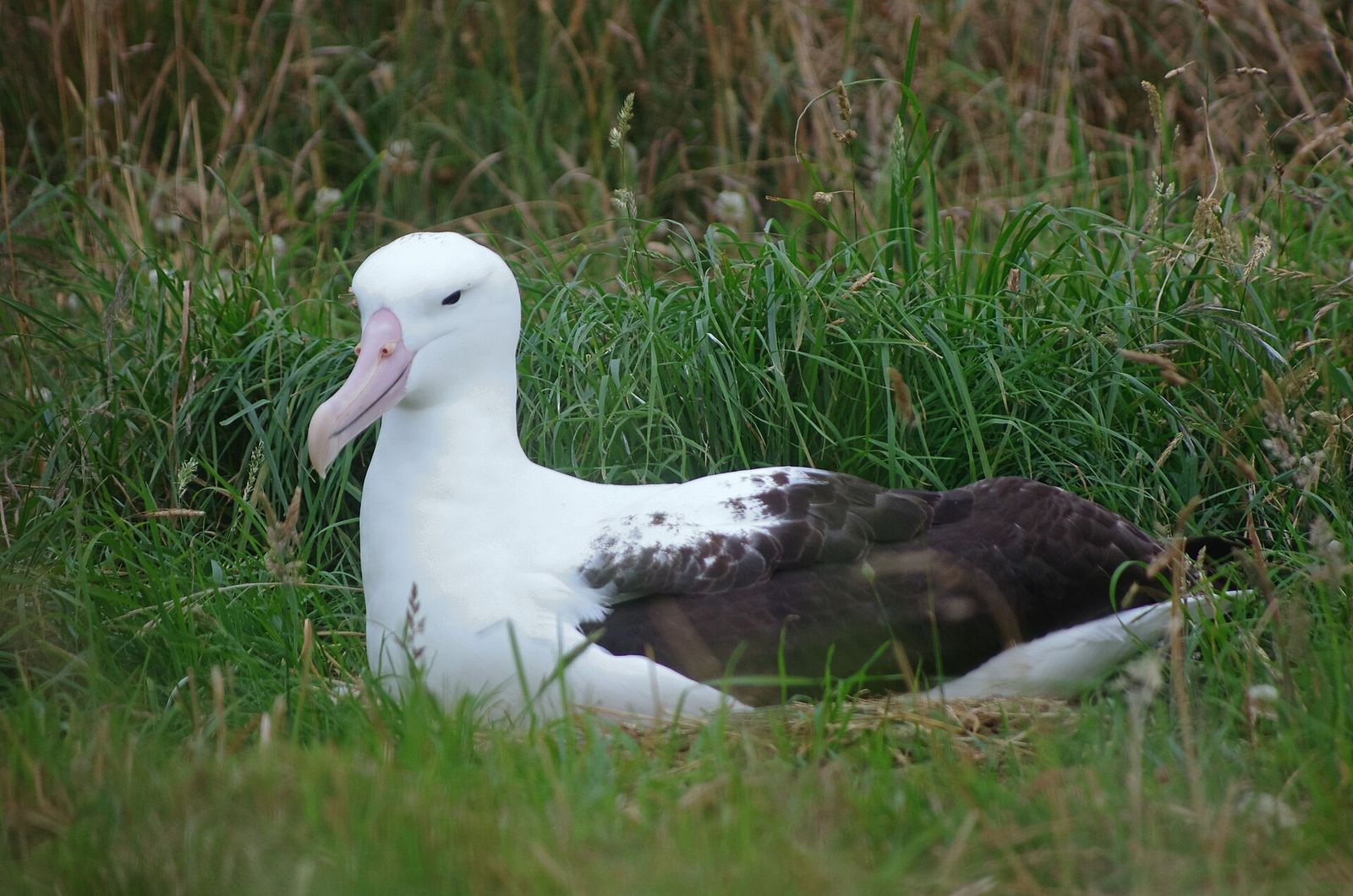
Photo: Alfie↑↓© (Helmut Schütz) · CC BY-SA 4.0 (May be cropped or resized)
Diomedea epomophora
Basic stats
Diet
Invertebrates
Habitat
Open southern oceans; tussock grassland, plateaus and ridges at colonies
Range
Southern oceans between New Zealand and southern South America; breeds mainly on Campbell and Auckland islands
Clutch size
1 egg
Size
112–123cm
Wingspan
About 290–328cm
Weight
Averages about 8906g
The Southern Royal Albatross is among the world's largest flying birds, measuring 112–123 cm with an average wingspan reported at about 2.9–3.28 m. Adults become predominantly white with black wings, and all ages have a pink bill edged in black. Younger birds retain dark upperwings and scattered dark markings. AVONET records an average mass of about 8,906 g, close to the AnAge figure (Wikipedia, general species account; AVONET, Tobias et al. 2022; AnAge).
It ranges across southern oceans, especially between New Zealand and southern South America, and breeds mainly on Campbell and the Auckland islands. Tussock grassland, plateaus and ridges provide nesting ground with room for take-off. Invertebrates form 90% of the EltonTraits diet profile; the species account identifies squid as a major food. Pairs use snapping, clapping and sky-pointing displays and usually lay a single egg only every second year (Wikipedia, general species account; EltonTraits, Wilman et al. 2014; Collins Birds of the World).
Quick answers
- What does the Southern Royal Albatross eat?
- Invertebrates
- What habitat does the Southern Royal Albatross live in?
- Open southern oceans; tussock grassland, plateaus and ridges at colonies
- Where is the Southern Royal Albatross found?
- Southern oceans between New Zealand and southern South America; breeds mainly on Campbell and Auckland islands
- How many eggs does the Southern Royal Albatross lay?
- 1 egg
- How big is the Southern Royal Albatross?
- 112–123cm
- What is the wingspan of the Southern Royal Albatross?
- About 290–328cm
- How much does the Southern Royal Albatross weigh?
- Averages about 8906g