
 Wildlife
of Spain
Tarentola angustimentalis
Geckos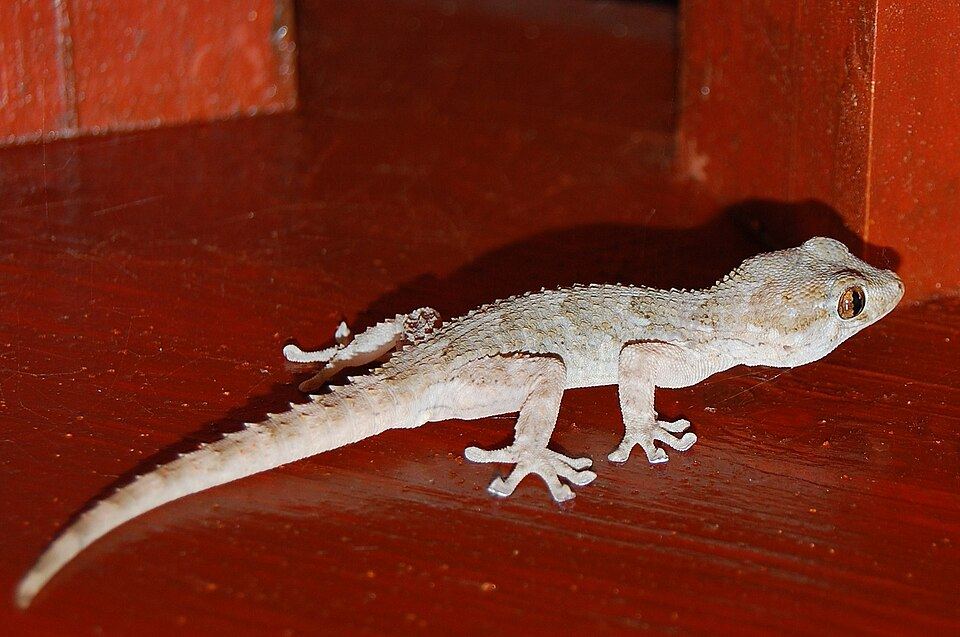
Photo: Chemi Pérez · CC BY-SA 4.0 (May be cropped or resized)
Tarentola angustimentalis
Basic stats
Habitat
Shrubland, rocky shores, dunes, cultivated land, and houses
Range
Fuerteventura, Lanzarote, Lobos, and smaller islands north of Lanzarote
Size
About 8 cm snout to vent
The East Canary gecko, also called the Canary wall gecko, is native to the eastern Canary Islands. It occurs on Fuerteventura, Lanzarote, Lobos, and smaller islands north of Lanzarote. Its sturdy body reaches about 8 cm from snout to vent, with a tail of similar length. Greyish-brown coloring varies, with a pale stripe along the back and darker crossbars; the underside can be yellowish near the vent. (Wikipedia, general species account)
It uses habitats up to about 800 m, including cliffs, screes, gullies, scrubby salt flats, dunes, cultivated land, and houses. Its prey includes insects, spiders, and other small invertebrates. Males are larger than females and defend territories during the breeding season. Females lay oval eggs about 1.2 cm long, with two eggs in each clutch. They deposit one or more clutches in cracks, beneath stones, or buried in sand. The eggs hatch in roughly two to three months, and hatchlings measure 2–3 cm from snout to vent. (Wikipedia, general species account)
Quick answers
- What habitat does the Tarentola angustimentalis live in?
- Shrubland, rocky shores, dunes, cultivated land, and houses
- Where is the Tarentola angustimentalis found?
- Fuerteventura, Lanzarote, Lobos, and smaller islands north of Lanzarote
- How big is the Tarentola angustimentalis?
- About 8 cm snout to vent