
 Wildlife
of Spain
Western Black-eared Wheatear
Thrushes, Chats & Flycatchers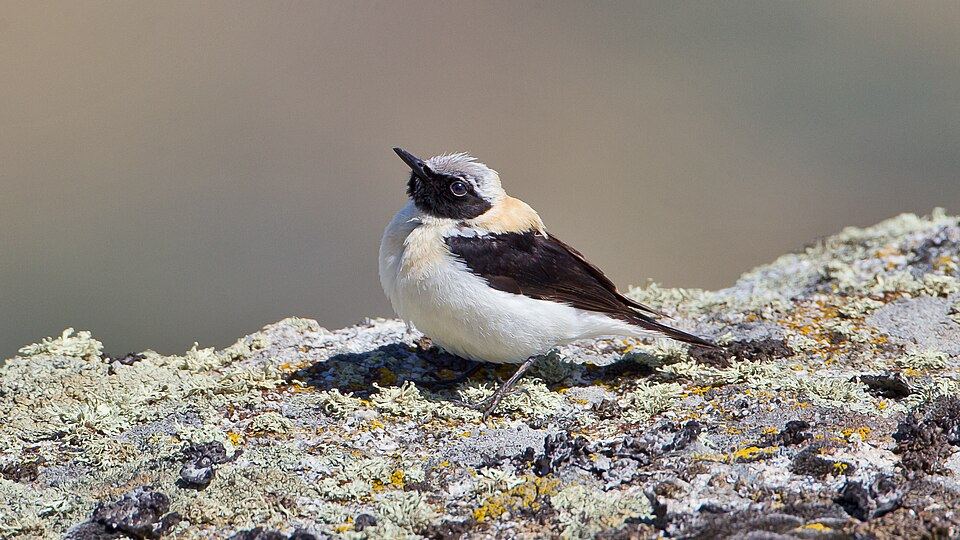
Photo: Juan Lacruz · CC BY-SA 3.0 (May be cropped or resized)
Oenanthe hispanica
The western black-eared wheatear (Oenanthe hispanica) is a small migratory passerine now placed in Muscicapidae, the Old World flycatchers; it was formerly grouped with Turdidae, the thrushes. Some authorities still treat it as the same species as the eastern black-eared wheatear. The underside is white with a buff tint. White covers much of the back and tail, including the upper tail coverts. (Wikipedia, general species account)
A black mask links the ear coverts and bill, while the throat may be black or white. Cooler months bring a distinct buff cast to the head, mantle and underparts; it extends to the throat where the black mask is absent, with intensity varying among birds. Apart from the central tail pair, its tail is far whiter than the northern wheatear’s, and white on the inner web often reaches the feather tips. (Wikipedia, general species account)
Where to see Western Black-eared Wheatear in Spain
GBIF records grouped by protected area. They show where the species has been reported, not that it is there now, and they are not population counts.
Recorded in 29 protected areas (1964–2025). The 8 with the most records:
- Monfragüe National Park: 719 records (1980–2025)
- ZEC-ZEPA Laguna de Pitillas: 349 records (1984–2024)
- ZEC Peñadil - Montecillo - Monterrey KBE: 330 records (1988–2024)
- Parque Regional El Valle y Carrascoy: 131 records (1976–2024)
- Reserva Marina de l'Illa de Tabarca: 69 records (2015–2024)
- LIC Yesos de la Ribera Estellesa: 63 records (2007–2024)
- Reserva natural de las Islas Columbretes: 63 records (1998–2024)
- Galacho de Juslibol: 60 records (1988–2024)