
 Wildlife
of Spain
White-backed Woodpecker
Woodpeckers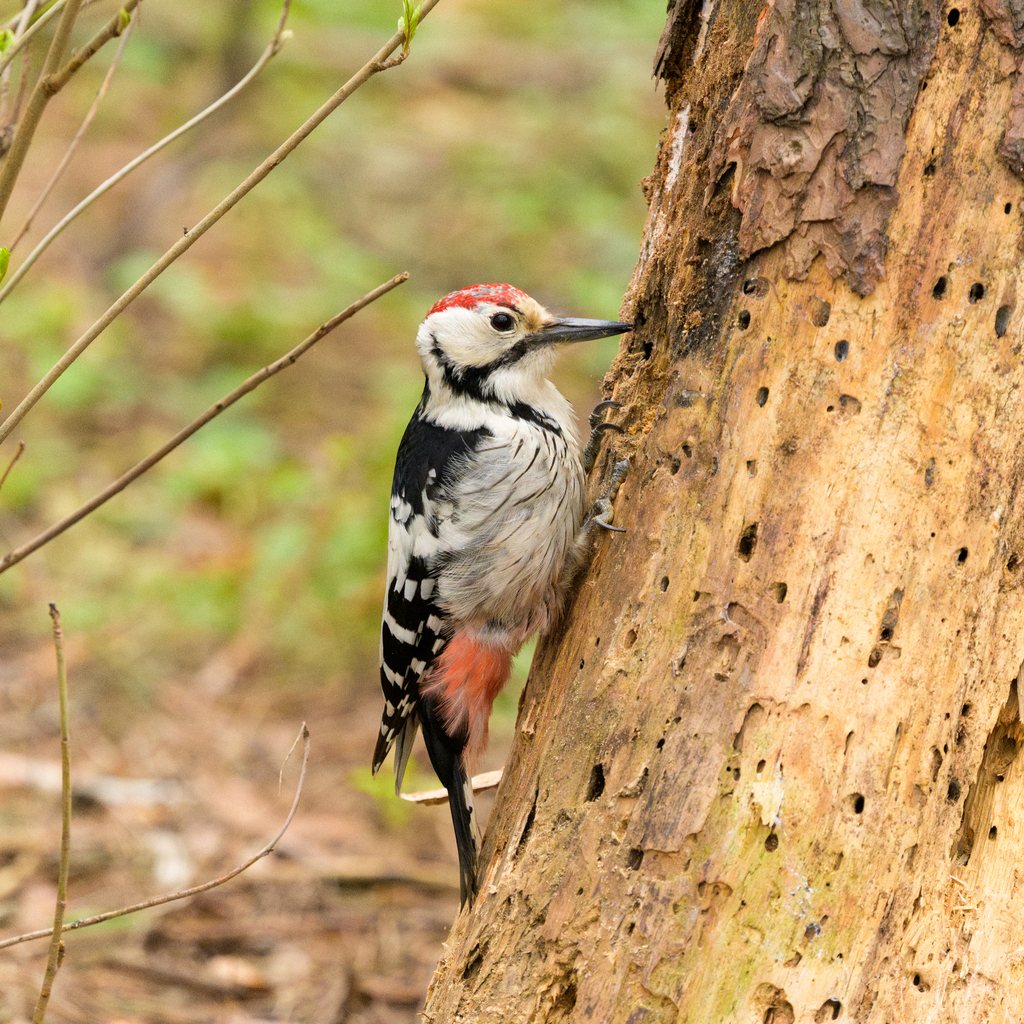
Photo: (c) Павел Кунгуров, some rights reserved (CC BY) · CC BY 4.0 (May be cropped or resized)
Dendrocopos leucotos
Basic stats
Diet
Mostly invertebrates, with fruit
Habitat
Mature deciduous forest rich in dead wood
Range
Central and northern Europe through temperate Asia to Korea and Japan
Clutch size
3–5 eggs
Incubation period
10–11 days
Size
24–26cm
Wingspan
38–40cm
Weight
Averages about 117g
The White-backed Woodpecker is the largest spotted woodpecker in the western Palearctic, measuring 24–26 cm with a 38–40 cm wingspan. White wing bars and a white lower back contrast with otherwise black-and-white plumage; males have a red crown and females a black one. AVONET records an average mass of about 117 g (Wikipedia, general species account; AVONET, Tobias et al. 2022).
From central and northern Europe east to Korea and Japan, it depends on extensive mature deciduous forest with abundant standing and fallen dead wood. Wood-boring beetles and larvae are especially important, while fruit contributes 20% of the EltonTraits diet profile. A cavity excavated in a decaying trunk contains three to five white eggs, incubated for 10–11 days (Wikipedia, general species account; EltonTraits, Wilman et al. 2014).
Quick answers
- What does the White-backed Woodpecker eat?
- Mostly invertebrates, with fruit
- What habitat does the White-backed Woodpecker live in?
- Mature deciduous forest rich in dead wood
- Where is the White-backed Woodpecker found?
- Central and northern Europe through temperate Asia to Korea and Japan
- How many eggs does the White-backed Woodpecker lay?
- 3–5 eggs
- How long are the eggs of the White-backed Woodpecker incubated?
- 10–11 days
- How big is the White-backed Woodpecker?
- 24–26cm
- What is the wingspan of the White-backed Woodpecker?
- 38–40cm
- How much does the White-backed Woodpecker weigh?
- Averages about 117g