
 Wildlife
of Spain
Bar-headed Goose
Ducks, Geese & Swans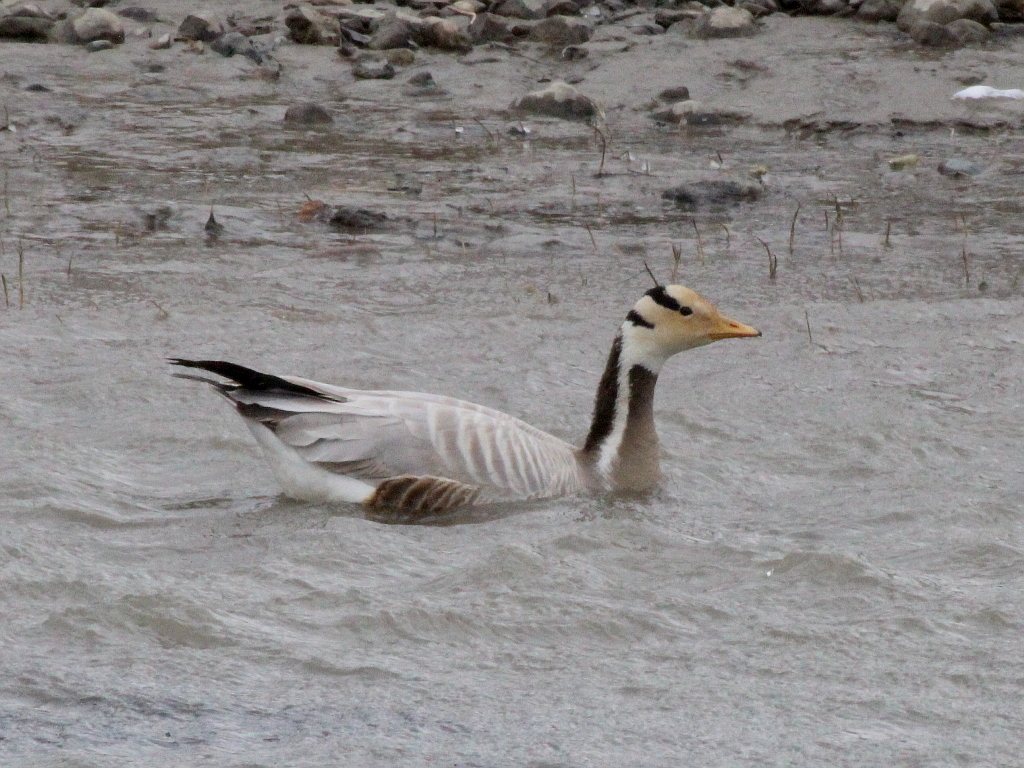
Photo: (c) Andrew Bazdyrev, some rights reserved (CC BY) · CC-BY (May be cropped or resized)
Anser indicus
Basic stats
Diet
Grasses and other plant material
Habitat
High-altitude lakes and marshes when breeding; fields and wetlands in winter
Range
Breeds in Central Asia and winters in South Asia
Clutch size
3–8 eggs
Size
71–76cm
Weight
Averages about 2213g
The Bar-headed Goose is a medium-sized, pale grey goose distinguished by two black bars across its otherwise white head. Adults measure about 71–76 cm and average roughly 2,213 g. The species is famous for crossing the Himalayas, using physiological adaptations that improve oxygen uptake and transport in thin air. Tracking shows that most travel follows valleys and passes, although some individuals climb above 7,000 m (Wikipedia, general species account; AVONET, Tobias et al. 2022).
The species breeds beside high-altitude lakes and marshes in Central Asia and migrates to South Asia for winter. It grazes on short grass in summer and feeds in cultivated fields during winter, taking crops such as barley, rice and wheat. Plant material makes up the entire EltonTraits diet profile. Ground nests hold three to eight eggs, and breeding colonies can contain large numbers of birds (Wikipedia, general species account; EltonTraits, Wilman et al. 2014).
Quick answers
- What does the Bar-headed Goose eat?
- Grasses and other plant material
- What habitat does the Bar-headed Goose live in?
- High-altitude lakes and marshes when breeding; fields and wetlands in winter
- Where is the Bar-headed Goose found?
- Breeds in Central Asia and winters in South Asia
- How many eggs does the Bar-headed Goose lay?
- 3–8 eggs
- How big is the Bar-headed Goose?
- 71–76cm
- How much does the Bar-headed Goose weigh?
- Averages about 2213g