
 Wildlife
of Spain
Black Kite
Eagles, Hawks & Vultures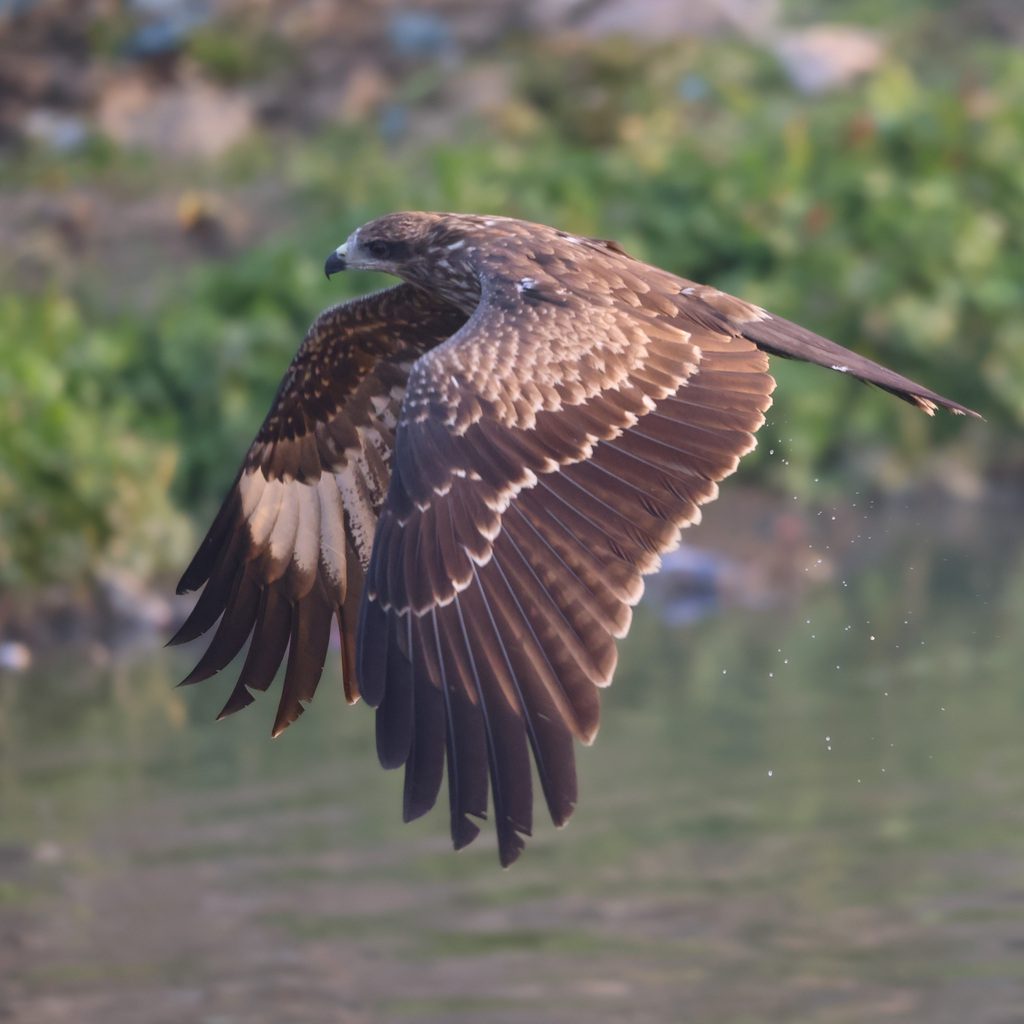
Photo: Andy Wilson · CC0 1.0
Milvus migrans
Basic stats
Diet
Mostly carrion, with fish, small vertebrates and invertebrates
Habitat
Woodlands and open or human-modified landscapes, usually with trees for nesting
Range
Much of Europe, Africa, Asia and Australasia
Weight
Averages about 734g
The Black Kite is a widespread medium-sized raptor occurring through much of Europe, Africa, Asia and Australasia. Its long wings and shallowly forked tail are conspicuous in flight, while the plumage is mainly dark brown with lighter streaking on the head and breast. The species occupies woodland edges, open country and many human-modified landscapes. Some populations migrate over long distances, whereas others remain within the same broad region throughout the year. (Wikipedia, general species account)
An opportunistic feeder, the Black Kite searches from the air and takes carrion more heavily than live prey in the trait dataset. Fish, small vertebrates and invertebrates supplement scavenged food, and birds readily exploit refuse around settlements. Its aerial lifestyle is reflected in long, angled wings and a manoeuvrable tail. Pairs build stick nests in trees, sometimes decorating them with assorted materials. AVONET reports a species mean mass of about 734.1 g. (EltonTraits, Wilman et al. 2014; AVONET, Tobias et al. 2022; Wikipedia, general species account)
Where to see Black Kite in Spain
GBIF records grouped by protected area. They show where the species has been reported, not that it is there now, and they are not population counts.
Recorded in 83 protected areas (1964–2026). The 8 with the most records:
- Monfragüe National Park: 5,700 records (1973–2025)
- ZEPA Estepas Cerealistas de los ríos Jarama y Henares: 1,368 records (1997–2026)
- LIC-ZEPA Embalse de las Cañas: 720 records (1988–2024)
- ZEC-ZEPA Laguna de Pitillas: 512 records (1986–2024)
- ZEC Peñadil - Montecillo - Monterrey KBE: 393 records (1997–2024)
- ZEC-ZEPA Sierra de Leire: 371 records (1990–2024)
- Reserva Natural Dirigida de la Laguna de Gallocanta: 328 records (1997–2024)
- Galacho de Juslibol: 308 records (1986–2024)
Quick answers
- What does the Black Kite eat?
- Mostly carrion, with fish, small vertebrates and invertebrates
- What habitat does the Black Kite live in?
- Woodlands and open or human-modified landscapes, usually with trees for nesting
- Where is the Black Kite found?
- Much of Europe, Africa, Asia and Australasia
- How much does the Black Kite weigh?
- Averages about 734g