
 Wildlife
of Spain
Black-legged Kittiwake
Gulls, Terns, Skuas & Auks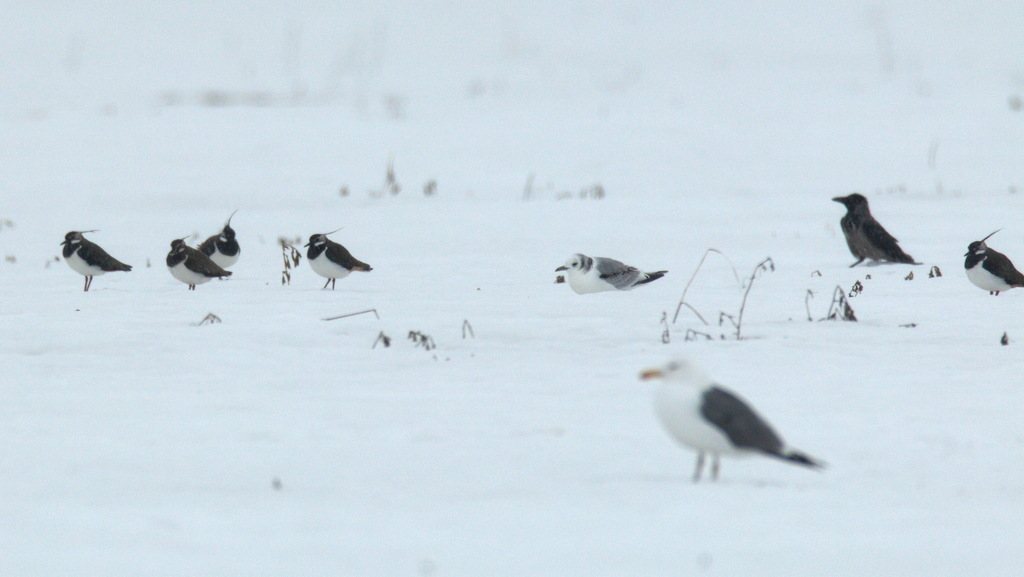
Photo: (c) Вячеслав Юсупов, some rights reserved (CC BY) · CC BY 4.0 (May be cropped or resized)
Rissa tridactyla
Basic stats
Diet
Fish, marine invertebrates and other small animals
Habitat
Open sea and coastal nesting cliffs
Range
Arctic and subarctic North Atlantic and North Pacific, dispersing farther south in winter
Clutch size
Averages about 2 eggs
Incubation period
Averages about 27 days
Size
37–41cm
Wingspan
91–105cm
Weight
Averages about 416g
The Black-legged Kittiwake is a compact oceanic gull, 37–41 cm long with a 91–105 cm wingspan and an average AVONET mass of 416 g. Adults have a white head and body, grey back and wings, solid black wingtips, black legs and a yellow bill. In winter, a grey mark appears behind the eye and the hindneck becomes greyer (Wikipedia, general species account; AVONET, Tobias et al. 2022).
Across Arctic and subarctic North Atlantic and North Pacific waters, it spends most of the year at sea and comes ashore mainly to breed on steep coastal cliffs. Fish and marine invertebrates dominate the diet, with other small animals also substantial. Birds nest colonially on narrow ledges, where their carrying calls create a noisy breeding colony. Clutches average two eggs and incubation about 27 days (Wikipedia, general species account; EltonTraits, Wilman et al. 2014; AnAge).
Where to see Black-legged Kittiwake in Spain
GBIF records grouped by protected area. They show where the species has been reported, not that it is there now, and they are not population counts.
Recorded in 8 protected areas (1979–2024).
- LIC Jaizkibel BGL: 349 records (1984–2024)
- Parque Natural de la Bahía de Cádiz: 5 records (2009–2021)
- Zona Húmida Protexida Ría de Ortigueira e Ladrido: 5 records (2005–2023)
- Parque Natural de Bahía de Cádiz: 4 records (2009–2019)
- Reserva Natural Parcial de la Ría de Villaviciosa: 4 records (1979–2023)
- Monfragüe National Park: 3 records (2009)
- Parc Agrari del Baix Llobregat: 3 records (2022)
- Reserva natural de las Islas Columbretes: 3 records (2022–2023)
Quick answers
- What does the Black-legged Kittiwake eat?
- Fish, marine invertebrates and other small animals
- What habitat does the Black-legged Kittiwake live in?
- Open sea and coastal nesting cliffs
- Where is the Black-legged Kittiwake found?
- Arctic and subarctic North Atlantic and North Pacific, dispersing farther south in winter
- How many eggs does the Black-legged Kittiwake lay?
- Averages about 2 eggs
- How long are the eggs of the Black-legged Kittiwake incubated?
- Averages about 27 days
- How big is the Black-legged Kittiwake?
- 37–41cm
- What is the wingspan of the Black-legged Kittiwake?
- 91–105cm
- How much does the Black-legged Kittiwake weigh?
- Averages about 416g