
 Wildlife
of Spain
Blue Rock-Thrush
Thrushes, Chats & Flycatchers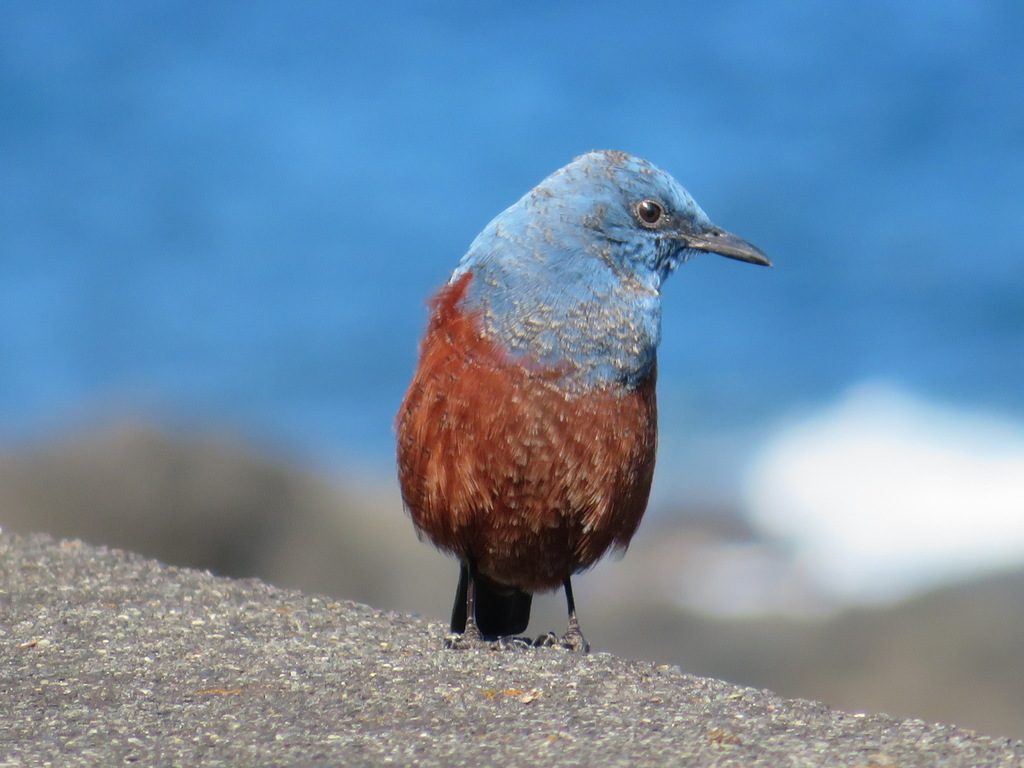
Photo: Marco Mussita · CC BY 4.0 (May be cropped or resized)
Monticola solitarius
Basic stats
Diet
Invertebrates, fruit and small vertebrates
Habitat
Rocky cliffs, quarries, ravines and built structures
Range
Southern Europe and northwestern Africa through Central and southern Asia to China and Southeast Asia
Size
21–23cm
Weight
Averages about 54g
The Blue Rock-Thrush is a starling-sized, long-billed chat measuring 21–23 cm. In the nominate form, breeding males are blue-grey apart from darker wings, whereas females and young birds are brown above with paler, scale-patterned underparts. Some eastern males also show extensive chestnut below. Both sexes lack the reddish outer tail feathers associated with the related rock thrush, and males deliver clear, melodious songs (Wikipedia, general species account).
Across southern Europe, northwestern Africa and a broad Asian range, the species is strongly associated with exposed rock. It occupies sea cliffs, mountain faces, ravines, quarries and buildings, using ledges and cavities for nesting. Some populations remain year-round, while others migrate or move downslope outside the breeding season. The diet combines invertebrates and fruit with small vertebrates, reflecting its broad omnivorous feeding profile (Wikipedia, general species account; EltonTraits, Wilman et al. 2014).
Where to see Blue Rock-Thrush in Spain
GBIF records grouped by protected area. They show where the species has been reported, not that it is there now, and they are not population counts.
Recorded in 60 protected areas (1977–2026). The 8 with the most records:
- Monfragüe National Park: 6,451 records (1980–2026)
- ZEC-ZEPA Sierra de Leire: 313 records (1985–2024)
- Galacho de Juslibol: 259 records (2002–2024)
- LIC Sistema fluvial Irati-Urrobi-Erro: 221 records (1985–2024)
- Parque Regional El Valle y Carrascoy: 97 records (1977–2024)
- ZEC-ZEPA Alto Tajo: 97 records (2017–2024)
- Reserva Marina de la Península de Llevant: 87 records (1995–2024)
- ZEC de la Foz de Arbaiun: 76 records (1985–2024)
Quick answers
- What does the Blue Rock-Thrush eat?
- Invertebrates, fruit and small vertebrates
- What habitat does the Blue Rock-Thrush live in?
- Rocky cliffs, quarries, ravines and built structures
- Where is the Blue Rock-Thrush found?
- Southern Europe and northwestern Africa through Central and southern Asia to China and Southeast Asia
- How big is the Blue Rock-Thrush?
- 21–23cm
- How much does the Blue Rock-Thrush weigh?
- Averages about 54g