
 Wildlife
of Spain
Common Eider
Ducks, Geese & Swans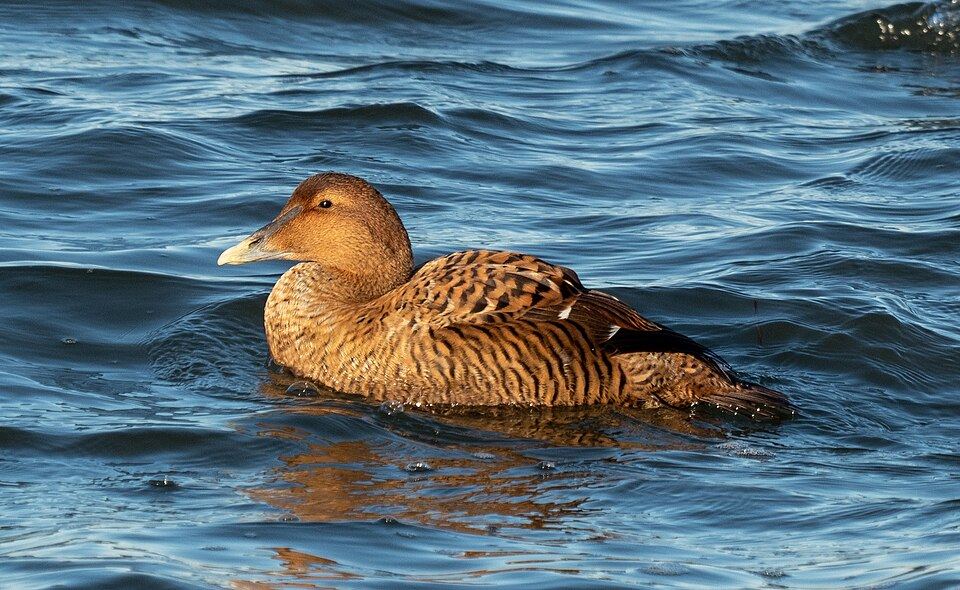
Photo: Rhododendrites · CC BY-SA 4.0 (May be cropped or resized)
Somateria mollissima
Basic stats
Diet
Marine invertebrates
Habitat
Northern coastal waters
Range
Northern Europe, North America and eastern Siberia
Clutch size
About 4 eggs
Incubation period
About 28 days
Size
50–71cm
Weight
Average 2,061g
The Common Eider is a large sea duck of northern coasts of eastern Siberia, Europe and North America. Its breeding grounds lie in Arctic and northern temperate regions and spends winter somewhat farther south, often in large coastal flocks. Its body measures 50–71 cm. AVONET gives an average mass of 2,061 g and classifies it as an aquatic predator (Wikipedia, general species account; AVONET, Tobias et al. 2022).
Eiders nest near the sea, lining the nest with soft down plucked from the female's breast. They dive for marine food, and EltonTraits assigns 70% of their diet to invertebrates. AnAge reports a clutch of about four eggs and an incubation period near 28 days. The birds dive for mussels and other molluscs, swallowing mussels whole and crushing their shells in the gizzard (Wikipedia, general species account; EltonTraits, Wilman et al. 2014; AnAge).
Where to see Common Eider in Spain
GBIF records grouped by protected area. They show where the species has been reported, not that it is there now, and they are not population counts.
Recorded in 4 protected areas (1978–2024).
- Paraje Natural Río Palmones: 35 records (2024)
- Zona Húmida Protexida Ría de Ortigueira e Ladrido: 11 records (2005–2019)
- Gaztelugatxeko natura monumentua: 3 records (2018)
- Reserva Natural Parcial de la Ría de Villaviciosa: 3 records (1978–1997)
Quick answers
- What does the Common Eider eat?
- Marine invertebrates
- What habitat does the Common Eider live in?
- Northern coastal waters
- Where is the Common Eider found?
- Northern Europe, North America and eastern Siberia
- How many eggs does the Common Eider lay?
- About 4 eggs
- How long are the eggs of the Common Eider incubated?
- About 28 days
- How big is the Common Eider?
- 50–71cm
- How much does the Common Eider weigh?
- Average 2,061g