
 Wildlife
of Spain
Greater Scaup
Ducks, Geese & Swans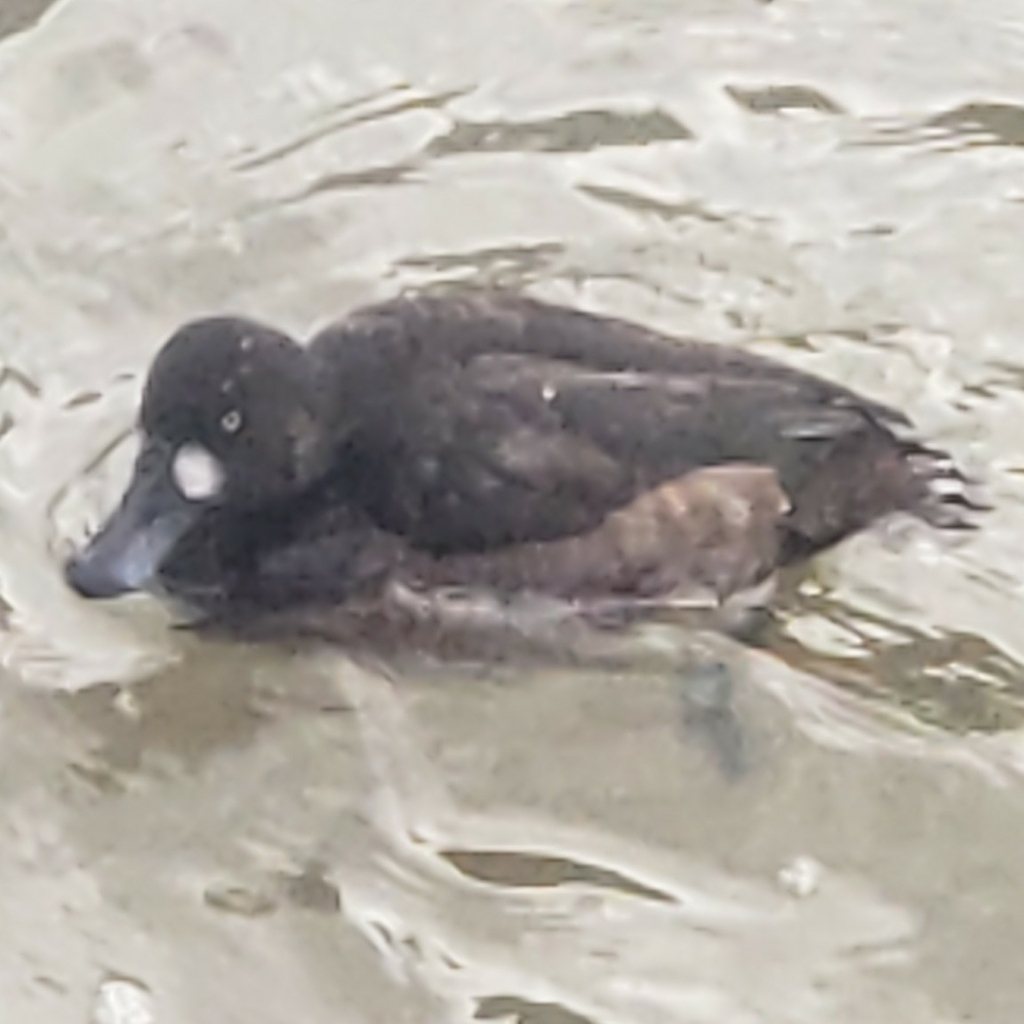
Photo: (c) Gavin Slater, some rights reserved (CC BY) · CC-BY (May be cropped or resized)
Aythya marila
Basic stats
Diet
Mostly aquatic molluscs, insects and other invertebrates
Habitat
Marshy tundra and islands in northern lakes when breeding; coastal bays, estuaries and large lakes in winter
Range
Breeds around the northern Holarctic; winters on temperate coasts of Europe, Asia and North America
Clutch size
Usually 6–9 eggs
Incubation period
24–28 days
Size
39–56cm
Wingspan
71–84cm
Weight
Averages about 1005g
The Greater Scaup is a medium-sized diving duck with a broad blue-grey bill and yellow eyes. Males have a dark glossy head, black breast, pale grey back and white flanks; females are mainly brown with a conspicuous white patch around the bill base. Both sexes show a long white stripe across the wing. A rounded head and broader bill help separate it from Lesser Scaup. It measures 39–56 cm, spans 71–84 cm and averages about 1,005 g (Wikipedia, general species account; AVONET, Tobias et al. 2022).
Across the northern Holarctic, the species breeds on marshy tundra and islands in freshwater lakes, then mostly migrates to temperate coastal bays, estuaries and large inland waters. Dense winter flocks may contain thousands of birds. Scaup dive to obtain aquatic molluscs, insects and other invertebrates, while plants also occur in the diet. A female places six to nine eggs in a nest close to water; incubation lasts 24–28 days, and the downy young can follow her soon after hatching (Wikipedia, general species account; EltonTraits, Wilman et al. 2014; AnAge).
Where to see Greater Scaup in Spain
GBIF records grouped by protected area. They show where the species has been reported, not that it is there now, and they are not population counts.
Recorded in 9 protected areas (1974–2024). The 8 with the most records:
- Zona Húmida Protexida Ría de Ortigueira e Ladrido: 41 records (1998–2021)
- ZEC-ZEPA Laguna de Pitillas: 30 records (2010–2020)
- Reserva Natural Dirigida de la Laguna de Gallocanta: 20 records (1990–2024)
- Zona Periférica de Protección de la Reserva Natural Dirigida de la Laguna de Gallocanta: 15 records (2024)
- Zona Húmida Protexida Ría de Ribadeo: 13 records (1987–2022)
- Parc Agrari del Baix Llobregat: 8 records (2014)
- LIC-ZEPA Embalse de las Cañas: 5 records (1983–2017)
- Kodesko mendilerroa KBE: 4 records (1994–1998)
Quick answers
- What does the Greater Scaup eat?
- Mostly aquatic molluscs, insects and other invertebrates
- What habitat does the Greater Scaup live in?
- Marshy tundra and islands in northern lakes when breeding; coastal bays, estuaries and large lakes in winter
- Where is the Greater Scaup found?
- Breeds around the northern Holarctic; winters on temperate coasts of Europe, Asia and North America
- How many eggs does the Greater Scaup lay?
- Usually 6–9 eggs
- How long are the eggs of the Greater Scaup incubated?
- 24–28 days
- How big is the Greater Scaup?
- 39–56cm
- What is the wingspan of the Greater Scaup?
- 71–84cm
- How much does the Greater Scaup weigh?
- Averages about 1005g