
 Wildlife
of Spain
Etruscan Shrew
Shrews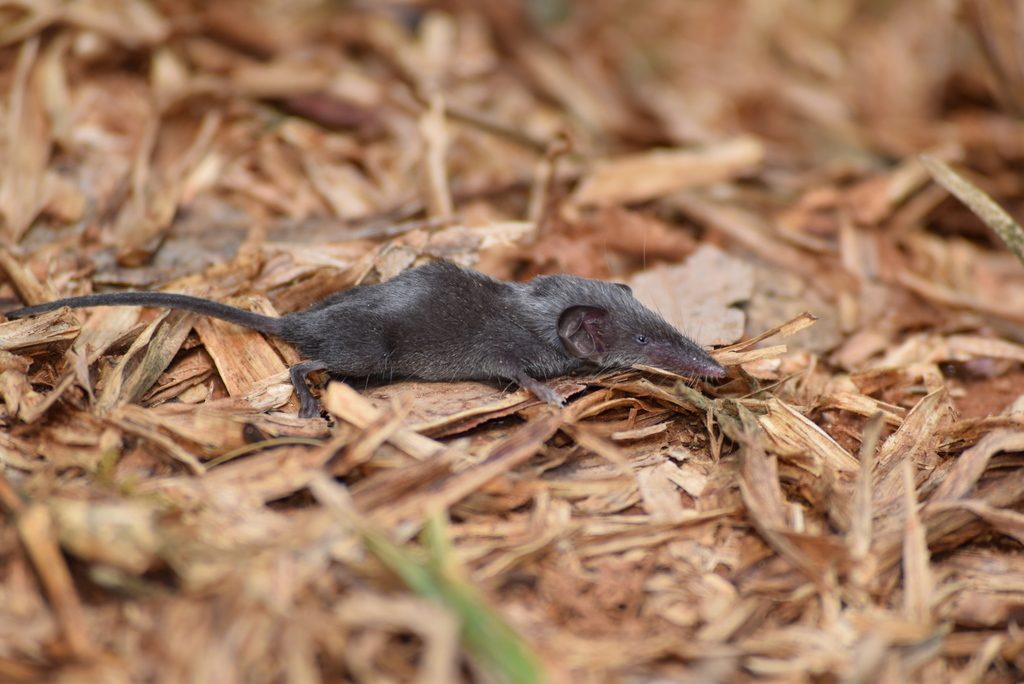
Photo: Ansil B.R. · CC BY 4.0 (May be cropped or resized)
Suncus etruscus
Basic stats
Diet
Invertebrates including insects, larvae and earthworms; also young amphibians, lizards and rodents
Habitat
Warm, damp, shrubby ground, often where open terrain meets deciduous forest
Litter size
2–6
Gestation period
27–28 days
Size
Body 3–5.2cm; tail 2.4–3.2cm
Weight
1.3–2.5g, usually about 1.8g
The Etruscan shrew is the smallest living mammal by mass, weighing 1.3–2.5 g, usually about 1.8 g, with a slender body of 3–5.2 cm and a tail of 2.4–3.2 cm. It has a long mobile snout, protruding ears and pale brown fur. Its metabolism is so fast that it eats one and a half to two times its body weight daily, mostly invertebrates such as insects, larvae and earthworms, and sometimes the young of amphibians, lizards and rodents (Wikipedia, general species account).
The species has a very wide range across Europe, Africa and Asia, and in Asia it is recorded in India, Nepal, Bhutan and Pakistan among many other countries. It favours warm, damp, shrubby ground, often where open terrain meets deciduous forest. Gestation is 27–28 days and litters are two to six. Young are weaned at about three weeks. (Wikipedia, general species account).
Where to see Etruscan Shrew in Spain
GBIF records grouped by protected area. They show where the species has been reported, not that it is there now, and they are not population counts.
Recorded in 6 protected areas (1978–1992).
- LIC Yesos de la Ribera Estellesa: 86 records (1986–1992)
- LIC Tramos Bajos del Aragón y del Arga: 28 records (1980–1992)
- Aragoi ibaiko erdiko tartea HBB - KBE: 17 records (1978–1990)
- ZEC Peñadil - Montecillo - Monterrey KBE: 16 records (1992)
- Artxugako mendilerroa, Zarikieta eta Aretako mendiak KBE: 3 records
- Itzaga Mendia Kontserbazio Bereziko Eremua: 3 records
Quick answers
- What does the Etruscan Shrew eat?
- Invertebrates including insects, larvae and earthworms; also young amphibians, lizards and rodents
- What habitat does the Etruscan Shrew live in?
- Warm, damp, shrubby ground, often where open terrain meets deciduous forest
- What is the litter size of the Etruscan Shrew?
- 2–6
- How long is the gestation period of the Etruscan Shrew?
- 27–28 days
- How big is the Etruscan Shrew?
- Body 3–5.2cm; tail 2.4–3.2cm
- How much does the Etruscan Shrew weigh?
- 1.3–2.5g, usually about 1.8g