
 Wildlife
of Spain
Eurasian Spoonbill
Herons, Storks, Ibises & Pelicans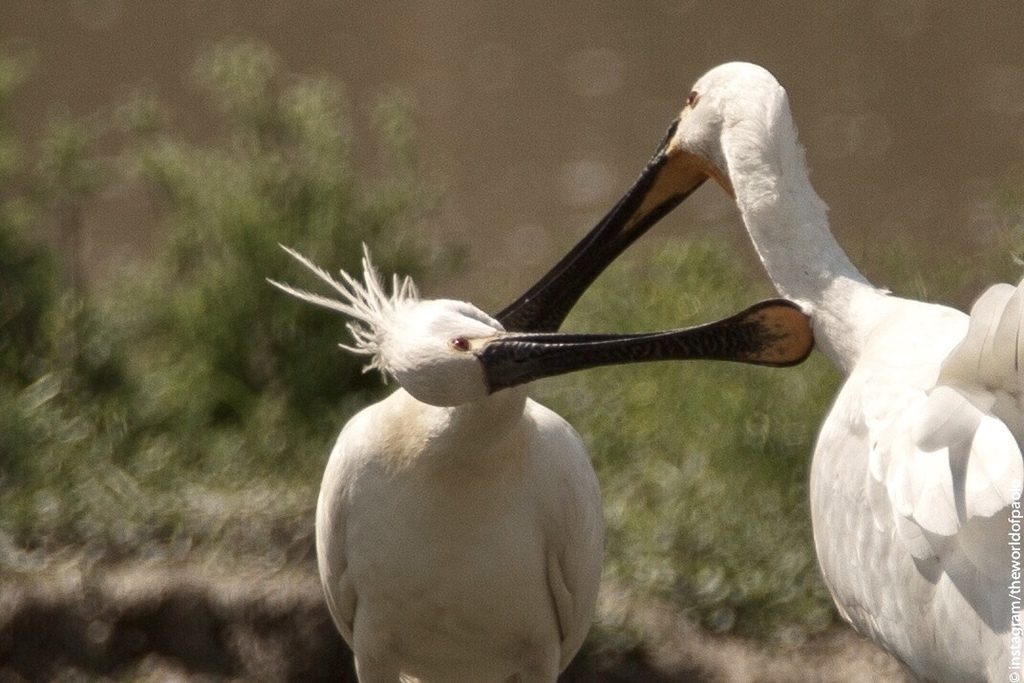
Photo: Paolo Zucca · CC BY 4.0 (May be cropped or resized)
Platalea leucorodia
Basic stats
Diet
Aquatic insects, molluscs, crustaceans, worms, amphibians and small fish
Habitat
Shallow fresh, brackish and saline wetlands, including marshes, lakes, estuaries and lagoons
Range
Widely distributed across Europe, Africa and Asia
Size
80–90cm
Weight
Averages about 1868g
The Eurasian Spoonbill is a large white wader named for its long, flattened bill, which is black with a yellow tip in adults. Breeding birds develop a crest and yellow breast patch; these ornaments are absent outside the breeding season, while immature birds show pale bills and dark tips to the flight feathers. In flight it holds its neck extended. It measures about 80–90 cm and averages about 1,868 g (Wikipedia, general species account; AVONET, Tobias et al. 2022).
Across Europe, Africa and Asia, the species uses broad shallow wetlands with muddy or fine sandy bottoms, including marshes, lakes, floodplains, mangroves, estuaries and coastal lagoons. It sweeps the open bill from side to side through the water to capture aquatic insects, molluscs, crustaceans, worms, amphibians and small fish. Breeding is colonial, with stick-and-vegetation platforms placed on islands, among reeds, in shrubs, mangroves or trees. Northern populations generally move south for winter, whereas many warm-region birds remain local (Wikipedia, general species account).
Where to see Eurasian Spoonbill in Spain
GBIF records grouped by protected area. They show where the species has been reported, not that it is there now, and they are not population counts.
Recorded in 36 protected areas (1973–2026). The 8 with the most records:
- Zona Húmida Protexida Ría de Ortigueira e Ladrido: 1,112 records (1986–2024)
- Reserva Natural Parcial de la Ría de Villaviciosa: 1,007 records (1989–2026)
- Parque Natural de Bahía de Cádiz: 878 records (1996–2026)
- LIC-ZEPA Embalse de las Cañas: 426 records (1988–2024)
- Parque Natural de la Bahía de Cádiz: 364 records (1983–2024)
- Zona Húmida Protexida Ría de Ribadeo: 256 records (2004–2024)
- ZEC-ZEPA Laguna de Pitillas: 221 records (1990–2024)
- Paisaje Protegido Corredor Verde del Guadiamar: 217 records (1973–2024)
Quick answers
- What does the Eurasian Spoonbill eat?
- Aquatic insects, molluscs, crustaceans, worms, amphibians and small fish
- What habitat does the Eurasian Spoonbill live in?
- Shallow fresh, brackish and saline wetlands, including marshes, lakes, estuaries and lagoons
- Where is the Eurasian Spoonbill found?
- Widely distributed across Europe, Africa and Asia
- How big is the Eurasian Spoonbill?
- 80–90cm
- How much does the Eurasian Spoonbill weigh?
- Averages about 1868g