
 Wildlife
of Spain
Gray Heron
Herons, Storks, Ibises & Pelicans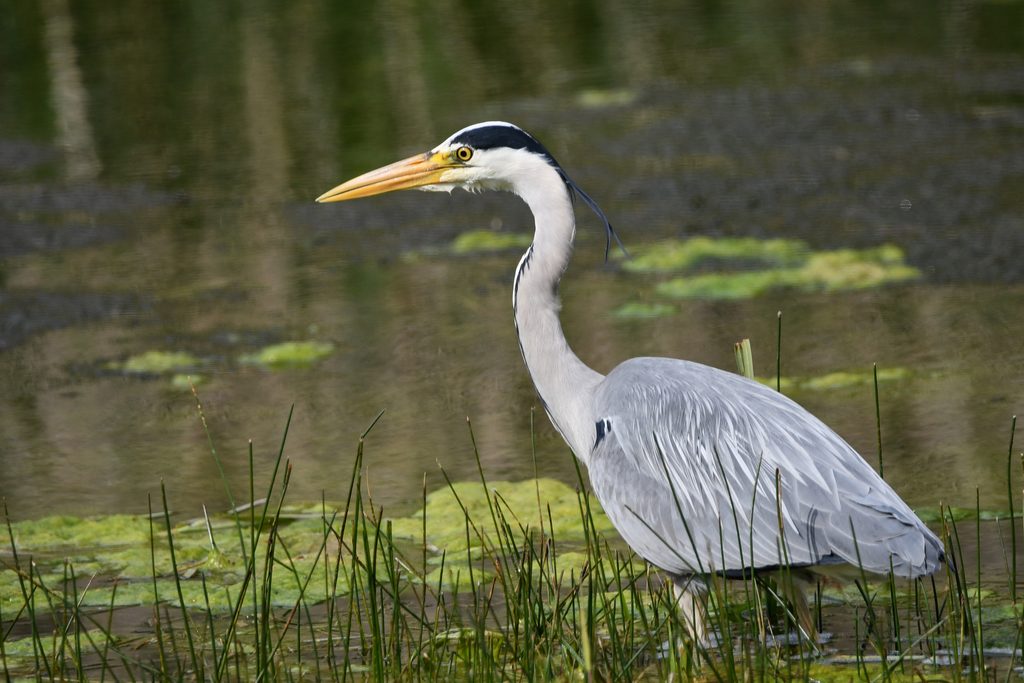
Photo: Frank Sengpiel · CC BY 4.0 (May be cropped or resized)
Ardea cinerea
Basic stats
Diet
Mostly fish, with aquatic invertebrates and other small vertebrates
Habitat
Lakes, rivers, ponds, marshes and coasts
Range
Europe, most of Africa and much of Asia
Clutch size
Usually 3–5 eggs
Incubation period
About 25 days
Size
84–102cm
Wingspan
155–195cm
Weight
Averages about 1443g
The Gray Heron is a large, long-legged waterbird native across Europe, most of Africa and much of Asia. It occupies lakes, rivers, ponds, marshes and seacoasts, remaining resident in much of the range while some northern populations move south in autumn. Adults are grey above and greyish white below, with a white head and neck, a broad black eye-stripe ending in a crest, a long pointed yellowish bill and brown legs. (Wikipedia, general species account)
The species hunts chiefly by standing motionless beside or within the water, or by stalking slowly through the shallows before striking at fish and other aquatic prey. Trait data also record invertebrates and terrestrial vertebrates in its diet. Birds breed colonially in heronries, usually placing large stick nests high in trees. A clutch normally contains three to five eggs; both adults incubate for around 25 days and then provision the chicks. (Wikipedia, general species account; EltonTraits, Wilman et al. 2014)
Where to see Gray Heron in Spain
GBIF records grouped by protected area. They show where the species has been reported, not that it is there now, and they are not population counts.
Recorded in 104 protected areas (1964–2026). The 8 with the most records:
- Monfragüe National Park: 4,576 records (1980–2025)
- Parc Agrari del Baix Llobregat: 4,388 records (2002–2026)
- LIC-ZEPA Embalse de las Cañas: 2,038 records (1975–2024)
- Reserva Natural Parcial de la Ría de Villaviciosa: 1,821 records (1973–2026)
- ZEC-ZEPA Laguna de Pitillas: 1,525 records (1980–2024)
- Paisaje Protegido Espacios Abiertos e Islas del Mar Menor: 1,524 records (1982–2025)
- els Carrissars d'Elx: 1,130 records (2002–2024)
- Zona Húmida Protexida Ría de Ortigueira e Ladrido: 1,039 records (1982–2024)
Quick answers
- What does the Gray Heron eat?
- Mostly fish, with aquatic invertebrates and other small vertebrates
- What habitat does the Gray Heron live in?
- Lakes, rivers, ponds, marshes and coasts
- Where is the Gray Heron found?
- Europe, most of Africa and much of Asia
- How many eggs does the Gray Heron lay?
- Usually 3–5 eggs
- How long are the eggs of the Gray Heron incubated?
- About 25 days
- How big is the Gray Heron?
- 84–102cm
- What is the wingspan of the Gray Heron?
- 155–195cm
- How much does the Gray Heron weigh?
- Averages about 1443g