
 Wildlife
of Spain
European Fat Dormouse
Dormice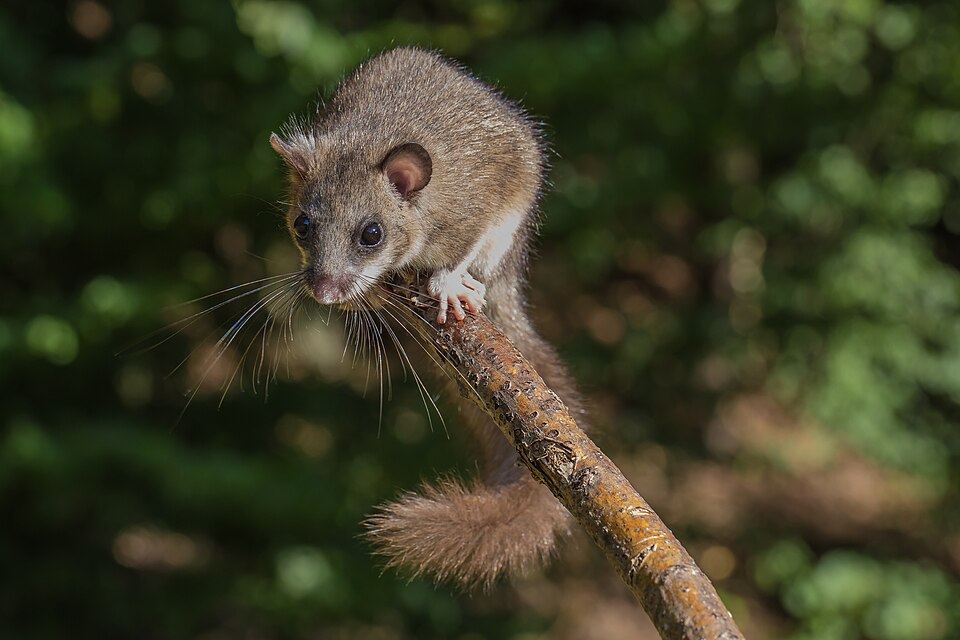
Photo: Herwig Winter · CC BY-SA 4.0 (May be cropped or resized)
Glis glis
Basic stats
Range
Most of Europe and parts of western Asia
Litter size
4
Gestation period
25 days
Weight
Normally 120–150g, nearly doubling before hibernation
The European edible dormouse, also called the European fat dormouse, is the biggest living dormouse and one of only two surviving members of the genus Glis. Its head and body measure about 14–19cm, with a bushy tail of 11–13cm, and it normally weighs 120–150g, although it can nearly double in weight before hibernation. Its fur is grey to greyish-brown on the upper body, with white to pale buff underparts, and it has no dark face markings beyond faint rings around the eyes. Females have four to six pairs of teats. Its common name is said to come from the Romans, who ate it as a delicacy (Wikipedia, general species account; AnAge).
It is found across much of mainland western Europe and on Mediterranean islands including Sardinia, Corsica, Sicily and Crete, and more sparsely in central and south-eastern Europe, reaching the upper Volga and the Caucasus. A small isolated population lives in south-east England after animals escaped from a private collection in 1902. If grasped by the tail, it can shed the skin and escape, leaving the tail bone to heal over with a new brush of hair. Its gestation is about 25 days (Wikipedia, general species account; AnAge).
Quick answers
- Where is the European Fat Dormouse found?
- Most of Europe and parts of western Asia
- What is the litter size of the European Fat Dormouse?
- 4
- How long is the gestation period of the European Fat Dormouse?
- 25 days
- How much does the European Fat Dormouse weigh?
- Normally 120–150g, nearly doubling before hibernation