
 Wildlife
of Spain
Greater Myotis
Bats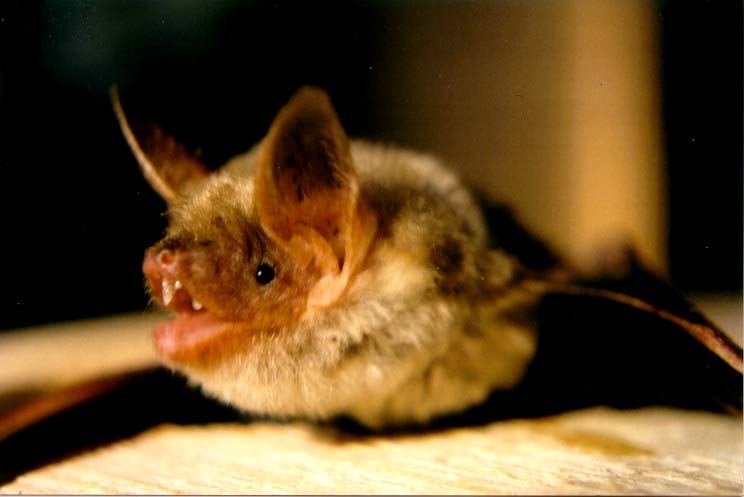
Photo: Urheber: Manuel Werner, Germany, Wikipedia-Kontakt: http://de.wikipedia.org/wiki/Benutzer:Werner,_Deutschland · CC BY-SA 3.0 (May be cropped or resized)
Myotis myotis
Basic stats
Diet
Beetles, large moths, centipedes and spiders gleaned from the ground
Habitat
Open deciduous woodland, forest edges and pastures
Range
Most of Europe, plus Mediterranean islands and parts of the Middle East
Litter size
1
Gestation period
About 65 days
Size
8–9cm head to tail
Weight
Up to 45g
The greater mouse-eared bat (Myotis myotis) is one of the largest European bats and is relatively big for the genus Myotis, with a long, wide snout and large, lengthy ears. Its back is brown to reddish-brown and its underside dirty white or beige, and the tragus, which forms half of the ear, usually has a small black tip. It weighs up to 45g, measures 8–9cm from head to tail and has a wingspan of about 40cm. It is exceptionally long-lived for its size, and AnAge records a maximum longevity of 37.1 years (Wikipedia, general species account; AnAge).
It is found across most of Europe, though not Ireland, Denmark, Latvia, Estonia, Finland or Scandinavia, and it also lives on many Mediterranean islands and in parts of the Middle East. It forages in open deciduous woodland, forest edges and pastures. Unlike many bats, it does not use echolocation to catch prey in flight; it finds ground-dwelling insects by listening for the noises they make. It roosts underground throughout the year, while in northern Europe roosts may also be in attics and lofts. AnAge gives a gestation of about 65 days and one young per litter (Wikipedia, general species account; AnAge).
Quick answers
- What does the Greater Myotis eat?
- Beetles, large moths, centipedes and spiders gleaned from the ground
- What habitat does the Greater Myotis live in?
- Open deciduous woodland, forest edges and pastures
- Where is the Greater Myotis found?
- Most of Europe, plus Mediterranean islands and parts of the Middle East
- What is the litter size of the Greater Myotis?
- 1
- How long is the gestation period of the Greater Myotis?
- About 65 days
- How big is the Greater Myotis?
- 8–9cm head to tail
- How much does the Greater Myotis weigh?
- Up to 45g