
 Wildlife
of Spain
Iberian Mole
Moles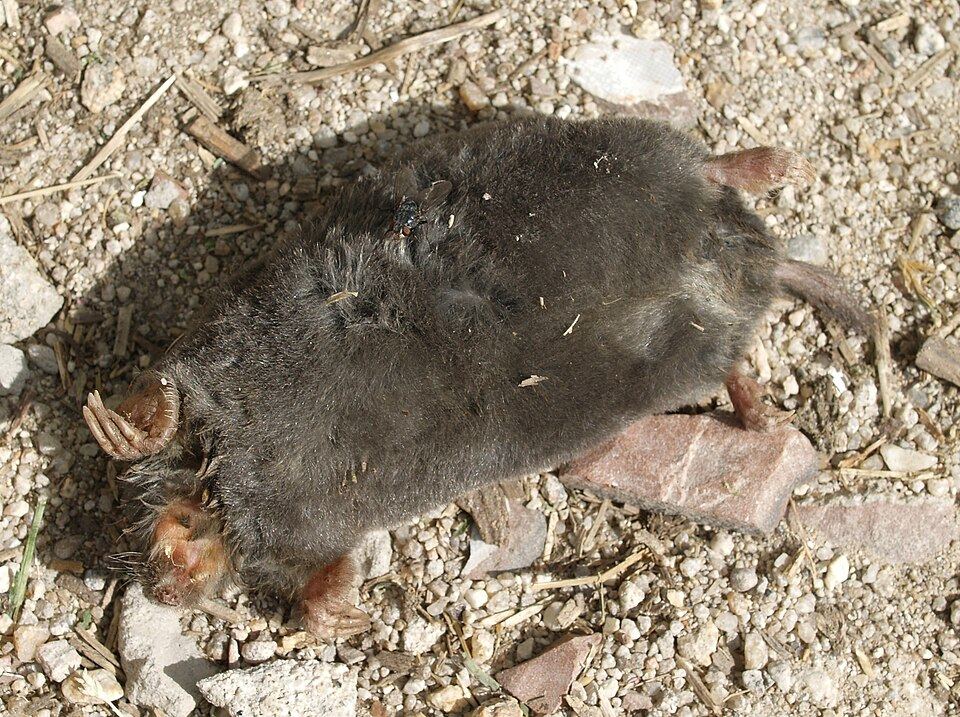
Photo: Luis Fernández García · CC BY-SA 3.0 (May be cropped or resized)
Talpa occidentalis
Basic stats
Diet
Earthworms, slugs, millipedes, centipedes, and beetle larvae
Habitat
Moist soils in meadows, pastures, orchards, cropland, and woodland
Range
Iberian Peninsula, mainly north-western Spain and Portugal
Litter size
Two to three embryos
Gestation period
About 28 days
Weight
Males about 65 g; females about 53.5 g
The Iberian Mole is a small burrowing mammal of the mole family, with black fur and eyes hidden beneath the skin. Compared with the European Mole, it is smaller, has a shorter snout, and broader forefeet. Males are slightly larger than females. The species is restricted to the Iberian Peninsula, where it occurs in both Spain and Portugal. (Wikipedia, general species account; GBIF description, Talpidae)
It uses a range of damp-soil settings, including meadows, pasture, orchards, cultivated land, and woodland. The supplied species account describes deep, moist ground as preferred and says the mole occurs mainly in north-western Spain and Portugal, with broad areas of eastern Iberia, the Pyrenees, and the Ebro Basin outside its range. This reported habitat includes natural and cultivated settings. (Wikipedia, general species account; GBIF description, Talpidae)
Quick answers
- What does the Iberian Mole eat?
- Earthworms, slugs, millipedes, centipedes, and beetle larvae
- What habitat does the Iberian Mole live in?
- Moist soils in meadows, pastures, orchards, cropland, and woodland
- Where is the Iberian Mole found?
- Iberian Peninsula, mainly north-western Spain and Portugal
- What is the litter size of the Iberian Mole?
- Two to three embryos
- How long is the gestation period of the Iberian Mole?
- About 28 days
- How much does the Iberian Mole weigh?
- Males about 65 g; females about 53.5 g