
 Wildlife
of Spain
Marsh Sandpiper
Waders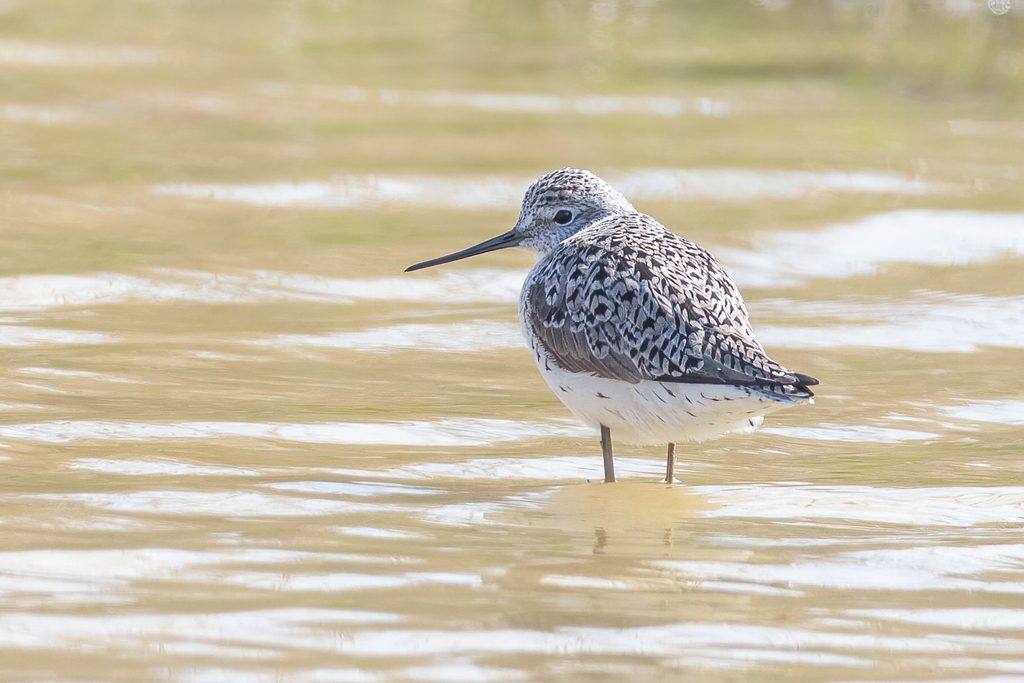
Photo: egorbirder · CC BY 4.0 (May be cropped or resized)
Tringa stagnatilis
Basic stats
Diet
Mostly aquatic invertebrates and small fish, with some plant matter
Habitat
Open northern wetlands when breeding; shallow freshwater and brackish marshes at other seasons
Range
Breeds across steppe regions of eastern Europe and central Asia; winters in Africa, southern Asia and Australasia
Weight
Averages about 78g
The Marsh Sandpiper is a slim, elegant shank with very long greenish legs and a fine, straight bill. It is pale grey-brown above and white below, with darker spotting during the breeding season. In flight a narrow white wedge extends up the back, while the long legs project conspicuously beyond the tail. Its light build and delicate feeding action distinguish it from the heavier Common Greenshank. Adults average about 77.5 g (Wikipedia, general species account; AVONET, Tobias et al. 2022).
The species breeds in open marshes and steppe wetlands from eastern Europe through central Asia, then migrates to Africa, southern Asia and Australasia. Outside breeding it uses shallow freshwater and brackish marshes, flooded fields, lake edges and lagoons. Birds wade actively through shallow water, picking or probing for aquatic invertebrates and small fish; plant material is also recorded. They may feed singly or in loose groups, sometimes sweeping the bill through the water (Wikipedia, general species account; EltonTraits, Wilman et al. 2014).
Where to see Marsh Sandpiper in Spain
GBIF records grouped by protected area. They show where the species has been reported, not that it is there now, and they are not population counts.
Recorded in 5 protected areas (1983–2024).
- els Carrissars d'Elx: 47 records (2019–2023)
- Parc natural d'es Trenc i el Salobrar de Campos: 32 records (1983–2020)
- Aragoi ibaiko erdiko tartea HBB - KBE: 15 records (2023)
- Paisaje Protegido Espacios Abiertos e Islas del Mar Menor: 12 records (2008–2023)
- Reserva Natural Parcial de la Ría de Villaviciosa: 5 records (2010–2024)
Quick answers
- What does the Marsh Sandpiper eat?
- Mostly aquatic invertebrates and small fish, with some plant matter
- What habitat does the Marsh Sandpiper live in?
- Open northern wetlands when breeding; shallow freshwater and brackish marshes at other seasons
- Where is the Marsh Sandpiper found?
- Breeds across steppe regions of eastern Europe and central Asia; winters in Africa, southern Asia and Australasia
- How much does the Marsh Sandpiper weigh?
- Averages about 78g