
 Wildlife
of Spain
Natrix astreptophora
Colubrid Snakes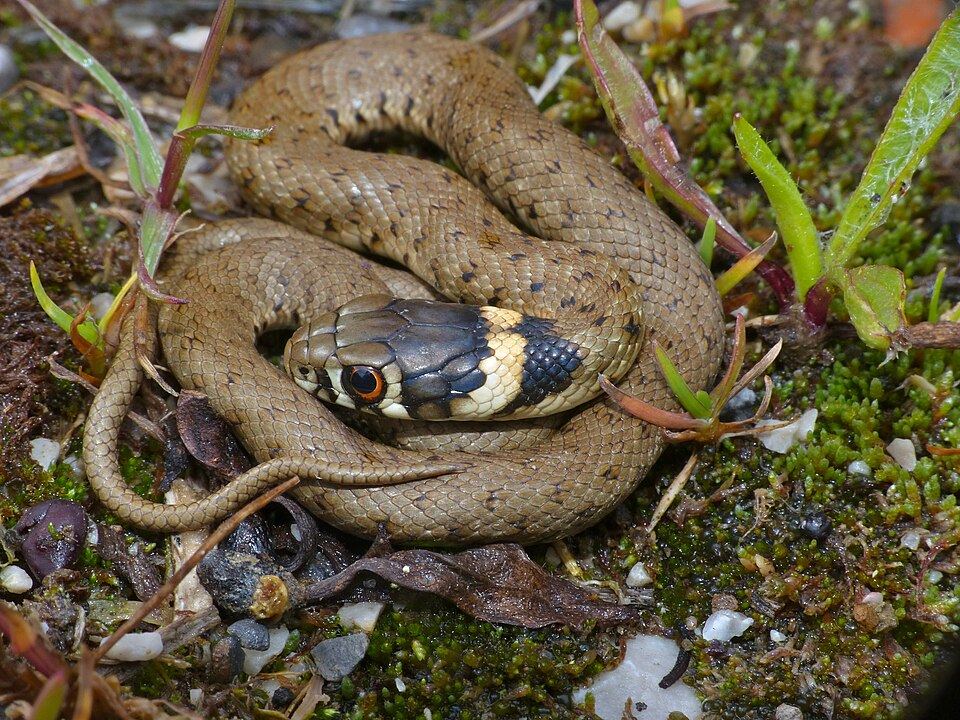
Photo: Bernard DUPONT from FRANCE · CC BY-SA 2.0 (May be cropped or resized)
Natrix astreptophora
Basic stats
Diet
Fish and amphibians; also small mammals and juvenile birds
Habitat
Moist, shaded areas, typically near water
Range
Iberian Peninsula and southwestern France; northern Morocco and northwestern Tunisia to northeastern Algeria
Clutch size
About 10 eggs in young females; up to 100 in older females
The red-eyed or Iberian grass snake is a natricine snake found in three separate populations: Iberia with south-western France, northern Morocco, and northwestern Tunisia with north-eastern Algeria. Long treated as a subspecies of the European grass snake, it was split off in 2016. It is told apart from other grass snakes by its reddish irises and fewer ventral scales, and it is known to show erythrism, an excess of red pigment (Wikipedia, general species account).
It mainly eats fish and amphibians, with some small mammals and juvenile birds. Like other grass snakes it can raise its forebody and flatten its neck in a cobra-like display, a trait Wikipedia traces to a time when cobras lived in Europe. It matures at five years and lays eggs in July and August, around ten in young females and as many as 100 in older ones. It rarely hybridises with the barred grass snake and, in Andalusia, with the viperine water snake (Wikipedia).
Quick answers
- What does the Natrix astreptophora eat?
- Fish and amphibians; also small mammals and juvenile birds
- What habitat does the Natrix astreptophora live in?
- Moist, shaded areas, typically near water
- Where is the Natrix astreptophora found?
- Iberian Peninsula and southwestern France; northern Morocco and northwestern Tunisia to northeastern Algeria
- How many eggs does the Natrix astreptophora lay?
- About 10 eggs in young females; up to 100 in older females