
 Wildlife
of Spain
Natrix helvetica
Colubrid Snakes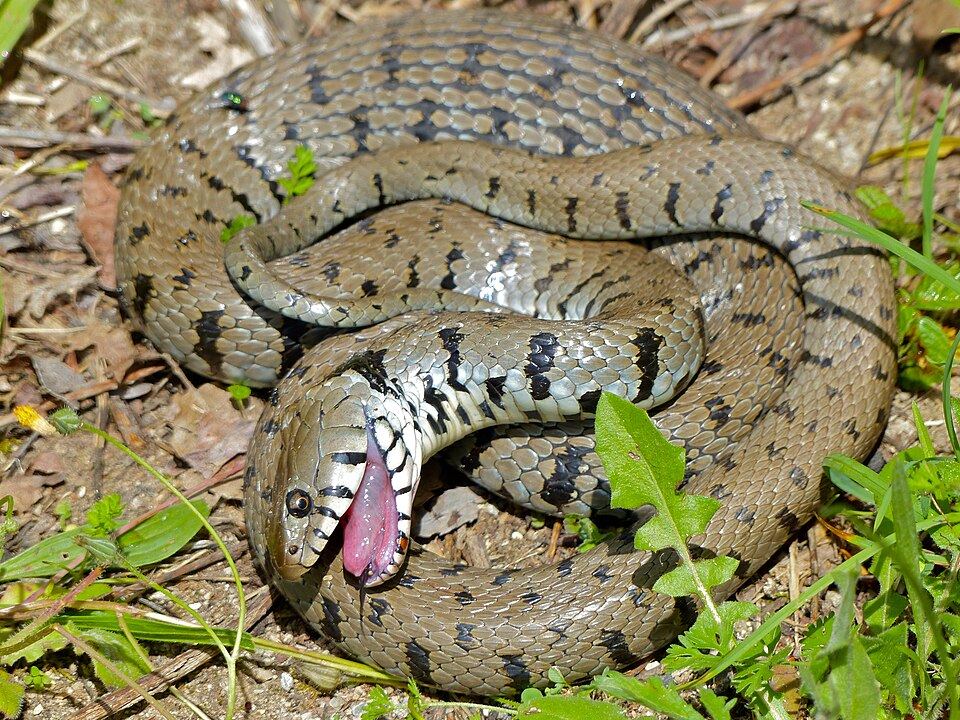
Photo: Bernard DUPONT from FRANCE · CC BY-SA 2.0 (May be cropped or resized)
Natrix helvetica
Basic stats
Diet
Amphibians, especially common toads and frogs; also fish, small mammals and nestling birds
Habitat
In and near fresh water; overwinters underground
Range
Great Britain as far north as southern Scotland, the Netherlands, western Germany, Switzerland, Italy and France
Clutch size
8-40 eggs
Size
Can grow to over 1m
The barred grass snake is a non-venomous colubrid of western Europe, usually living in or near water. It was treated as part of the grass snake until 2017, when genetic work separated it. It has a dark grey-green back with black bars along its sides, a pale underside and the yellow-and-black collar of the grass snake, and can exceed a metre in length. It occurs in Great Britain as far north as southern Scotland and in the Netherlands, western Germany, Switzerland, Italy and France (Wikipedia, general species account).
It is semi-aquatic, a strong swimmer, and hunts mainly amphibians, especially common toads and frogs, along with fish, small mammals and nestlings, using smell and sight and swallowing live prey without constriction. It hibernates underground from as early as October to April. Males emerge first and mate as soon as females appear. Leathery eggs, 8-40 per batch, are laid in June and July and hatch after about ten weeks, needing at least 21°C and high humidity (Wikipedia).
Quick answers
- What does the Natrix helvetica eat?
- Amphibians, especially common toads and frogs; also fish, small mammals and nestling birds
- What habitat does the Natrix helvetica live in?
- In and near fresh water; overwinters underground
- Where is the Natrix helvetica found?
- Great Britain as far north as southern Scotland, the Netherlands, western Germany, Switzerland, Italy and France
- How many eggs does the Natrix helvetica lay?
- 8-40 eggs
- How big is the Natrix helvetica?
- Can grow to over 1m