
 Wildlife
of Spain
Osprey
Eagles, Hawks & Vultures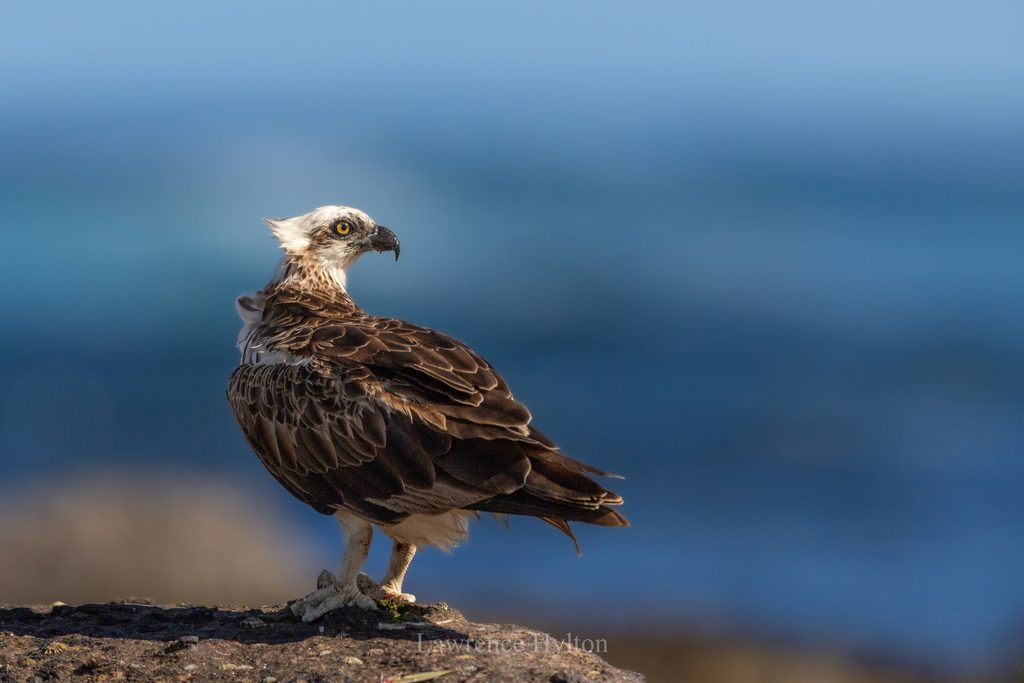
Photo: Lawrence Hylton · CC BY 4.0 (May be cropped or resized)
Pandion haliaetus
Basic stats
Diet
Almost entirely fish
Habitat
Coasts, lakes and rivers with adequate fish and nearby nest sites
Range
All continents except Antarctica; non-breeding only in South America
Clutch size
Usually 3 eggs
Incubation period
About 38 days
Size
50–66cm
Wingspan
127–180cm
Weight
Averages about 1483g
The Osprey is a large fish-eating raptor found on every continent except Antarctica, although it occurs in South America only outside the breeding season. It inhabits many landscapes provided that productive water and a suitable nesting site are close together. Long, narrow wings, white underparts, deep-brown upperparts and a dark eye-stripe give it a distinctive appearance. Adults measure about 50–66 cm and span 127–180 cm. (Wikipedia, general species account)
Fish make up almost the entire diet. The species is strongly adapted to seizing slippery prey: the outer toe can reverse, the toes are equal in length, and the talons are rounded rather than grooved. It hunts by plunging feet-first and can carry a captured fish with two toes facing forward and two behind. AnAge records a typical clutch of three and incubation around 38 days; AVONET reports an average mass of about 1,483.2 g. (Wikipedia, general species account; AnAge; AVONET, Tobias et al. 2022)
Where to see Osprey in Spain
GBIF records grouped by protected area. They show where the species has been reported, not that it is there now, and they are not population counts.
Recorded in 47 protected areas (1964–2026). The 8 with the most records:
- Reserva Natural Parcial de la Ría de Villaviciosa: 414 records (1973–2026)
- Parque Natural de Bahía de Cádiz: 347 records (1997–2024)
- Zona Húmida Protexida Ría de Ortigueira e Ladrido: 341 records (2000–2024)
- Parque Natural de la Bahía de Cádiz: 284 records (1987–2024)
- els Carrissars d'Elx: 186 records (1999–2024)
- Parc natural d'es Trenc i el Salobrar de Campos: 172 records (1972–2025)
- Paraje Natural Río Palmones: 146 records (1999–2024)
- Monfragüe National Park: 115 records (1997–2024)
Quick answers
- What does the Osprey eat?
- Almost entirely fish
- What habitat does the Osprey live in?
- Coasts, lakes and rivers with adequate fish and nearby nest sites
- Where is the Osprey found?
- All continents except Antarctica; non-breeding only in South America
- How many eggs does the Osprey lay?
- Usually 3 eggs
- How long are the eggs of the Osprey incubated?
- About 38 days
- How big is the Osprey?
- 50–66cm
- What is the wingspan of the Osprey?
- 127–180cm
- How much does the Osprey weigh?
- Averages about 1483g