
 Wildlife
of Spain
Red Phalarope
Waders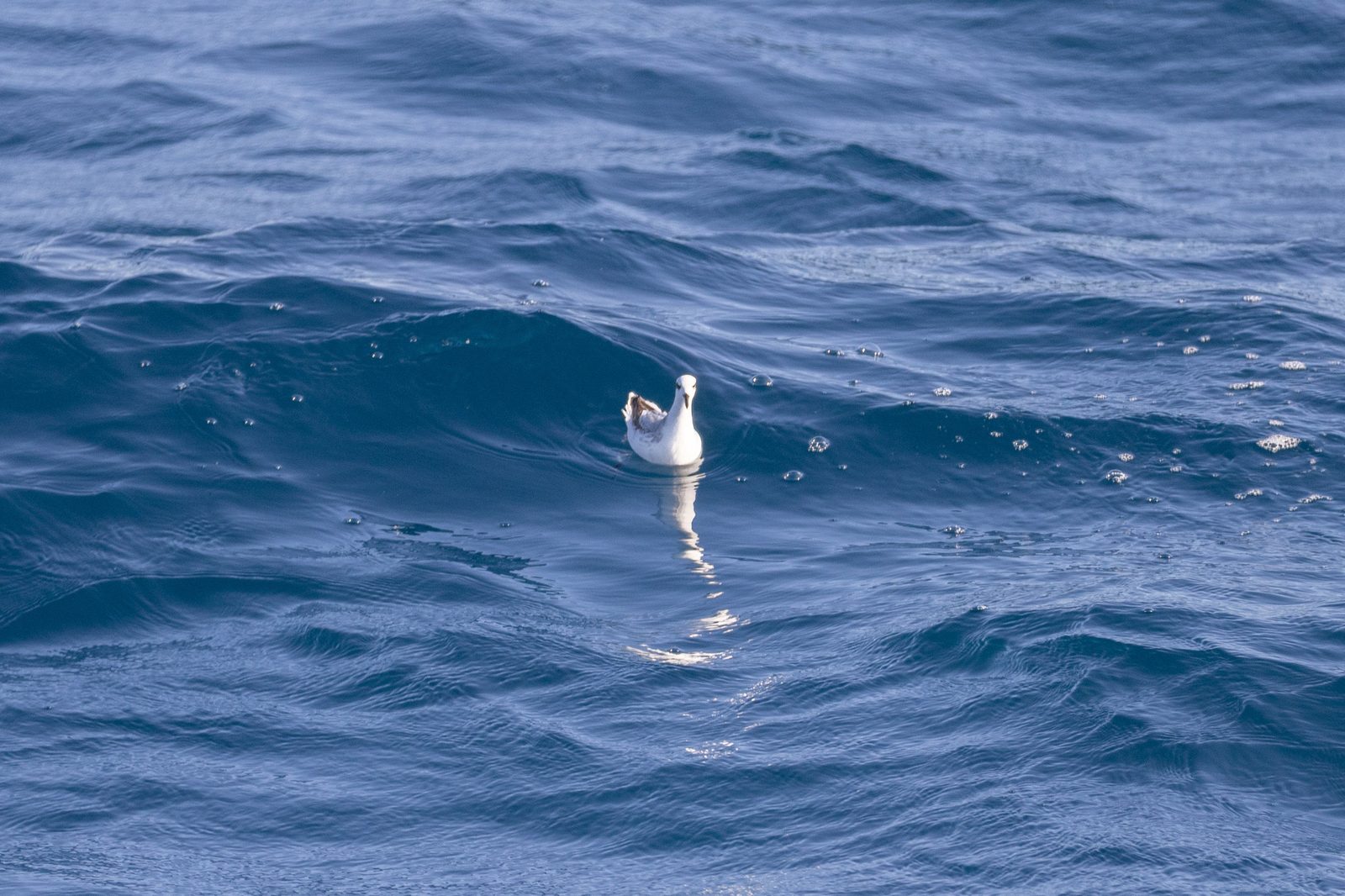
Photo: (c) Gavin Skeen, some rights reserved (CC BY) · CC-BY (May be cropped or resized)
Phalaropus fulicarius
Basic stats
Diet
Mainly insects and crustaceans
Habitat
Arctic wetlands when breeding; tropical open ocean outside breeding
Range
Breeds around Arctic North America and Eurasia; winters at sea on tropical oceans
Clutch size
3–6 eggs
Incubation period
18–19 days
Size
About 21cm
Weight
Averages about 56g
The Red Phalarope is a small wader with lobed toes and reversed sex roles. Breeding females are brighter and larger than males, with reddish underparts, dark upperparts and white cheek patches; males show a duller version. Winter birds are grey above and white below but retain a dark eye patch. The straight bill changes from yellow and black in breeding plumage to black in winter. Adults are about 21 cm long and average about 56 g (Wikipedia, general species account; AVONET, Tobias et al. 2022).
Across Arctic North America and Eurasia, the species nests near water before migrating mainly over oceans to tropical seas. Females compete for mates and depart after laying, leaving males to incubate three to six eggs for 18–19 days and tend the young. Feeding birds often spin on the water, drawing small prey upward in a vortex. Insects and crustaceans dominate the diet, and oceanic flocks gather where currents concentrate food (Wikipedia, general species account; EltonTraits, Wilman et al. 2014).
Where to see Red Phalarope in Spain
GBIF records grouped by protected area. They show where the species has been reported, not that it is there now, and they are not population counts.
Recorded in 8 protected areas (1982–2024).
- LIC Jaizkibel BGL: 180 records (1990–2024)
- LIC-ZEPA Embalse de las Cañas: 23 records (1982–2023)
- ZEC-ZEPA Laguna de Pitillas: 18 records (2000–2023)
- Reserva Natural Dirigida de la Laguna de Gallocanta: 11 records (2023–2024)
- Zona Periférica de Protección de la Reserva Natural Dirigida de la Laguna de Gallocanta: 9 records (2023–2024)
- Aragoi ibaiko erdiko tartea HBB - KBE: 7 records (2009–2022)
- Reserva Natural Parcial de la Ría de Villaviciosa: 6 records (2017–2023)
- Parque Natural de Bahía de Cádiz: 3 records (1997–2022)
Quick answers
- What does the Red Phalarope eat?
- Mainly insects and crustaceans
- What habitat does the Red Phalarope live in?
- Arctic wetlands when breeding; tropical open ocean outside breeding
- Where is the Red Phalarope found?
- Breeds around Arctic North America and Eurasia; winters at sea on tropical oceans
- How many eggs does the Red Phalarope lay?
- 3–6 eggs
- How long are the eggs of the Red Phalarope incubated?
- 18–19 days
- How big is the Red Phalarope?
- About 21cm
- How much does the Red Phalarope weigh?
- Averages about 56g