
 Wildlife
of Spain
Western Cattle-Egret
Herons, Storks, Ibises & Pelicans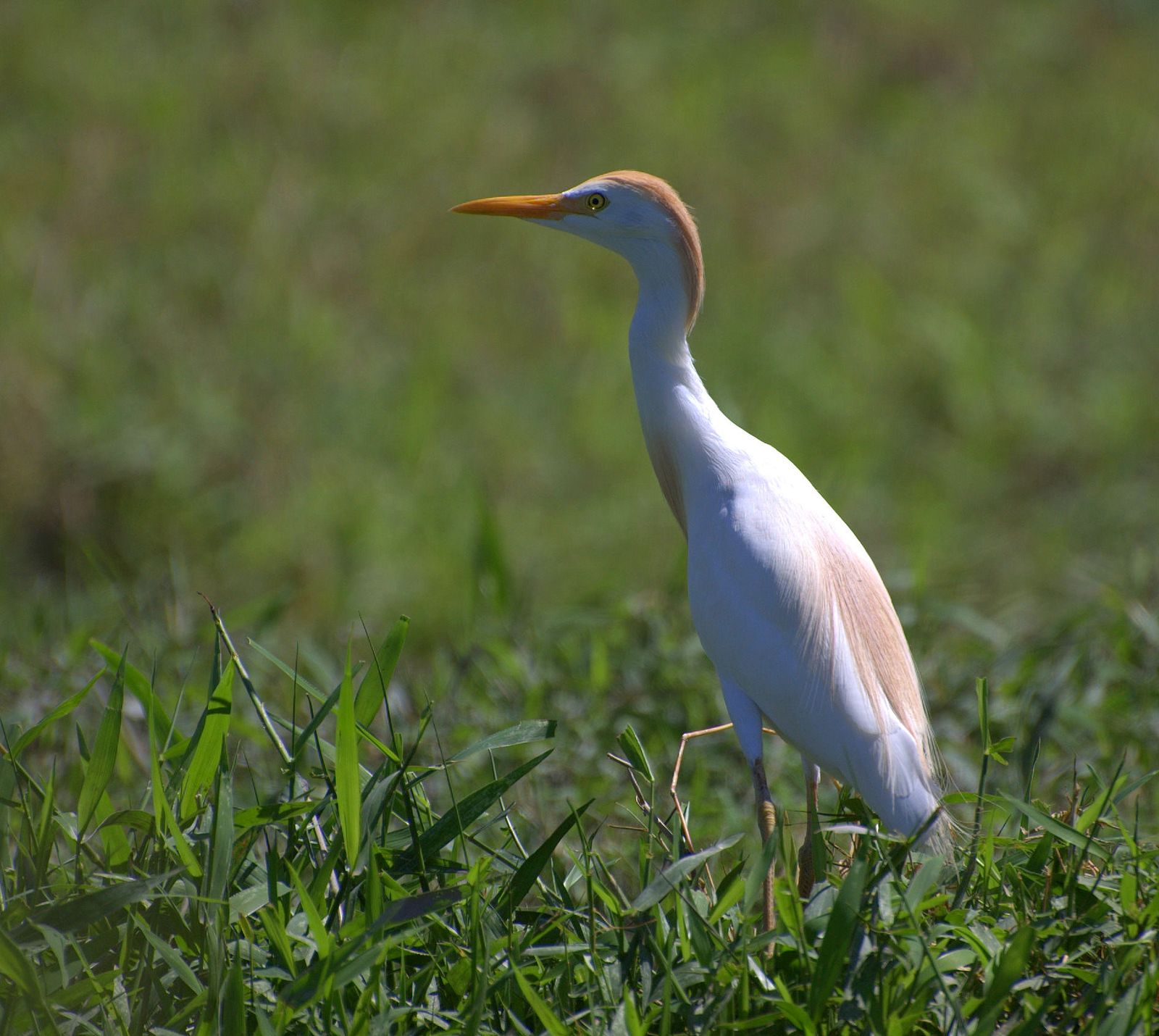
Photo: Dario Sanches from São Paulo, Brasil · CC BY-SA 2.0 (May be cropped or resized)
Ardea ibis
Basic stats
Diet
Mostly insects, with some small vertebrates, fish and carrion
Habitat
Pastures, farmland, seasonally flooded grassland, wetlands and rice fields
Range
Africa, southwestern Asia, southern Europe and the Americas
Clutch size
3 eggs
Incubation period
22 days
Size
46–56cm
Wingspan
88–96cm
Weight
Averages about 366g
Across its range, the Western Cattle-Egret is a compact white heron with a thick neck, sturdy yellow bill and hunched stance. Breeding adults develop orange-buff feathers on the crown, breast and back, while the bill, legs and eyes briefly become red; juveniles lack the coloured plumes and have a black bill. It measures 46–56 cm and spans 88–96 cm (Wikipedia, general species account).
The species uses drier ground more readily than most herons, following cattle and other large mammals to catch prey disturbed from vegetation. Its diet is dominated by invertebrates, supplemented by small vertebrates, fish and carrion (EltonTraits, Wilman et al. 2014). Colonies are commonly placed near water, where pairs build stick platforms in trees or shrubs. Some populations migrate, while others disperse after breeding (Wikipedia, general species account).
Where to see Western Cattle-Egret in Spain
GBIF records grouped by protected area. They show where the species has been reported, not that it is there now, and they are not population counts.
Recorded in 60 protected areas (1961–2026). The 8 with the most records:
- Parc Agrari del Baix Llobregat: 3,256 records (2000–2025)
- Paisaje Protegido Espacios Abiertos e Islas del Mar Menor: 905 records (1994–2025)
- Reserva Natural Parcial de la Ría de Villaviciosa: 795 records (1998–2026)
- els Carrissars d'Elx: 718 records (1999–2024)
- ZEPA Estepas Cerealistas de los ríos Jarama y Henares: 392 records (1997–2026)
- LIC-ZEPA Embalse de las Cañas: 374 records (1988–2024)
- ZEC-ZEPA Laguna de Pitillas: 360 records (1997–2024)
- Paisaje Protegido Corredor Verde del Guadiamar: 359 records (1961–2024)
Quick answers
- What does the Western Cattle-Egret eat?
- Mostly insects, with some small vertebrates, fish and carrion
- What habitat does the Western Cattle-Egret live in?
- Pastures, farmland, seasonally flooded grassland, wetlands and rice fields
- Where is the Western Cattle-Egret found?
- Africa, southwestern Asia, southern Europe and the Americas
- How many eggs does the Western Cattle-Egret lay?
- 3 eggs
- How long are the eggs of the Western Cattle-Egret incubated?
- 22 days
- How big is the Western Cattle-Egret?
- 46–56cm
- What is the wingspan of the Western Cattle-Egret?
- 88–96cm
- How much does the Western Cattle-Egret weigh?
- Averages about 366g