
 Wildlife
of Spain
Curlew Sandpiper
Waders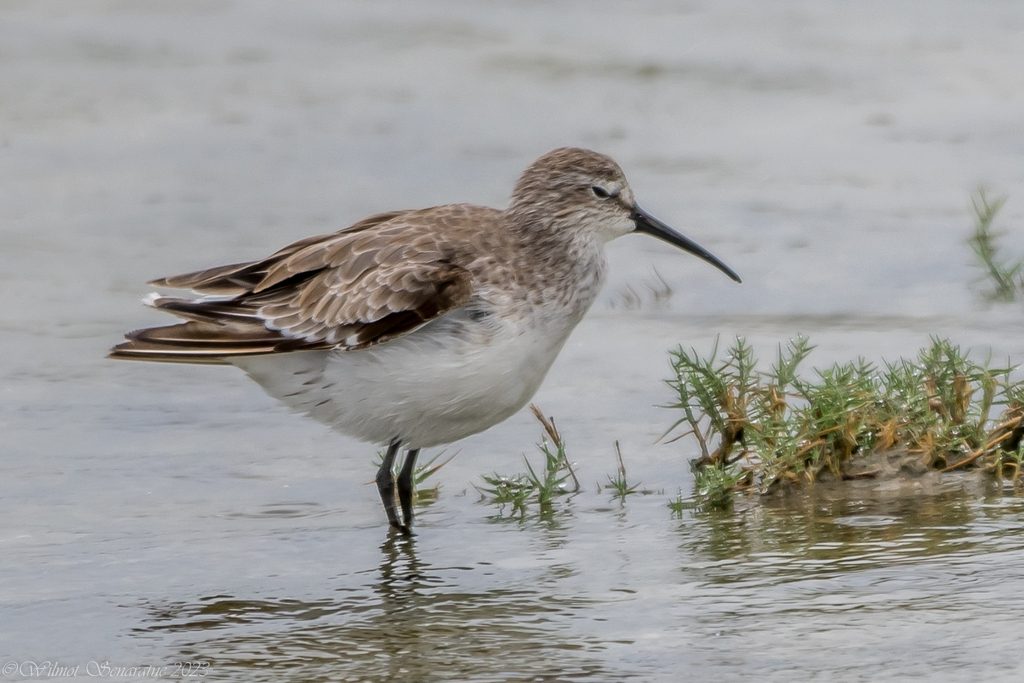
Photo: wilmotsenaratne · CC0 1.0
Calidris ferruginea
Basic stats
Diet
Mostly invertebrates, with some seeds
Habitat
Arctic bogs and coastal lowlands when breeding; tidal mudflats, saltpans and wetlands at other seasons
Range
Breeds in Arctic Siberia; winters in Africa, southern Eurasia and Oceania
Size
18–23cm
Wingspan
38–46cm
Weight
Averages about 58g
The Curlew Sandpiper is a small wader with a relatively long, gently downcurved bill. Breeding adults develop rich rusty underparts, while non-breeding birds are grey above and white below; juveniles have neatly fringed upperparts and a scaly appearance. A broad white rump and a pale wing stripe are apparent in flight. The species measures 18–23 cm, spans 38–46 cm and averages about 58 g (Wikipedia, general species account; AVONET, Tobias et al. 2022).
The species breeds in bogs and coastal lowlands of Arctic Siberia before travelling to wintering grounds in Africa, southern Eurasia and Oceania. Outside the breeding season it frequents tidal mudflats, saltpans and other shallow wetlands, often feeding in sizeable flocks. Its diet is dominated by invertebrates, including insects and small crustaceans, with seeds also taken. Courtship includes aerial pursuit, ground display and presentation of a false nest scrape; chicks leave the nest mobile soon after hatching (Wikipedia, general species account; EltonTraits, Wilman et al. 2014).
Where to see Curlew Sandpiper in Spain
GBIF records grouped by protected area. They show where the species has been reported, not that it is there now, and they are not population counts.
Recorded in 26 protected areas (1974–2025). The 8 with the most records:
- Parque Natural de Bahía de Cádiz: 547 records (1996–2025)
- Parque Natural de la Bahía de Cádiz: 282 records (1983–2024)
- Parc natural d'es Trenc i el Salobrar de Campos: 240 records (1974–2024)
- Paisaje Protegido Espacios Abiertos e Islas del Mar Menor: 170 records (2002–2024)
- Reserva Natural Dirigida de la Laguna de Gallocanta: 107 records (1980–2023)
- els Carrissars d'Elx: 93 records (2018–2024)
- Salina de Carboneros: 85 records (1985–2024)
- Reserva Natural Parcial de la Ría de Villaviciosa: 64 records (1978–2024)
Quick answers
- What does the Curlew Sandpiper eat?
- Mostly invertebrates, with some seeds
- What habitat does the Curlew Sandpiper live in?
- Arctic bogs and coastal lowlands when breeding; tidal mudflats, saltpans and wetlands at other seasons
- Where is the Curlew Sandpiper found?
- Breeds in Arctic Siberia; winters in Africa, southern Eurasia and Oceania
- How big is the Curlew Sandpiper?
- 18–23cm
- What is the wingspan of the Curlew Sandpiper?
- 38–46cm
- How much does the Curlew Sandpiper weigh?
- Averages about 58g