
 Wildlife
of Spain
Long-tailed Duck
Ducks, Geese & Swans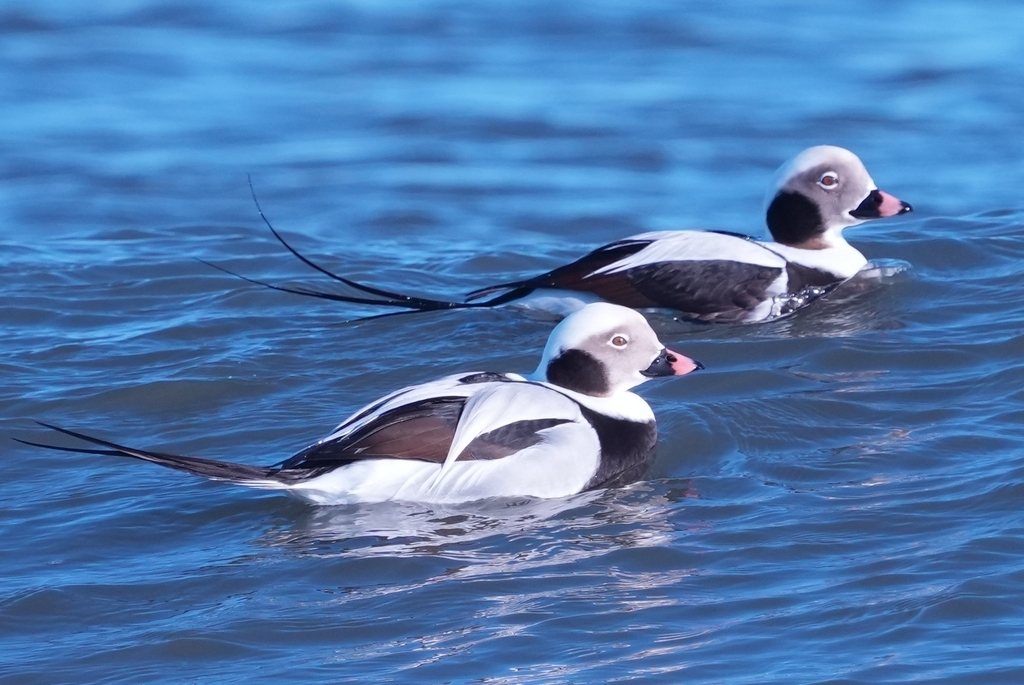
Photo: (c) carbenoid, some rights reserved (CC BY) · CC-BY (May be cropped or resized)
Clangula hyemalis
Basic stats
Diet
Mostly molluscs and crustaceans
Habitat
Arctic tundra pools, marshes and lakes when breeding; northern seas in winter
Range
Breeds across northern Eurasia and North America; winters along northern Atlantic and Pacific coasts
Clutch size
Usually 6–9 eggs
Incubation period
About 24 days
Weight
Averages about 871g
The Long-tailed Duck is a medium-sized sea duck with complex seasonal plumages. Adult males have elongated central tail feathers and a dark bill crossed by pink; the head is mainly white with a dark cheek in winter but dark with a white cheek patch in summer. Females are browner and shorter-tailed, while juveniles resemble autumn females. The male gives a musical yodelling call. The species averages about 871 g (Wikipedia, general species account; AVONET, Tobias et al. 2022).
Across northern Eurasia and North America, the species breeds beside tundra pools, marshes, coasts and mountain lakes, then winters in large flocks on northern seas and major open lakes. It dives using its wings and can reach considerable depths. Molluscs and crustaceans dominate the diet, with other aquatic invertebrates and small fish also eaten. A vegetation nest lined with down is placed on the ground near water. Six to nine eggs are usual; AnAge reports incubation of about 24 days (Wikipedia, general species account; EltonTraits, Wilman et al. 2014; AnAge).
Quick answers
- What does the Long-tailed Duck eat?
- Mostly molluscs and crustaceans
- What habitat does the Long-tailed Duck live in?
- Arctic tundra pools, marshes and lakes when breeding; northern seas in winter
- Where is the Long-tailed Duck found?
- Breeds across northern Eurasia and North America; winters along northern Atlantic and Pacific coasts
- How many eggs does the Long-tailed Duck lay?
- Usually 6–9 eggs
- How long are the eggs of the Long-tailed Duck incubated?
- About 24 days
- How much does the Long-tailed Duck weigh?
- Averages about 871g