
 Wildlife
of Spain
Greater Short-toed Lark
Larks, Pipits & Wagtails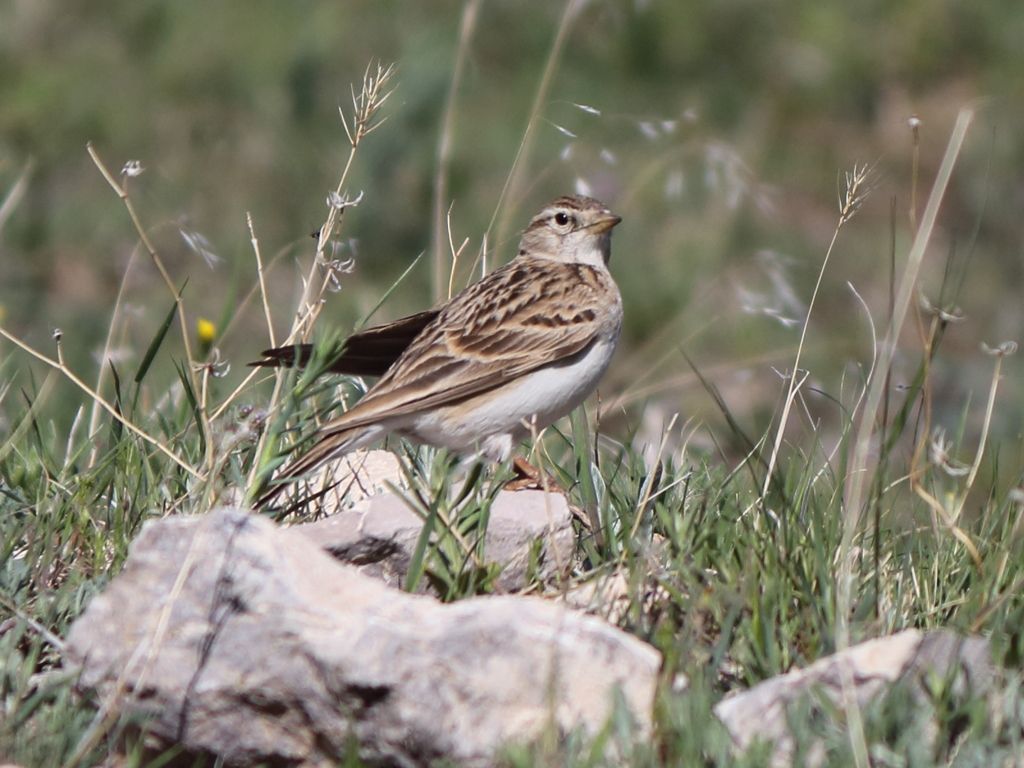
Photo: (c) Ani Sarkisyan, some rights reserved (CC BY) · CC BY 4.0 (May be cropped or resized)
Calandrella brachydactyla
Basic stats
Diet
Invertebrates, seeds and other plant material
Habitat
Dry plains, cultivation and semi-desert
Range
Breeds from southern Europe and northwestern Africa across central Asia; winters south to Africa, Arabia and South Asia
Clutch size
2–3 eggs
Size
About 15cm
Weight
Averages about 21g
The Greater Short-toed Lark is a small, pale lark about 15 cm long and averaging roughly 21 g. Grey-brown upperparts carry dark streaks, while the underparts are white with a dark patch at each side of the breast. A pale eyebrow, pointed pinkish bill and dark tail complete its subdued pattern. Males and females look alike (Wikipedia, general species account; AVONET, Tobias et al. 2022; Collins Birds of the World).
It breeds across dry open country from southern Europe and northwestern Africa through central Asia, with most populations wintering farther south in Africa, Arabia or South Asia. Birds forage entirely on the ground for insects, seeds and other plant matter; invertebrates are especially prominent during breeding. Large, tightly coordinated flocks form during migration and winter. A ground nest holds two or three eggs (Wikipedia, general species account; EltonTraits, Wilman et al. 2014).
Where to see Greater Short-toed Lark in Spain
GBIF records grouped by protected area. They show where the species has been reported, not that it is there now, and they are not population counts.
Recorded in 36 protected areas (1964–2024). The 8 with the most records:
- ZEC Peñadil - Montecillo - Monterrey KBE: 399 records (1988–2024)
- ZEC-ZEPA Laguna de Pitillas: 251 records (1998–2024)
- ZEPA Estepas Cerealistas de los ríos Jarama y Henares: 147 records (1992–2024)
- Reserva Natural Dirigida de la Laguna de Gallocanta: 118 records (1980–2024)
- Parc natural d'es Trenc i el Salobrar de Campos: 100 records (1974–2024)
- Paisaje Protegido Espacios Abiertos e Islas del Mar Menor: 77 records (1984–2024)
- Zona Periférica de Protección de la Reserva Natural Dirigida de la Laguna de Gallocanta: 48 records (1983–2024)
- Reserva natural de las Islas Columbretes: 46 records (1998–2024)
Quick answers
- What does the Greater Short-toed Lark eat?
- Invertebrates, seeds and other plant material
- What habitat does the Greater Short-toed Lark live in?
- Dry plains, cultivation and semi-desert
- Where is the Greater Short-toed Lark found?
- Breeds from southern Europe and northwestern Africa across central Asia; winters south to Africa, Arabia and South Asia
- How many eggs does the Greater Short-toed Lark lay?
- 2–3 eggs
- How big is the Greater Short-toed Lark?
- About 15cm
- How much does the Greater Short-toed Lark weigh?
- Averages about 21g