
 Wildlife
of Spain
Jack Snipe
Waders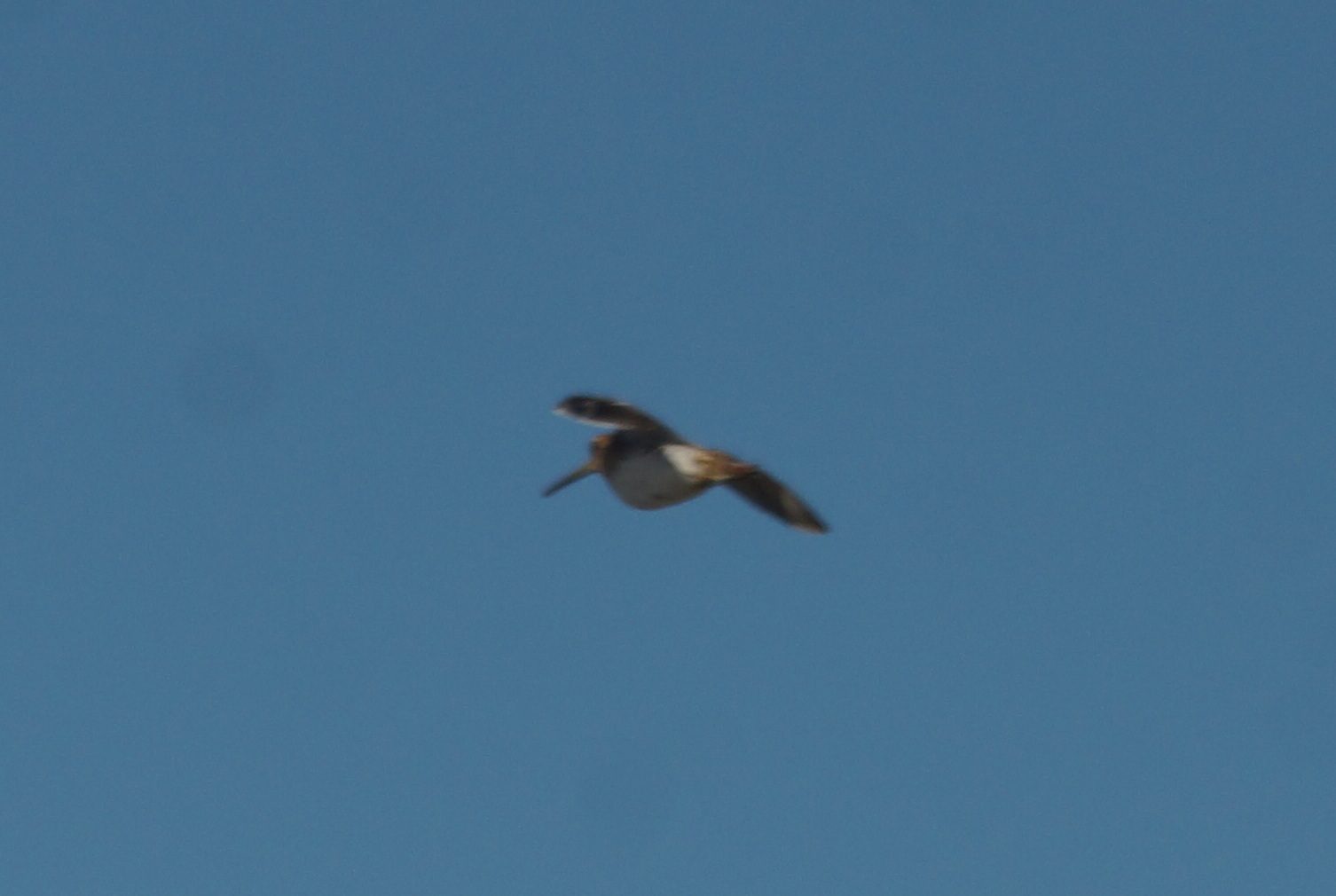
Photo: (c) SIA, some rights reserved (CC BY) · CC-BY (May be cropped or resized)
Lymnocryptes minimus
Basic stats
Diet
Mostly invertebrates, with seeds
Habitat
Marshes, bogs, tundra and wet meadows
Range
Breeds in northern Europe and Russia; winters across western and southern Europe, Africa and South Asia
Clutch size
3–4 eggs
Size
18–25cm
Wingspan
30–41cm
Weight
Averages about 50g
The Jack Snipe is the smallest snipe, measuring 18–25 cm with a 30–41 cm wingspan and averaging about 50 g. Mottled brown upperparts, pale underparts and two pale crown stripes provide concealment. Its bill is shorter than that of the Common Snipe. A repeated bobbing motion while feeding is a particularly characteristic feature (Wikipedia, general species account; AVONET, Tobias et al. 2022).
It breeds in marshes, bogs, tundra and wet meadows across northern Europe and Russia, then winters across western and southern Europe, Africa and South Asia. Secretive birds crouch until closely approached, fly only a short distance and quickly drop back into vegetation. They probe soft mud or pick visible prey, taking mostly insects and worms plus seeds. Three or four eggs are laid in a concealed ground nest (Wikipedia, general species account; EltonTraits, Wilman et al. 2014).
Where to see Jack Snipe in Spain
GBIF records grouped by protected area. They show where the species has been reported, not that it is there now, and they are not population counts.
Recorded in 17 protected areas (1978–2024). The 8 with the most records:
- Paisaje Protegido Espacios Abiertos e Islas del Mar Menor: 56 records (2009–2024)
- Reserva Natural Parcial de la Ría de Villaviciosa: 55 records (1978–2024)
- Parc Agrari del Baix Llobregat: 33 records (2012–2023)
- ZEC-ZEPA Laguna de Pitillas: 29 records (1989–2024)
- Aragoi ibaiko erdiko tartea HBB - KBE: 28 records (2008–2024)
- LIC-ZEPA Embalse de las Cañas: 23 records (1981–2024)
- els Carrissars d'Elx: 9 records (2014–2022)
- LIC Yesos de la Ribera Estellesa: 9 records (2015–2020)
Quick answers
- What does the Jack Snipe eat?
- Mostly invertebrates, with seeds
- What habitat does the Jack Snipe live in?
- Marshes, bogs, tundra and wet meadows
- Where is the Jack Snipe found?
- Breeds in northern Europe and Russia; winters across western and southern Europe, Africa and South Asia
- How many eggs does the Jack Snipe lay?
- 3–4 eggs
- How big is the Jack Snipe?
- 18–25cm
- What is the wingspan of the Jack Snipe?
- 30–41cm
- How much does the Jack Snipe weigh?
- Averages about 50g