
 Wildlife
of Spain
Little Gull
Gulls, Terns, Skuas & Auks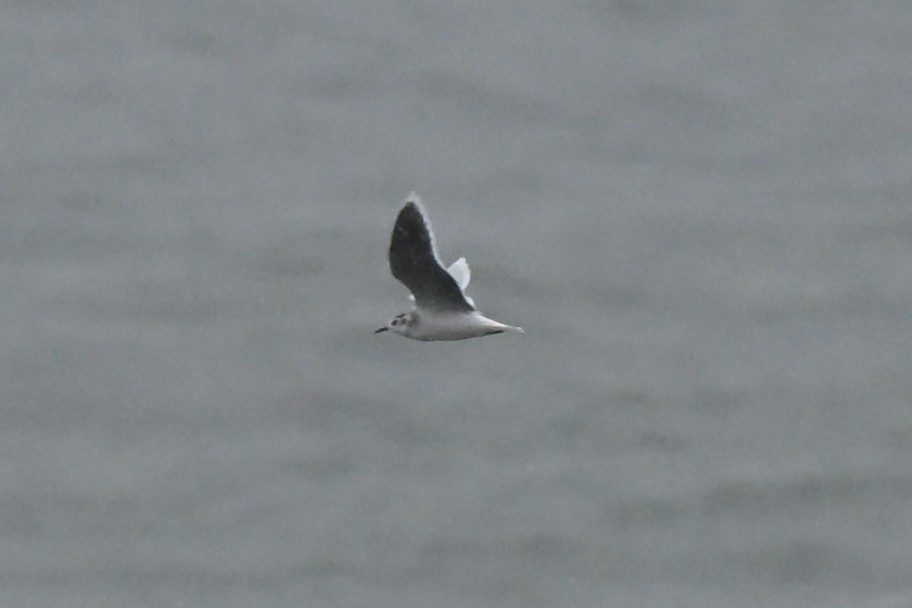
Photo: (c) Oscar Hazell, some rights reserved (CC BY) · CC-BY (May be cropped or resized)
Hydrocoloeus minutus
Basic stats
Diet
Invertebrates and fish
Habitat
Vegetated freshwater lakes and marshes when breeding; coasts and open sea in winter
Range
Breeds across the northern Palearctic with small North American colonies; winters along temperate coasts
Clutch size
Averages about 3 eggs
Incubation period
About 21 days
Size
24–28cm
Wingspan
62–69cm
Weight
Averages about 118g
The Little Gull is the world's smallest gull, measuring 24–28 cm, spanning 62–69 cm and averaging about 118 g. Breeding adults have a black hood, dark red bill and bright red legs, while winter birds retain a dark cap and ear spot. The pale upperwing contrasts with a very dark underwing. Juveniles carry blackish areas on the head and back and show a dark W across the upperwings (Wikipedia, general species account; AVONET, Tobias et al. 2022).
Across the northern Palearctic and in small North American colonies, the species breeds around shallow freshwater lakes, marshes and bogs with floating or emergent vegetation. It migrates to temperate coasts and open sea for winter. Insects dominate the breeding diet and fish form a substantial component overall; marine invertebrates become prominent outside breeding. Nests may rest on the ground or float among vegetation. AnAge reports about three eggs and 21 days of incubation (Wikipedia, general species account; EltonTraits, Wilman et al. 2014; AnAge).
Where to see Little Gull in Spain
GBIF records grouped by protected area. They show where the species has been reported, not that it is there now, and they are not population counts.
Recorded in 14 protected areas (1964–2024). The 8 with the most records:
- LIC Jaizkibel BGL: 224 records (1984–2024)
- LIC-ZEPA Embalse de las Cañas: 173 records (2006–2024)
- ZEC-ZEPA Laguna de Pitillas: 40 records (1985–2024)
- Parc Agrari del Baix Llobregat: 14 records (2011–2024)
- Zona Húmida Protexida Ría de Ortigueira e Ladrido: 13 records (2006–2022)
- Paisaje Protegido Espacios Abiertos e Islas del Mar Menor: 12 records (2008–2013)
- Parc natural d'es Trenc i el Salobrar de Campos: 12 records (1980–2020)
- Parque Natural de Bahía de Cádiz: 10 records (1975–2023)
Quick answers
- What does the Little Gull eat?
- Invertebrates and fish
- What habitat does the Little Gull live in?
- Vegetated freshwater lakes and marshes when breeding; coasts and open sea in winter
- Where is the Little Gull found?
- Breeds across the northern Palearctic with small North American colonies; winters along temperate coasts
- How many eggs does the Little Gull lay?
- Averages about 3 eggs
- How long are the eggs of the Little Gull incubated?
- About 21 days
- How big is the Little Gull?
- 24–28cm
- What is the wingspan of the Little Gull?
- 62–69cm
- How much does the Little Gull weigh?
- Averages about 118g