
 Wildlife
of Spain
Dunlin
Waders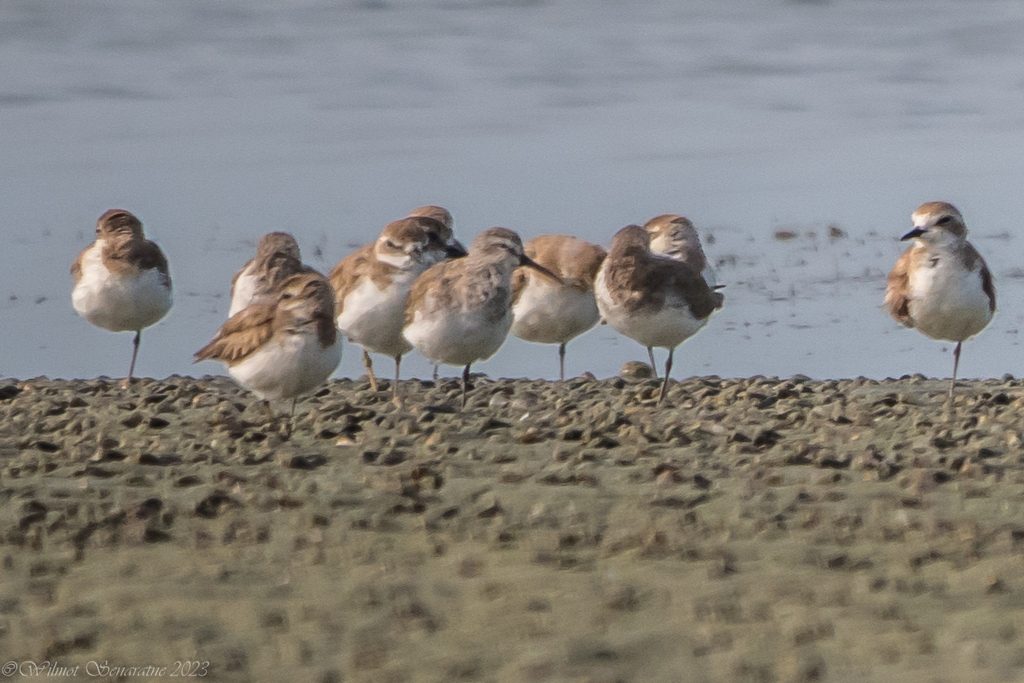
Photo: wilmotsenaratne · CC0 1.0
Calidris alpina
Basic stats
Diet
Insects and other invertebrates, with plant matter
Habitat
Arctic and subarctic wetlands when breeding; coastal mudflats, beaches and marshes otherwise
Range
Breeds around Arctic North America and Eurasia; winters on coasts farther south
Clutch size
Usually 4 eggs
Incubation period
About 21 days
Size
17–21cm
Wingspan
32–36cm
Weight
Averages about 52g
The Dunlin is a small, sturdy sandpiper, 17–21 cm long with a 32–36 cm wingspan. Breeding adults carry a unique black belly patch beneath rufous-toned upperparts, while winter birds are grey-brown above and white below. All ages show a narrow pale wing bar. A slightly downcurved bill, longer on average in females, has a sensitive tip suited to finding prey in soft sediment (Wikipedia, general species account).
The species breeds across Arctic and subarctic North America and Eurasia, with populations migrating varying distances to temperate and tropical coasts. Outside nesting areas it forms dense flocks on mudflats and beaches. Birds probe and pick rapidly: insects are important on breeding grounds, whereas molluscs, worms and crustaceans feature strongly along coasts; plant matter also reaches the dataset threshold (Wikipedia, general species account; EltonTraits, Wilman et al. 2014). Four eggs are typically incubated by both adults for about 21 days (Wikipedia, general species account; AnAge).
Where to see Dunlin in Spain
GBIF records grouped by protected area. They show where the species has been reported, not that it is there now, and they are not population counts.
Recorded in 36 protected areas (1964–2026). The 8 with the most records:
- Parque Natural de Bahía de Cádiz: 1,260 records (1975–2026)
- Reserva Natural Parcial de la Ría de Villaviciosa: 746 records (1974–2024)
- Zona Húmida Protexida Ría de Ortigueira e Ladrido: 689 records (1982–2024)
- Parc natural d'es Trenc i el Salobrar de Campos: 664 records (1975–2025)
- Paisaje Protegido Espacios Abiertos e Islas del Mar Menor: 588 records (1984–2024)
- Parque Natural de la Bahía de Cádiz: 483 records (1964–2025)
- LIC-ZEPA Embalse de las Cañas: 482 records (1982–2024)
- Reserva Natural Dirigida de la Laguna de Gallocanta: 467 records (1980–2024)
Quick answers
- What does the Dunlin eat?
- Insects and other invertebrates, with plant matter
- What habitat does the Dunlin live in?
- Arctic and subarctic wetlands when breeding; coastal mudflats, beaches and marshes otherwise
- Where is the Dunlin found?
- Breeds around Arctic North America and Eurasia; winters on coasts farther south
- How many eggs does the Dunlin lay?
- Usually 4 eggs
- How long are the eggs of the Dunlin incubated?
- About 21 days
- How big is the Dunlin?
- 17–21cm
- What is the wingspan of the Dunlin?
- 32–36cm
- How much does the Dunlin weigh?
- Averages about 52g