
 Wildlife
of Spain
Black-tailed Godwit
Waders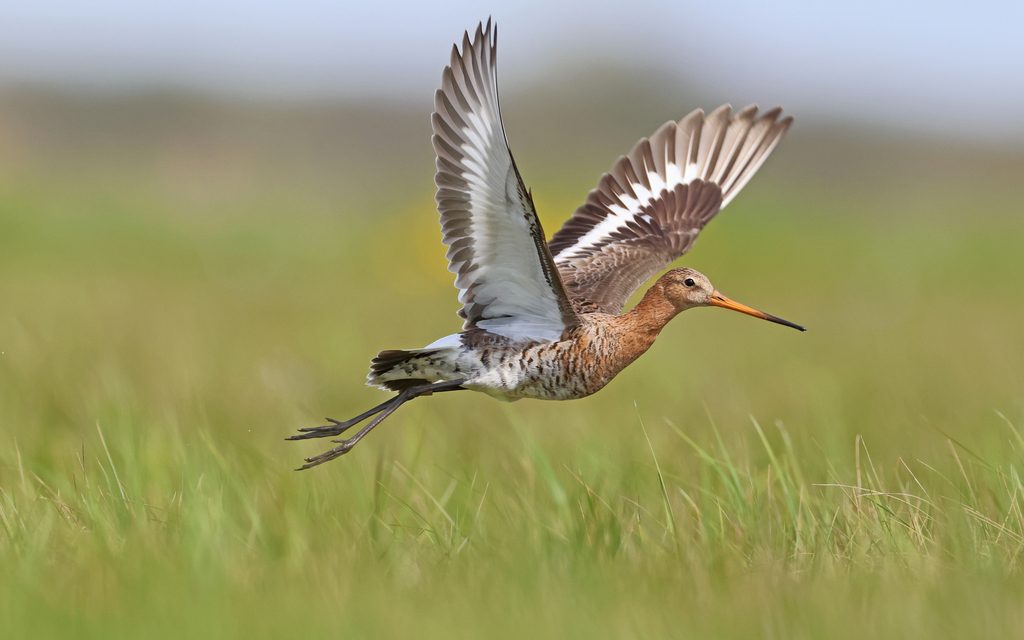
Photo: Christoph Moning · CC BY 4.0 (May be cropped or resized)
Limosa limosa
Basic stats
Diet
Mostly invertebrates, with small vertebrates, fish, fruit and seeds
Habitat
Fens, damp grassland, bogs, marshes, estuaries and other wetlands
Range
Breeds from Iceland across Eurasia; winters in western Europe, Africa, southern Asia and Australasia
Clutch size
3–6 eggs
Incubation period
22–24 days
Size
About 42cm
Wingspan
70–82cm
Weight
Averages about 288g
The Black-tailed Godwit is a tall shorebird with long legs and a long, nearly straight bill. Breeding plumage brings orange to the head, neck and breast, whereas winter birds become muted grey-brown. At every season, the bold black-and-white wing pattern and white rump are valuable flight marks. Females tend to be larger and longer-billed than males, though the sexes otherwise resemble one another (Wikipedia, general species account).
Across its range, the species breeds in fens, damp meadows, bogs and wet country beside lakes, then uses marshes, flooded fields, estuaries and other wetlands outside the nesting season. It feeds mainly on invertebrates, with smaller contributions from vertebrates, fish, fruit and seeds (EltonTraits, Wilman et al. 2014). A shallow scrape holds 3–6 eggs; both adults share the 22–24-day incubation, and the mobile young leave the nest soon after hatching (Wikipedia, general species account).
Where to see Black-tailed Godwit in Spain
GBIF records grouped by protected area. They show where the species has been reported, not that it is there now, and they are not population counts.
Recorded in 33 protected areas (1879–2026). The 8 with the most records:
- Parque Natural de Bahía de Cádiz: 617 records (1985–2024)
- Zona Húmida Protexida Ría de Ortigueira e Ladrido: 524 records (1986–2024)
- ZEC-ZEPA Laguna de Pitillas: 325 records (1978–2024)
- Parque Natural de la Bahía de Cádiz: 300 records (1983–2024)
- Reserva Natural Dirigida de la Laguna de Gallocanta: 270 records (1998–2024)
- els Carrissars d'Elx: 212 records (2009–2024)
- Reserva Natural Parcial de la Ría de Villaviciosa: 209 records (1879–2024)
- Zona Periférica de Protección de la Reserva Natural Dirigida de la Laguna de Gallocanta: 108 records (1987–2024)
Quick answers
- What does the Black-tailed Godwit eat?
- Mostly invertebrates, with small vertebrates, fish, fruit and seeds
- What habitat does the Black-tailed Godwit live in?
- Fens, damp grassland, bogs, marshes, estuaries and other wetlands
- Where is the Black-tailed Godwit found?
- Breeds from Iceland across Eurasia; winters in western Europe, Africa, southern Asia and Australasia
- How many eggs does the Black-tailed Godwit lay?
- 3–6 eggs
- How long are the eggs of the Black-tailed Godwit incubated?
- 22–24 days
- How big is the Black-tailed Godwit?
- About 42cm
- What is the wingspan of the Black-tailed Godwit?
- 70–82cm
- How much does the Black-tailed Godwit weigh?
- Averages about 288g