
 Wildlife
of Spain
Beringian Ermine
Otters, Badgers & Mustelids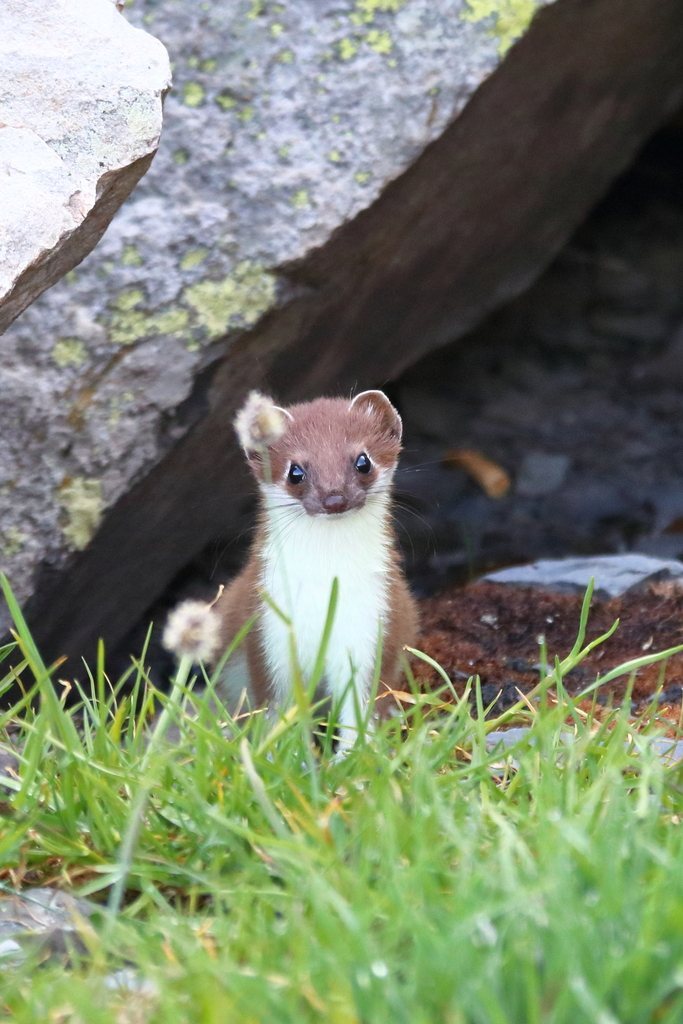
Photo: (c) Donsky, some rights reserved (CC BY) · CC-BY (May be cropped or resized)
Mustela erminea
Basic stats
Diet
Primarily rodents and lagomorphs; also birds, fish, shrews, and occasional reptiles or amphibians
Habitat
Northern temperate and boreal landscapes
Range
Eurasia and Alaska under the modern restricted species concept
The stoat, or Eurasian ermine, is a slender mustelid with short legs, a long neck and a black-tipped tail. Its coat is brown above and pale below in summer, turning white in winter across colder parts of its range while the black tip remains. A 2021 revision restricts Mustela erminea to Eurasia and Alaska, separating most North American populations as M. richardsonii and an island form as M. haidarum. (Wikipedia, general species account).
Rodents dominate its diet, but stoats also take pikas, hamsters, water voles, rabbits, birds, fish and shrews, with reptiles, amphibians and insects eaten less often. Their narrow bodies let them pursue prey into burrows; males more often tackle large prey than females and are about a quarter larger. Litters average around six or seven after a gestation of about 43 days. (Wikipedia, general species account; AnAge).
Quick answers
- What does the Beringian Ermine eat?
- Primarily rodents and lagomorphs; also birds, fish, shrews, and occasional reptiles or amphibians
- What habitat does the Beringian Ermine live in?
- Northern temperate and boreal landscapes
- Where is the Beringian Ermine found?
- Eurasia and Alaska under the modern restricted species concept