
 Wildlife
of Spain
Stone Marten
Otters, Badgers & Mustelids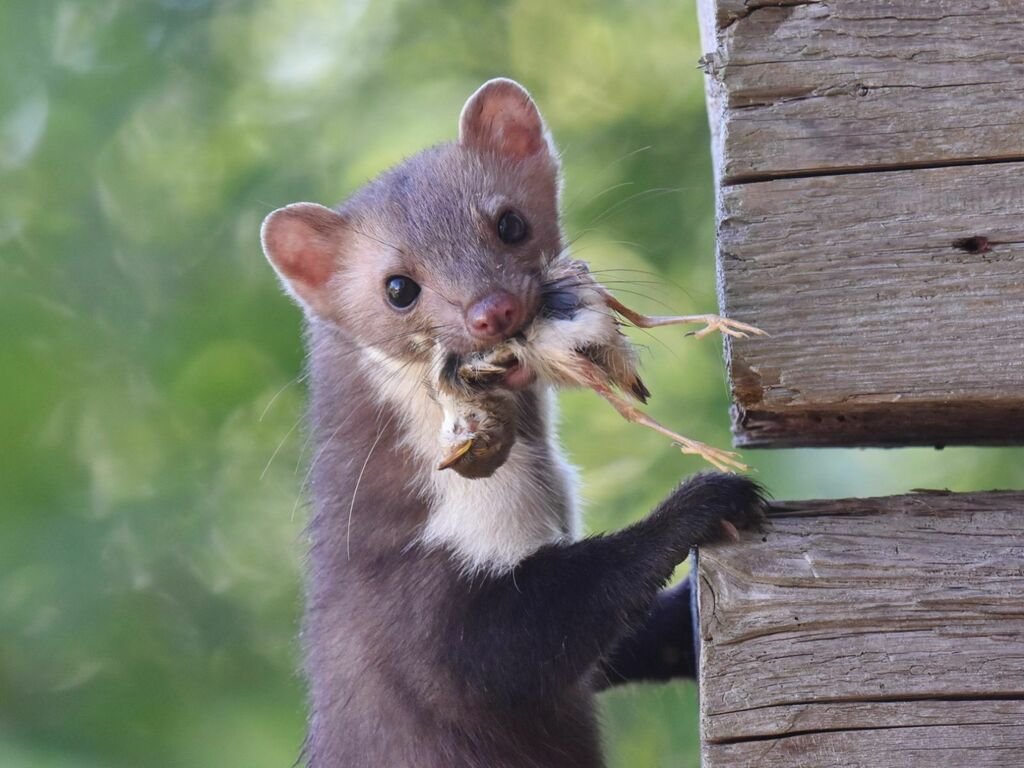
Photo: Лариса Артемьева · CC0
Martes foina
Basic stats
Diet
Fruit, rodents, birds, eggs, insects, and other small prey
Habitat
Open and forest habitats, rocky ground, and buildings
Range
Europe and Central Asia
Litter size
Usually 3–7
Gestation period
Approximately 236–237 days in the wild
Size
Males 430–590mm, females 380–470mm
Weight
Males 1.7–2.1kg, females 1.1–1.5kg
The stone marten, also called the beech marten or white-breasted marten, is a slender mustelid with brown to grey-brown fur, a bushy tail, and a conspicuous pale throat patch. It resembles the pine marten but is generally smaller, more terrestrial, and less closely tied to continuous forest. The throat patch is often white and may divide toward the forelegs, while the nose is paler than that of a pine marten. Geographic variation is considerable across its European and Central Asian range, so measurements from a single subspecies are omitted. (Wikipedia, general species account)
Stone martens use rocky clefts, tree cavities, stone structures, and buildings rather than digging their own burrows. They are mainly nocturnal or crepuscular, hunt largely on the ground, climb well, and can swim. Their adaptable diet includes rodents, birds, eggs, insects, fruit, and cultivated produce, with plant foods particularly important in winter. Mating occurs in June and July, followed by delayed implantation; three to seven kits are typical in late March or early April. (Wikipedia, general species account; Mammal Diversity Database)
Where to see Stone Marten in Spain
GBIF records grouped by protected area. They show where the species has been reported, not that it is there now, and they are not population counts.
Recorded in 4 protected areas (2018–2025).
- Parque Natural del Alto Najerilla: 24 records (2024–2025)
- Espai d'interès natural de les Gavarres: 7 records (2022–2025)
- Meatzaldeko biotopo babestua: 5 records (2018)
- ZEC-ZEPA Alto Tajo: 3 records (2024–2025)
Quick answers
- What does the Stone Marten eat?
- Fruit, rodents, birds, eggs, insects, and other small prey
- What habitat does the Stone Marten live in?
- Open and forest habitats, rocky ground, and buildings
- Where is the Stone Marten found?
- Europe and Central Asia
- What is the litter size of the Stone Marten?
- Usually 3–7
- How long is the gestation period of the Stone Marten?
- Approximately 236–237 days in the wild
- How big is the Stone Marten?
- Males 430–590mm, females 380–470mm
- How much does the Stone Marten weigh?
- Males 1.7–2.1kg, females 1.1–1.5kg