
 Wildlife
of Spain
Eurasian Otter
Otters, Badgers & Mustelids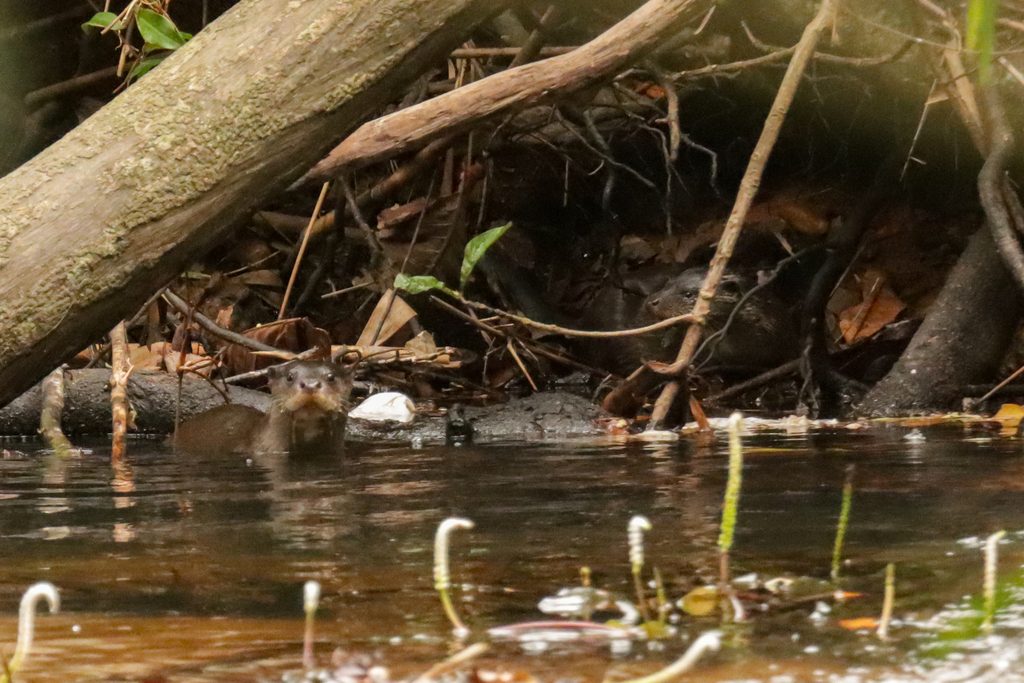
Photo: Vsevolod Rudyi · CC BY 4.0 (May be cropped or resized)
Lutra lutra
Basic stats
Diet
Mainly fish; also amphibians, crustaceans, insects, birds, and small mammals
Habitat
Freshwater lakes, rivers, streams, canals, ponds, and some coasts
Range
Europe, North Africa, and much of Asia
Litter size
1–4
Gestation period
60–64 days
Size
57–95cm, excluding tail
Weight
Usually 7–12kg
The Eurasian otter is a long, streamlined semiaquatic mustelid with dark brown upper fur, a cream throat and belly, short limbs, and a thick tapering tail. Adults usually measure 57–95cm before the 35–45cm tail and commonly weigh 7–12kg; females are smaller than males. Dense bones reduce buoyancy while swimming. Compared with the North American river otter, it has a shorter neck, broader face, wider ear spacing, and proportionally longer tail, although across most of Eurasia it is the only native otter likely to be encountered. (Wikipedia, general species account)
The species uses food-rich lakes, rivers, streams, canals, and ponds, and can live on coasts if fresh water is available for washing its fur. Fish dominate the diet, with amphibians, crustaceans, insects, birds, eggs, and small mammals taken seasonally. Adults are mainly solitary and mark territories with droppings known as spraints; male and female ranges may overlap. Mating occurs in water and can take place throughout the year. After a 60–64-day gestation, females bear one to four pups, which remain dependent for roughly thirteen months. (Wikipedia, general species account)
Where to see Eurasian Otter in Spain
GBIF records grouped by protected area. They show where the species has been reported, not that it is there now, and they are not population counts.
Recorded in 4 protected areas (2013–2025).
- ZEC-ZEPA Alto Tajo: 8 records (2024–2025)
- Monfragüe National Park: 4 records (2013–2020)
- Paisaje Protegido Corredor Verde del Guadiamar: 4 records (2023–2025)
- Parque Natural del Alto Najerilla: 3 records (2024–2025)
Quick answers
- What does the Eurasian Otter eat?
- Mainly fish; also amphibians, crustaceans, insects, birds, and small mammals
- What habitat does the Eurasian Otter live in?
- Freshwater lakes, rivers, streams, canals, ponds, and some coasts
- Where is the Eurasian Otter found?
- Europe, North Africa, and much of Asia
- What is the litter size of the Eurasian Otter?
- 1–4
- How long is the gestation period of the Eurasian Otter?
- 60–64 days
- How big is the Eurasian Otter?
- 57–95cm, excluding tail
- How much does the Eurasian Otter weigh?
- Usually 7–12kg