
 Wildlife
of Spain
European Polecat
Otters, Badgers & Mustelids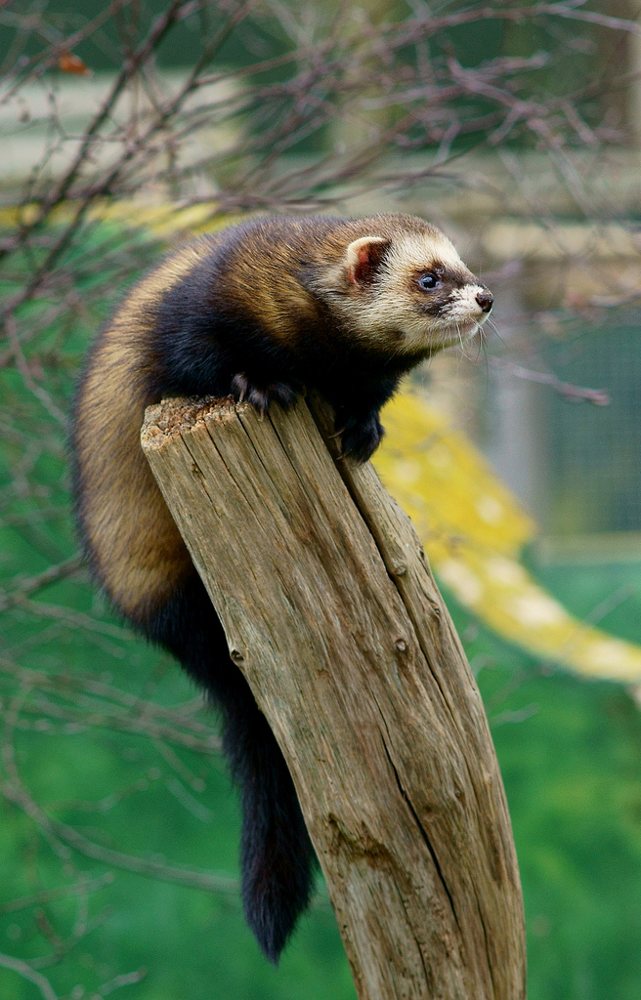
Photo: Peter Trimming · CC BY 2.0 (May be cropped or resized)
Mustela putorius
Basic stats
Diet
Small rodents, birds, amphibians and reptiles
Habitat
Not detailed in sources
Range
Europe and the Rif mountains
Litter size
5–10 kits
Gestation period
About 42 days (AnAge)
Size
Shorter and more compact than other Mustela
Weight
About 810g (AnAge, COMBINE)
The European polecat is a mustelid of Europe and the Rif mountains, generally dark brown with a pale underbelly and a dark mask across the face. It has a shorter, more compact body than other Mustela species and a more powerfully built skull and teeth, and it is less agile. It can release a foul-smelling liquid to mark its territory. Adult mass is about 810g in both AnAge and COMBINE (Wikipedia, general species account). Colour mutations, including albinos, occasionally occur.
The polecat feeds on small rodents, birds, amphibians and reptiles, and occasionally cripples prey and stores it alive in its burrow. It is much less territorial than other mustelids, and animals of the same sex often share home ranges. It is polygamous, with pregnancy following mating through induced ovulation. Kits, five to ten in a litter, are born in early summer and become independent at two to three months. It is thought to be the sole ancestor of the domestic ferret (Wikipedia, general species account). Gestation is about 42 days in AnAge.
Quick answers
- What does the European Polecat eat?
- Small rodents, birds, amphibians and reptiles
- What habitat does the European Polecat live in?
- Not detailed in sources
- Where is the European Polecat found?
- Europe and the Rif mountains
- What is the litter size of the European Polecat?
- 5–10 kits
- How long is the gestation period of the European Polecat?
- About 42 days (AnAge)
- How big is the European Polecat?
- Shorter and more compact than other Mustela
- How much does the European Polecat weigh?
- About 810g (AnAge, COMBINE)