
 Wildlife
of Spain
European Badger
Otters, Badgers & Mustelids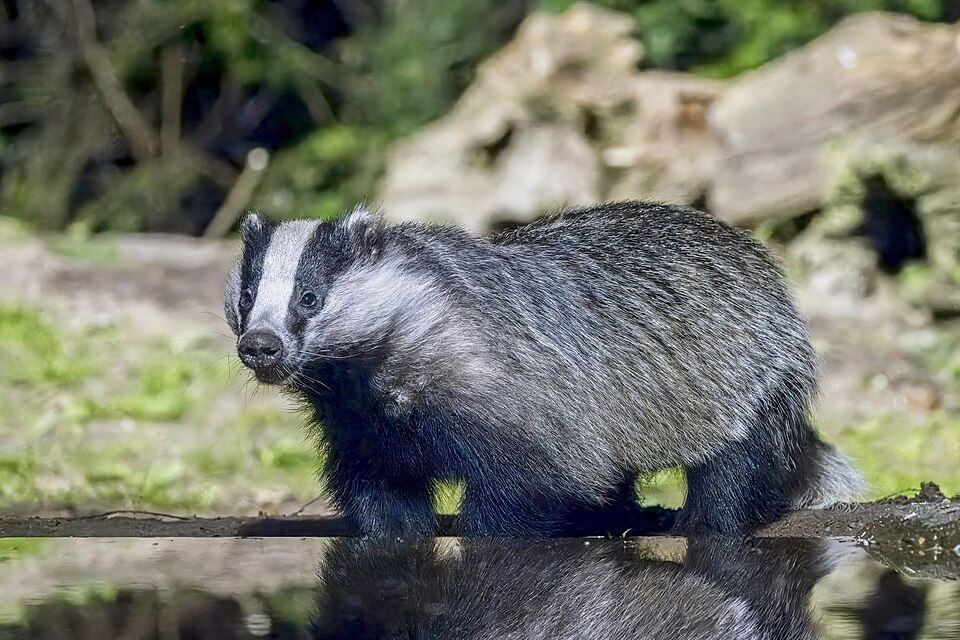
Photo: Charles J. Sharp · CC BY-SA 4.0 (May be cropped or resized)
Meles meles
Basic stats
Diet
Earthworms, large insects, small mammals, carrion, cereals and tubers
Habitat
Burrows (setts) in woodland and farmland
Range
Europe, West Asia and parts of Central Asia
Litter size
Up to 5 cubs
Gestation period
49 days (AnAge and COMBINE)
Weight
7–13kg in spring; 15–17kg in autumn
The European badger is a powerfully built member of the weasel family with a small head, stocky body, small black eyes, short tail and a coat of black, white, brown and grey fur. Its weight varies from 7–13kg in spring to 15–17kg in autumn, before winter sleep. It is native to Europe, West Asia and parts of Central Asia, and in the United Kingdom it is the only living badger. Several subspecies are recognised (Wikipedia, general species account).
It is nocturnal and social, sleeping by day in one of several setts within its territory. These burrows have many chambers and entrances and passages measuring 35–81m in length, and badger families may use them for decades. Badgers keep their setts clean and use latrines outside them. Although classed as a carnivoran, it is an omnivore that eats earthworms, large insects, small mammals, carrion, cereals and tubers. Litters of up to five cubs are born in spring, and gestation is 49 days in both AnAge and COMBINE (Wikipedia, general species account).
Where to see European Badger in Spain
GBIF records grouped by protected area. They show where the species has been reported, not that it is there now, and they are not population counts.
Recorded in 5 protected areas (2018–2025).
- Parque Natural del Alto Najerilla: 27 records (2024–2025)
- Espai d'interès natural de les Gavarres: 7 records (2022–2024)
- ZEC-ZEPA Alto Tajo: 5 records (2024–2025)
- Meatzaldeko biotopo babestua: 3 records (2018)
- Parc Agrari del Baix Llobregat: 3 records (2022–2024)
Quick answers
- What does the European Badger eat?
- Earthworms, large insects, small mammals, carrion, cereals and tubers
- What habitat does the European Badger live in?
- Burrows (setts) in woodland and farmland
- Where is the European Badger found?
- Europe, West Asia and parts of Central Asia
- What is the litter size of the European Badger?
- Up to 5 cubs
- How long is the gestation period of the European Badger?
- 49 days (AnAge and COMBINE)
- How much does the European Badger weigh?
- 7–13kg in spring; 15–17kg in autumn